
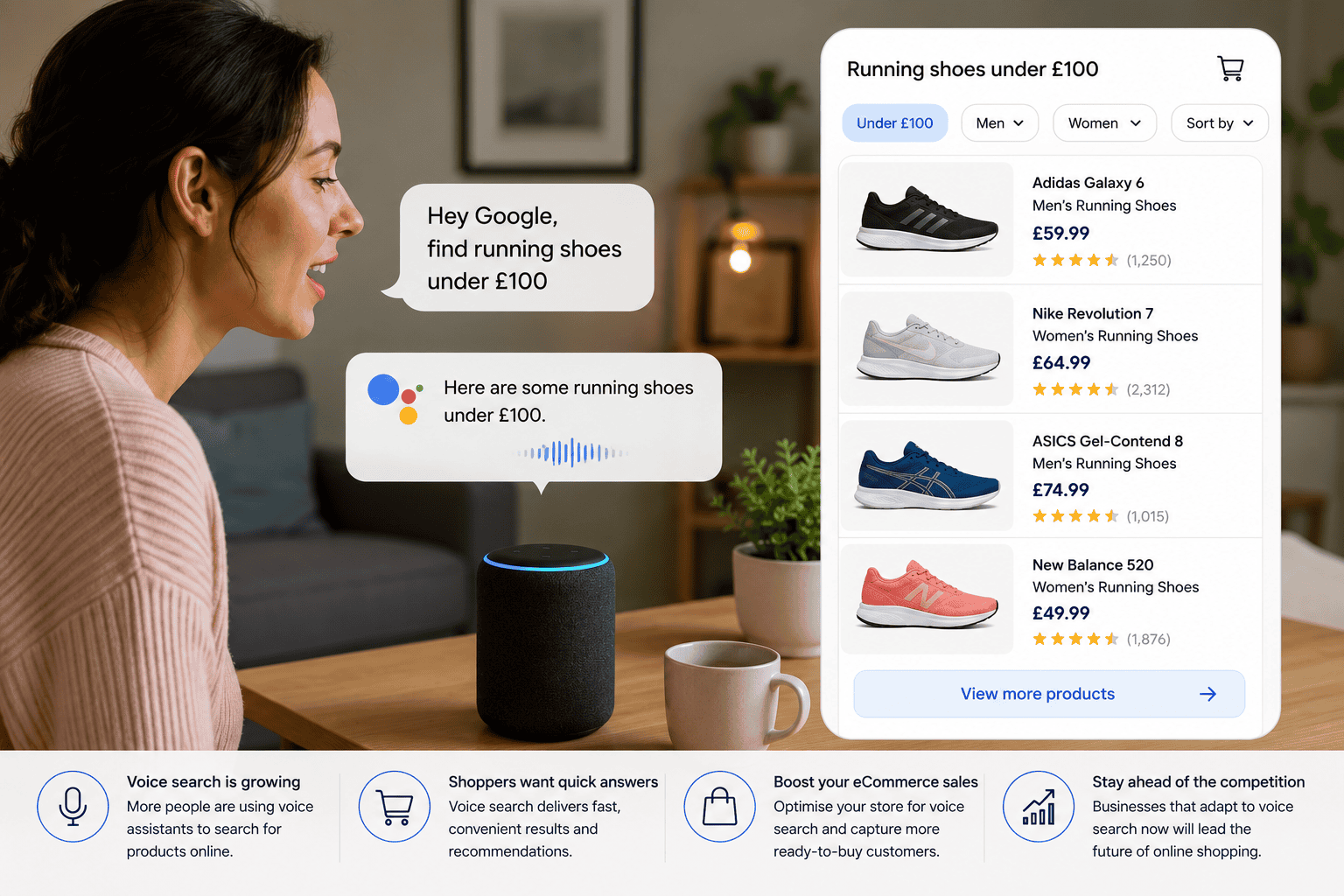
Picture this: I’m rushing to get dinner ready, hands covered in flour, when I realise I need a new eco-friendly frying pan. No time to type, so I shout, “Hey, Alexa, find me the best non-stick pan for 2025!” Within seconds, I’ve got options read out loud. That’s the magic of voice search, and in 2025, it’s changing how we shop online. For e-commerce businesses, this is a massive opportunity to get your products in front of customers like me.
When I first started my online tech shop, I focused on traditional SEO—keywords, backlinks, the lot. But when I noticed voice search queries driving traffic, I realised I was missing a trick. Optimising for voice search sent my rankings soaring and brought in customers who’d never found me otherwise. In this blog, I’ll share why voice search is a game-changer for e-commerce and how to make your site speak louder in 2025. Whether you’re selling gadgets, fashion, or artisanal coffee, these tips will help you shine. Let’s get started!
What is Voice Search and Why Does It Matter?
Voice search lets users query search engines using spoken words via devices like Alexa, Siri, or Google Assistant. It’s fast, hands-free, and perfect for busy folks like me juggling dinner and shopping. In 2025, voice search is booming, with over 50% of searches expected to be voice-based, especially for shopping queries like “best eco-friendly headphones” or “where to buy sustainable fashion near me.”
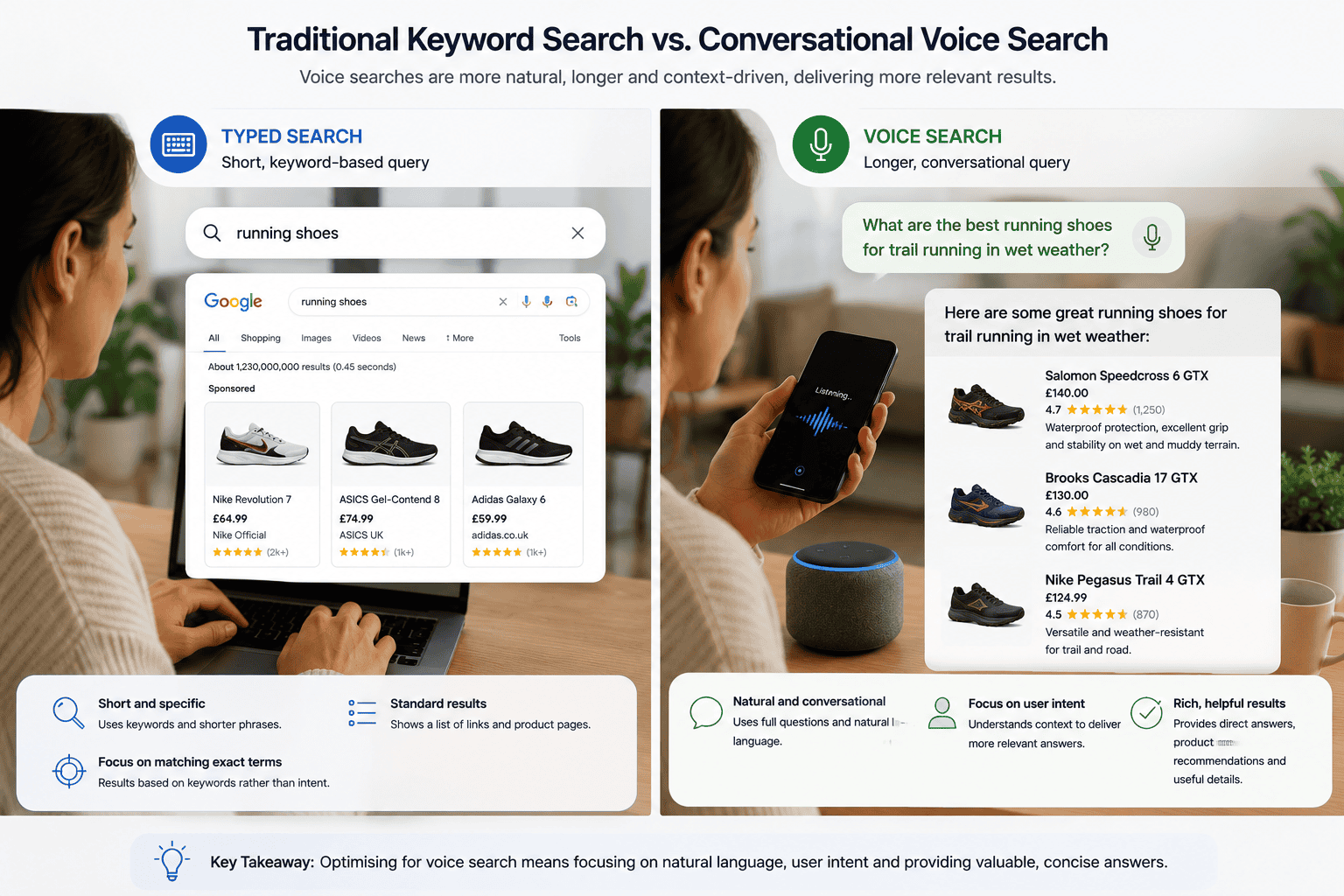
For e-commerce, voice search matters because it’s how customers discover products. Unlike typed searches, voice queries are conversational and often local, like “What’s the best tech shop in Manchester?” Optimising for these queries puts your products front and centre, boosting traffic and sales.
Why Voice Search is an E-commerce Must in 2025
Voice search isn’t just a trend—it’s a must-have for SEO. Here’s why:
Conversational Queries: Voice searches use natural language, like “What’s the best laptop for students in 2025?” Optimising for these boosts relevance.
Local SEO Power: Many voice searches are location-based, like “tech shops near me,” perfect for businesses with physical stores.
High Intent: Voice searchers often want to buy now, making them valuable customers.
Featured Snippets: Voice assistants read answers from snippets, giving optimised sites prime exposure.
Mobile Dominance: With 60% of searches on mobile, voice search fits the on-the-go shopping vibe.

Practical Voice Search Secrets for E-commerce
Here’s a step-by-step guide to optimising your e-commerce site for voice search in 2025, with actionable tips and real-world examples.
1. Target Conversational Keywords
Voice searches are chatty, like “What’s the best eco-friendly phone case for 2025?” rather than “eco phone case.”
Pro Tip: Use tools like AnswerThePublic to find questions your audience asks.
Action: Create product descriptions with phrases like “best sustainable headphones for travel in 2025.” Add a Q&A section to answer queries like “How do I choose eco-tech?”
Why It Works: Conversational keywords match user intent, boosting rankings.
I added “best eco-gadgets for home” to a product page, and it ranked for Siri queries.
2. Optimise for Local Voice Searches
Many voice searches are local, like “Where can I buy tech in Bristol?”
Story Time: My Manchester shop wasn’t showing up for “tech shops near me.” After updating my Google My Business profile, I landed in voice results, driving foot traffic.
Action: Claim and optimise your Google My Business profile with local keywords, hours, and photos. Add local phrases like “Manchester tech shop 2025” to product pages.
Why It Works: Local optimisation targets high-intent customers nearby.
3. Aim for Featured Snippets
Voice assistants often read answers from Google’s featured snippets, making them gold for e-commerce.
Action: Use clear headers like “What’s the best eco-laptop for 2025?” and answer in 40–60 words. Add FAQ Schema with Google’s Structured Data Markup Helper.
Why It Works: Snippets give your products top billing in voice results.
My “Best Eco-Headphones” snippet sent 100 weekly clicks via Alexa.
4. Speed Up Your Site
Voice searchers expect instant answers, so a slow site won’t cut it.
Action: Compress images with TinyPNG, enable caching with W3 Total Cache, and test with Google PageSpeed Insights. Aim for a load time under 3 seconds.
Why It Works: Fast sites rank higher and keep users engaged.
My site’s load time dropped from 4 to 2 seconds, lifting voice search traffic by 25%.
5. Make Content Mobile-Friendly
Voice searches often happen on phones, so your site must shine on mobile.
Action: Test with Google’s Mobile-Friendly Test. Use responsive themes like Astra and ensure buttons and text are easy to tap and read.
Why It Works: Mobile-friendly sites reduce bounce rates and rank better.
A mobile tweak cut my bounce rate by 10%, boosting voice-driven sales.
6. Use Natural Language in Product Descriptions
Write product descriptions like you’re chatting with a friend, not a robot.
Example: Instead of “Eco-friendly charger,” try “This solar-powered charger is perfect for eco-conscious travellers in 2025.”
Action: Rewrite top product pages with conversational phrases. Include benefits, like “charges your phone sustainably on the go.”
Why It Works: Natural language aligns with voice search queries.
My rewritten “eco-charger” description ranked for “best green charger 2025.”
7. Add Voice-Friendly FAQs
FAQs answer voice queries directly, like “How long does a solar charger last?”
Action: Add 3–5 FAQs per product page with concise, conversational answers. Use FAQ Schema to boost snippet chances.
Why It Works: FAQs match voice search intent and drive visibility.
An FAQ on my charger page landed in Google Assistant results.
8. Leverage Customer Reviews
Reviews often contain voice-friendly phrases like “best eco-gadget I’ve bought.”
Story Time: A customer’s review mentioning “fast eco-delivery” pushed my product page up for “quick green tech delivery.”
Action: Encourage reviews with post-purchase emails via Klaviyo. Add Review Schema for star ratings in search results.
Why It Works: Reviews add fresh, keyword-rich content.
9. Optimise for Long-Tail Keywords
Voice searches are specific, like “best budget eco-laptop under £500 in 2025.”
Action: Use Google Keyword Planner to find long-tail phrases. Include them in blogs, like “Top Budget Eco-Laptops for Students.”
Why It Works: Long-tail keywords capture high-intent shoppers.
A long-tail blog post ranked for “affordable green tech 2025” within a month.
10. Track Voice Search Performance
Monitor how voice search drives traffic to refine your strategy.
Pro Tip: Use Google Search Console for query data and Google Analytics for mobile traffic insights.
Action: Check monthly. If voice queries grow, add more FAQs. If not, tweak keywords.
Why It Works: Data keeps your optimisation on point.
Tracking showed voice searches drove 20% of my traffic—time to double down!

Conclusion
Voice search is your e-commerce superpower in 2025. By targeting conversational keywords, optimising for local and snippets, and keeping your site fast and mobile-friendly, you’ll make your products heard loud and clear. Start small—add a few FAQs or tweak a product page—and watch your rankings soar. Let’s make your site the one Alexa picks first!