
What is Entity-First SEO?
Entity-first SEO is a way of improving search visibility by focusing on people, places, products and concepts (entities) rather than just individual keywords. Search engines build knowledge about these entities and how they connect. When your website clearly explains who you are, what you do and how your topics relate, Google can trust and surface your content more often. For a UK business, this means building strong signals around your brand, your services and your service areas so you rank for the right searches and convert more traffic.
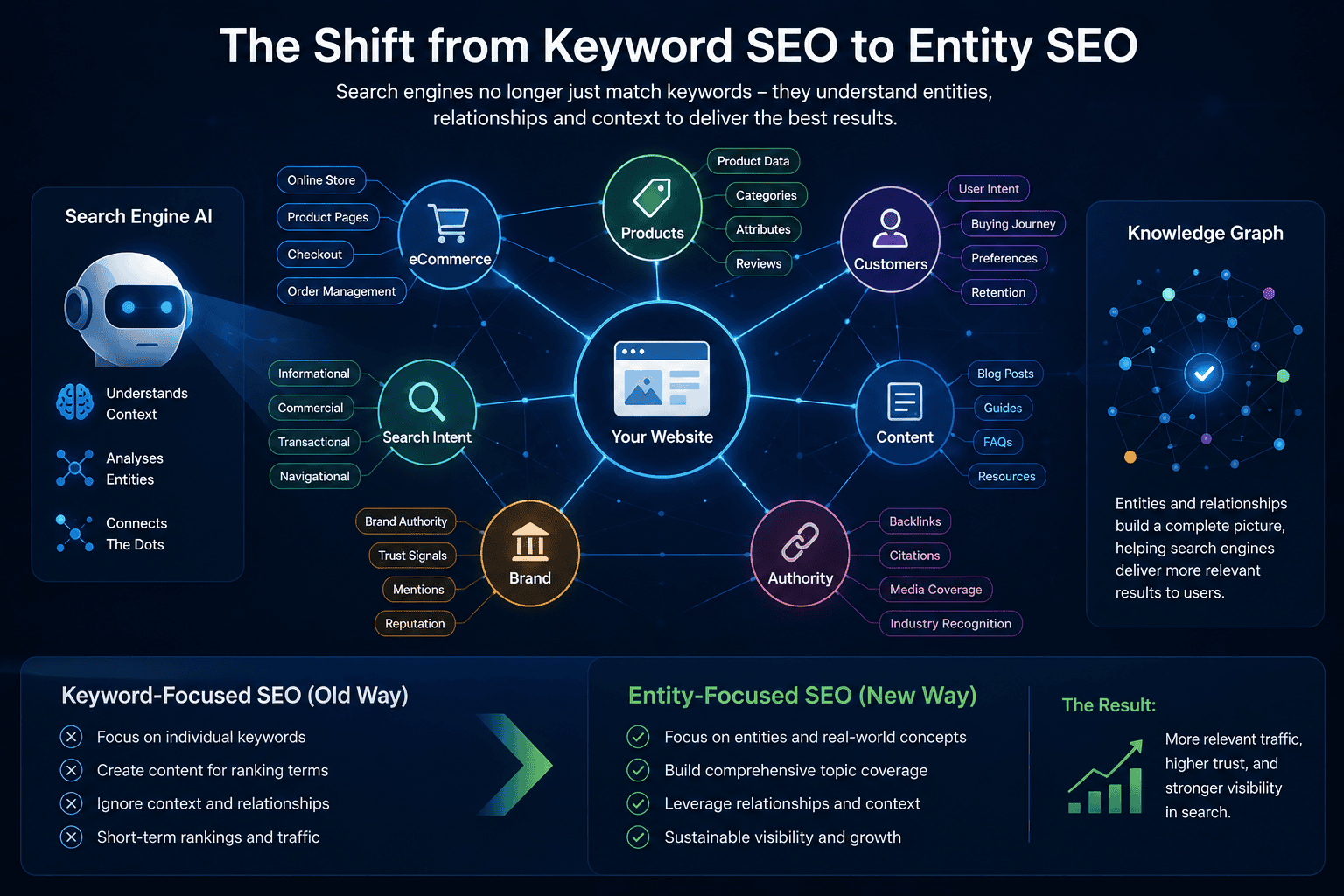
Why Entities Matter More Than Keywords
Keywords still matter, but they are only part of the picture. Google increasingly uses entity understanding, semantic relationships and intent to decide which results are most helpful. If your site demonstrates depth on a subject and fits into the wider knowledge graph, you are more likely to win rankings, rich results and featured snippets. This is especially powerful for service businesses, WordPress sites and e-commerce brands that need to own a niche across Leeds, Bradford and West Yorkshire.
How to Build Topical Authority the Right Way
Topical authority is about covering a subject comprehensively and joining the dots. Instead of dozens of loosely related pages, you create a well-structured set of pillar pages and supporting articles, tied together with clear internal links and backed by trustworthy brand signals. Done correctly, this approach improves organic rankings, boosts engagement and reduces your reliance on paid ads.
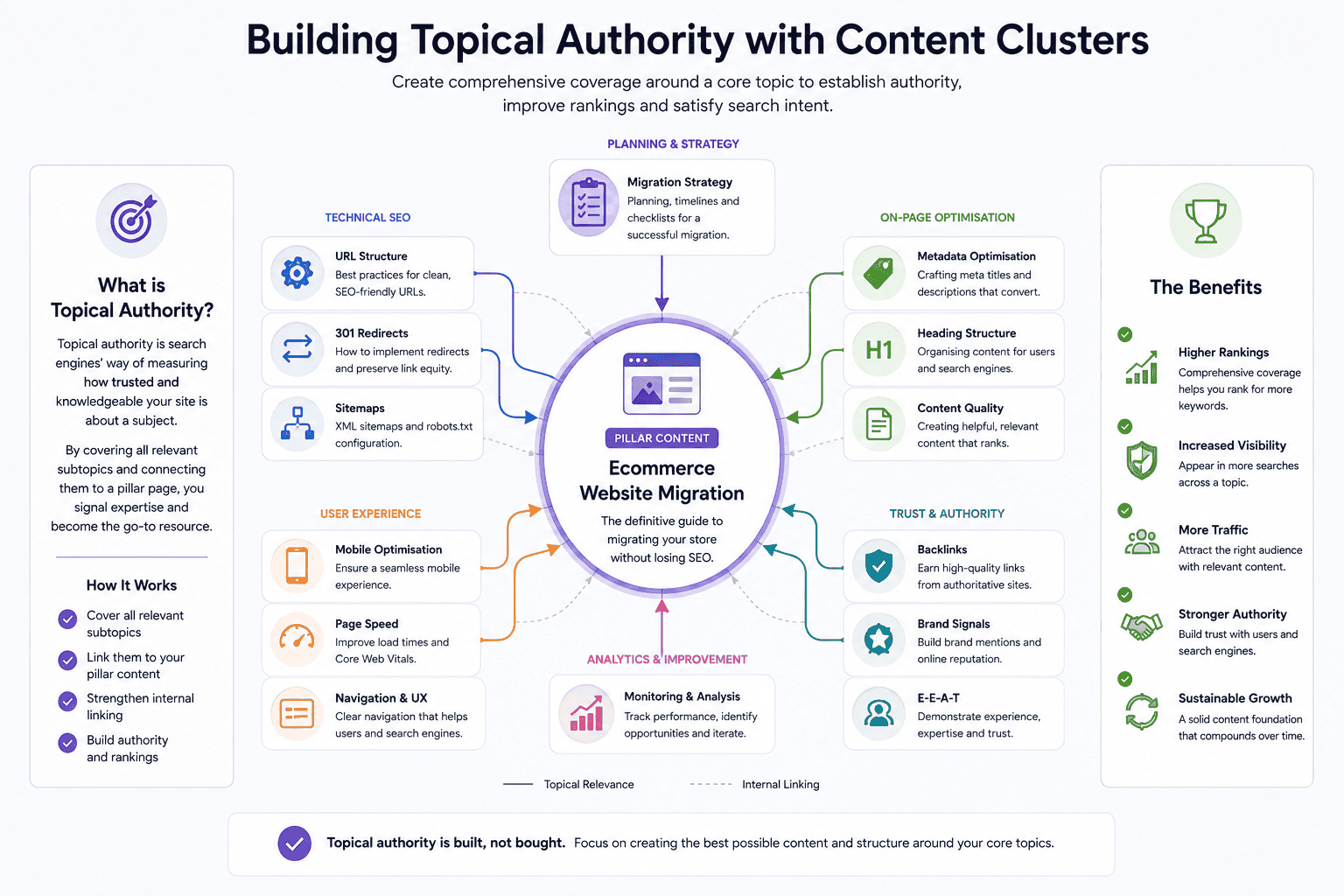
Step 1: Map Your Entities and Topics
Start by listing the entities that matter to your business. This will include your brand, your core services, your products, your target locations and the problems you solve. Add related concepts customers ask about, such as pricing, turnaround times, integrations, platforms and regulations. Group everything into logical themes. For a web design and SEO agency, themes might include website design, WordPress development, e-commerce, local SEO, technical SEO, content strategy and analytics. This topical map is your editorial compass for the next three to six months.
Step 2: Create Pillar Pages and Content Clusters
Pillar pages are the definitive guides on your main services. Each pillar explains the service, who it is for, the process, the benefits, costs and FAQs. Around every pillar, publish cluster content that goes deeper on subtopics. For example, a Website Design pillar could link to articles on responsive design, accessibility, speed optimisation, conversion rate optimisation, hosting and maintenance. Your Local SEO pillar might connect to guides on Google Business Profile, local citations, reviews management and service-area pages for Leeds, Bradford and wider West Yorkshire. This structure helps users find answers quickly and helps search engines recognise your authority.
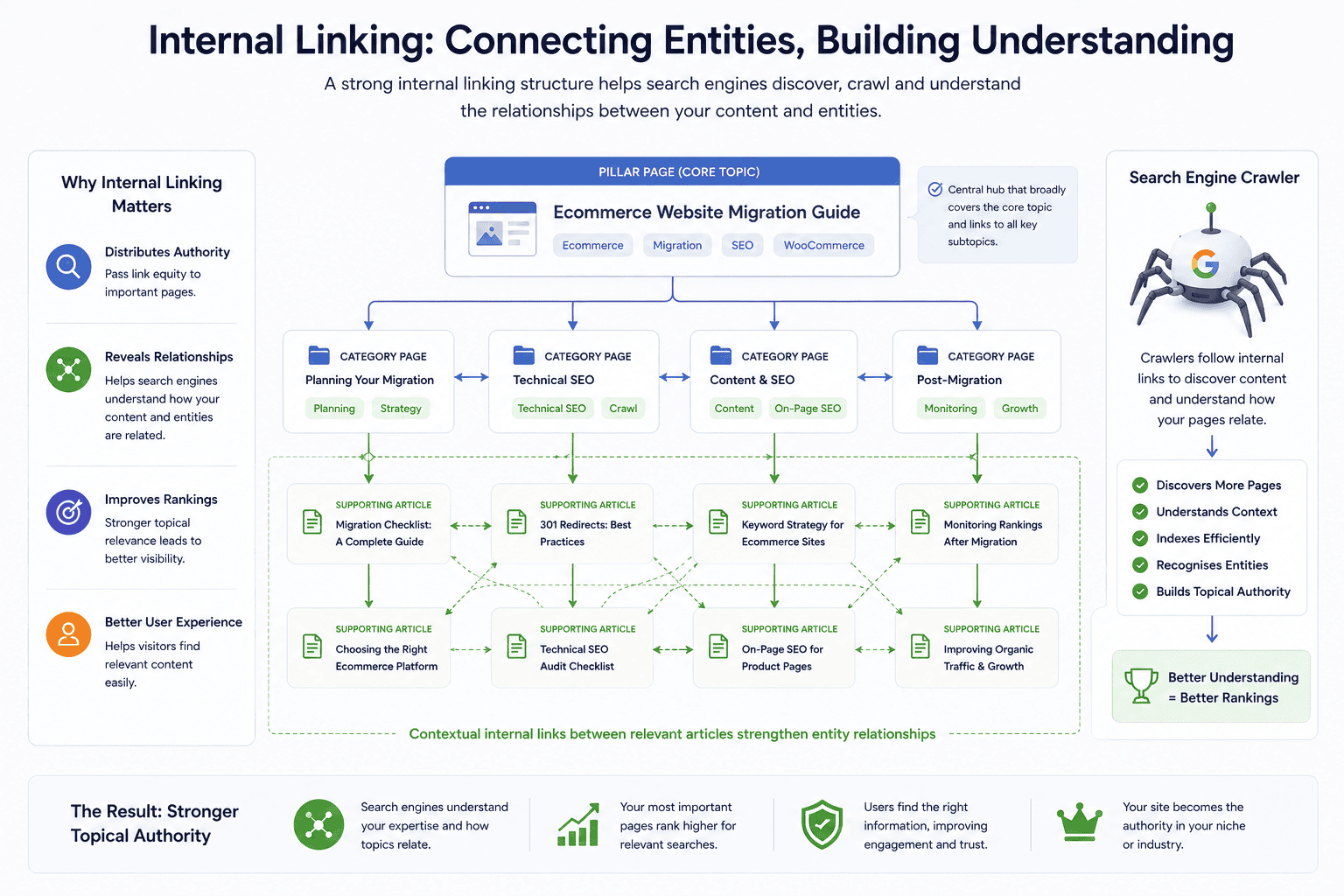
Step 3: Use Internal Linking to Send Clear Signals
Internal links are the glue that binds your topical map. Link from every cluster article to its pillar page and between related subtopics. Use natural, descriptive anchor text that reflects the entity or topic, not vague terms like “click here”. Add breadcrumb navigation to clarify hierarchy, and ensure each page has one primary topic to avoid cannibalisation. Over time, this network of links concentrates relevance and passes authority to the pages that matter most.
Step 4: Add Schema Markup that Supports Your Story
Schema markup gives search engines explicit clues about your entities. Prioritise Organization or LocalBusiness schema for your company, Service schema for core offerings, Article or BlogPosting for editorial content, FAQPage for FAQs and BreadcrumbList for navigational clarity. Product and HowTo can be useful for e-commerce or tutorial content. Consistent schema markup increases your chances of rich results, which in turn can raise click-through rates and strengthen your entity signals.
Step 5: Strengthen Your Brand as an Entity
Your brand is an entity too. Make sure your name, address and phone number are consistent everywhere (your website, Google Business Profile, directories and social media). Maintain a clear About page that introduces real people, expertise and credentials. Publish case studies with named clients where possible, include testimonials and show off awards or certifications. Author profiles with real names and roles help establish E-E-A-T (experience, expertise, authoritativeness and trust). When other reputable sites mention and link to you, it reinforces your presence in the knowledge graph.
Local SEO with Entities for Leeds, Bradford and West Yorkshire
If you target customers in specific locations, create high-quality location pages that read like helpful guides, not keyword stuffing exercises. Explain how you work with businesses in Leeds, Bradford and surrounding areas, include relevant local references, and show recent projects nearby. Optimise and actively manage your Google Business Profile: add services, categories, opening hours, products and regular posts; collect and reply to reviews; and use high-quality images. These elements connect your brand entity with your geographic entities, improving local rankings for searches such as web design Leeds, SEO Bradford and digital marketing West Yorkshire.
Measuring Success and What to Expect
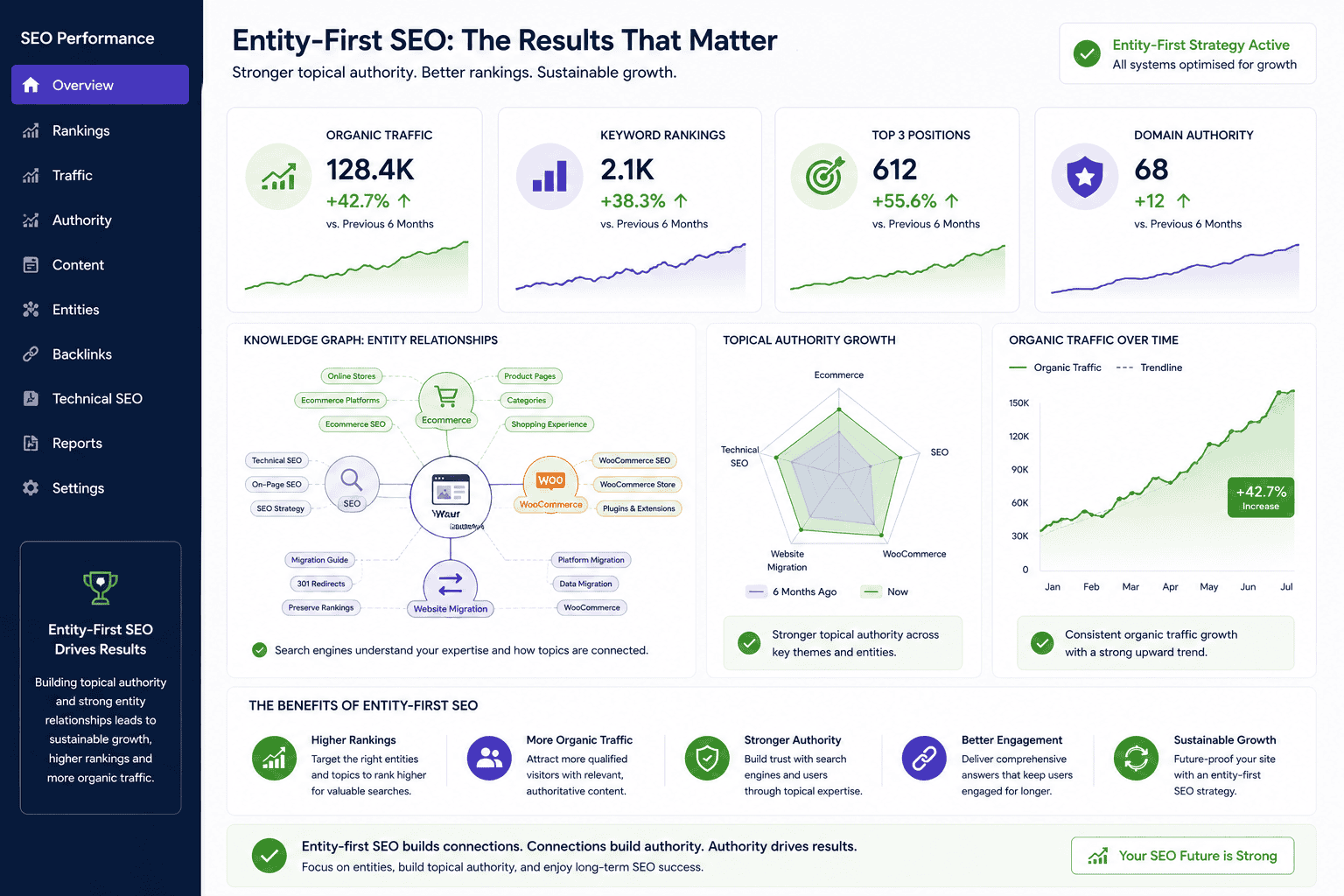
Entity-first SEO builds momentum. Expect early improvements in impressions and long-tail queries across your clusters, followed by rankings for broader head terms as authority grows. Track performance by topic, not just by isolated keywords. Monitor Search Console impressions and clicks across clusters, look at assisted conversions in analytics, and watch for rich results like FAQs and sitelinks. Engagement metrics matter too: time on page, scroll depth and conversion rate show whether your content genuinely helps people.
Common Mistakes to Avoid
Do not publish thin pages for every minor variation of a keyword. Focus on quality and intent. Avoid duplicate content across location pages; tailor examples, FAQs and case studies to each area. Be careful with overlapping articles that target the same query, as this can cause cannibalisation. Do not ignore technical foundations such as page speed, mobile usability and clean site architecture. Finally, resist the temptation to buy low-quality links; a small number of relevant, earned mentions will outperform a large volume of questionable ones.
How Techomatic Web Services Can Help
If you want a pragmatic partner to plan and deliver entity-first SEO, we can help you define your topical map, build pillar pages, produce conversion-ready content and implement schema across WordPress. We will also align your internal linking and local SEO so your brand stands out across Leeds, Bradford and West Yorkshire. Because we work on website design and SEO every day, we bring the technical and creative skills needed to turn strategy into measurable results.
