
Imagine landing on a website where the text is easy to read, the navigation is a breeze, and you can explore products even if you’re using a screen reader or have a visual impairment. It feels welcoming, doesn’t it? That’s the power of accessibility, and in 2025, it’s not just about making your site inclusive—it’s about boosting your SEO and connecting with more customers.
What is Accessibility-First SEO?
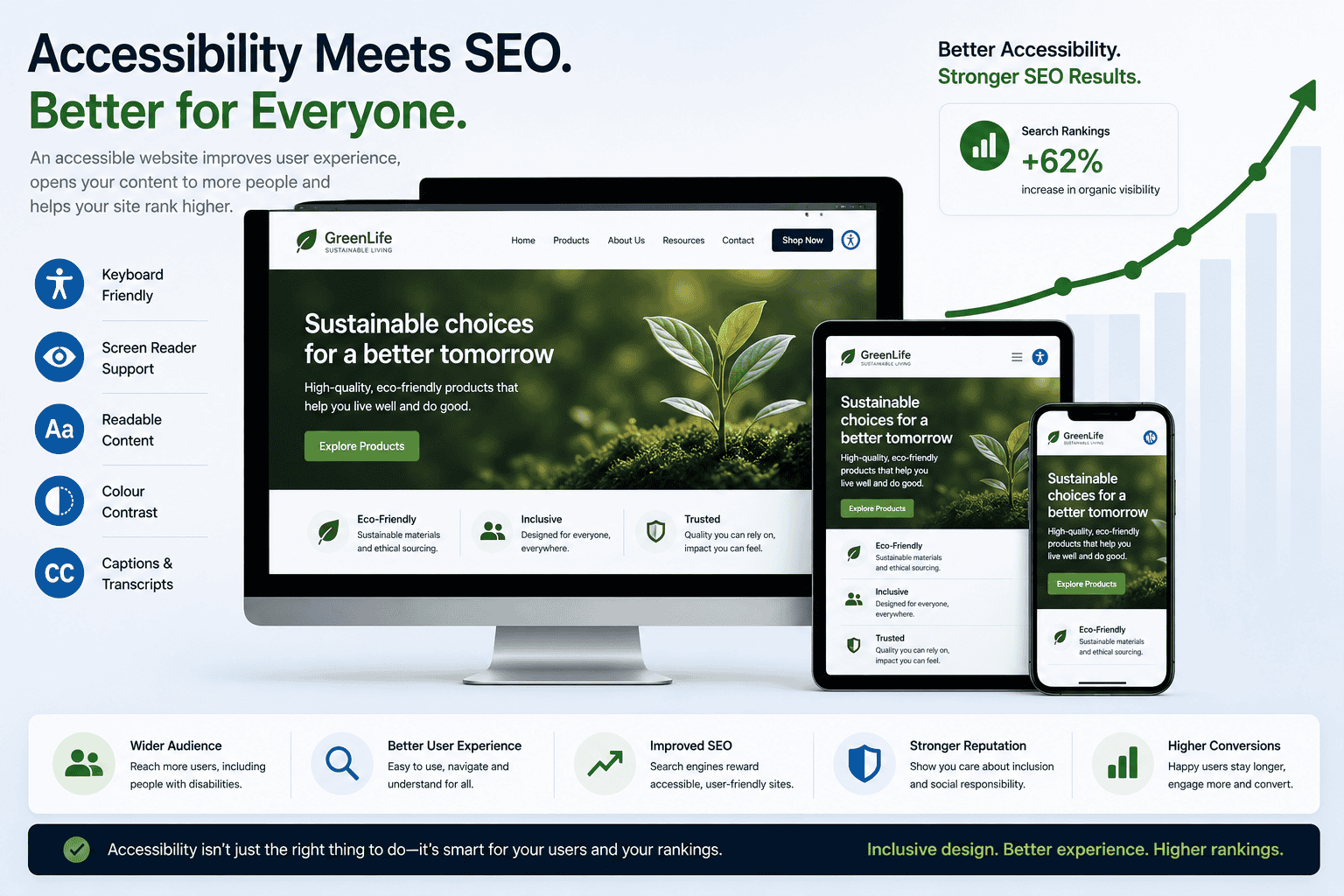
Accessibility-first SEO is about designing and optimising your website to be usable by everyone, including those with disabilities, while boosting your search engine rankings. It involves features like screen-reader-friendly text, keyboard navigation, and high-contrast designs, all optimised with keywords and metadata. In 2025, with Google’s algorithms prioritising user experience and inclusivity, accessibility is a key ranking factor for e-commerce businesses.
Think of it as building a shop that welcomes every customer, whether they’re browsing on a phone, using a screen reader, or navigating with a keyboard. By making your site accessible, you improve engagement, reduce bounce rates, and signal to Google that your content is high-quality and inclusive.
Why Accessibility Boosts SEO in 2025
Accessibility isn’t just ethical—it’s an SEO superpower. Here’s why it’s essential for your site:
Improved User Experience: Accessible sites are easier to navigate, increasing dwell time and reducing bounce rates, which Google rewards.
Broader Audience Reach: Accessibility opens your site to millions of users with disabilities, boosting traffic and engagement.
Keyword Opportunities: Alt text, captions, and transcripts let you naturally add keywords like “accessible eco-tech 2025.”
Mobile and Voice Search: Accessible designs align with mobile and voice search trends, improving rankings for “near me” or conversational queries.
E-E-A-T Boost: Accessible sites demonstrate expertise, experience, authoritativeness, and trustworthiness (E-E-A-T), a core Google ranking factor.
Practical Tips to Make Your Site Accessible and SEO-Friendly
Here’s a friendly guide to weaving accessibility into your e-commerce site to boost SEO in 2025, packed with practical ideas to get you started.

Ensure Clear and Readable Content
Make your content easy for everyone to understand. Use simple language, clear fonts like Arial or Roboto, and a font size of at least 16px. Add headings (H1, H2, H3) to structure your pages, like “Best Eco-Gadgets for 2025,” and include keywords naturally. Tools like Readable can check your content’s clarity. This helps users with cognitive disabilities and boosts SEO by making your site crawlable and user-friendly.
Optimise Images with Descriptive Alt Text
Images are crucial for e-commerce, but screen readers need alt text to describe them. Write concise, keyword-rich alt text, like “green solar charger for eco-friendly tech 2025,” for every product image. Use WordPress Accessibility Checker to ensure compliance. This makes your site accessible to visually impaired users and lets Google index your images, improving rankings for visual searches.

Enable Keyboard Navigation
Some users rely on keyboards instead of a mouse. Ensure your site’s menus, buttons, and forms are navigable with a keyboard. Test with WAVE to check for issues, and fix broken links or non-focusable elements. This improves usability for users with motor disabilities and enhances SEO by reducing bounce rates and signaling a smooth user experience.
Use High-Contrast Designs
High-contrast colours, like black text on a white background, make your site readable for users with visual impairments. Aim for a contrast ratio of at least 4.5:1, and check with Contrast Checker. Include keywords like “accessible tech shop 2025” in your design elements, such as button text. This boosts usability and SEO by keeping visitors engaged longer.
Add Captions and Transcripts to Videos
Videos are great for engagement, but they need captions and transcripts for accessibility. Use YouTube’s auto-caption tool or Rev to create accurate captions for product demos, adding keywords like “accessible eco-gadget demo 2025.” Embed videos on your site with transcripts to make them crawlable by Google, boosting rankings and welcoming users with hearing impairments.
Optimise for Mobile Accessibility
With 60% of searches on mobile in 2025, your site must be accessible on phones. Use responsive themes like Astra and ensure buttons are large enough to tap (at least 48px). Test with Google’s Mobile-Friendly Test to confirm accessibility features work on mobile. This reduces bounce rates and aligns with mobile-first indexing, lifting your SEO performance.
Common Pitfalls to Avoid
Overcomplicating Content: Keep text simple to avoid confusing users or crawlers.
Skipping Alt Text: Every image needs descriptive, keyword-rich alt text.
Poor Navigation: Ensure all elements are keyboard-accessible to avoid usability issues.
Low Contrast: Avoid designs that strain the eyes—check contrast ratios.
Ignoring Mobile: Non-mobile-friendly accessibility features hurt rankings and user experience.
Wrapping Up
Accessibility-first SEO is your 2025 superpower for e-commerce success. By creating readable content, optimising images, ensuring keyboard navigation, and promoting on social media, you’ll boost engagement and rankings. Start small—add alt text or captions—and watch your site shine for all users and Google alike. Let’s make your website inclusive and unstoppable!
