
Why structured data matters for service brands

If your business sells services rather than physical products, structured data is one of the most reliable ways to earn more space and trust on Google. Schema markup gives search engines a precise description of who you are, what you do, where you operate and how customers can take action. The payoff is practical: eligibility for rich results, clearer context for local SEO, improved click-through rates and a stronger brand presence in search. For companies across Leeds, Bradford and West Yorkshire, adding structured data to a WordPress website can be the difference between a plain blue link and a result that showcases ratings, FAQs or direct contact details.
Structured data does not replace good content or a fast, accessible site. It enhances them. When your pages already answer customer questions, schema helps Google recognise that relevance and surface the right elements directly in the search results. Think of markup as labelling your best ingredients so they are easy to find.
The essential schema types for UK service businesses
LocalBusiness (or a suitable subtype)
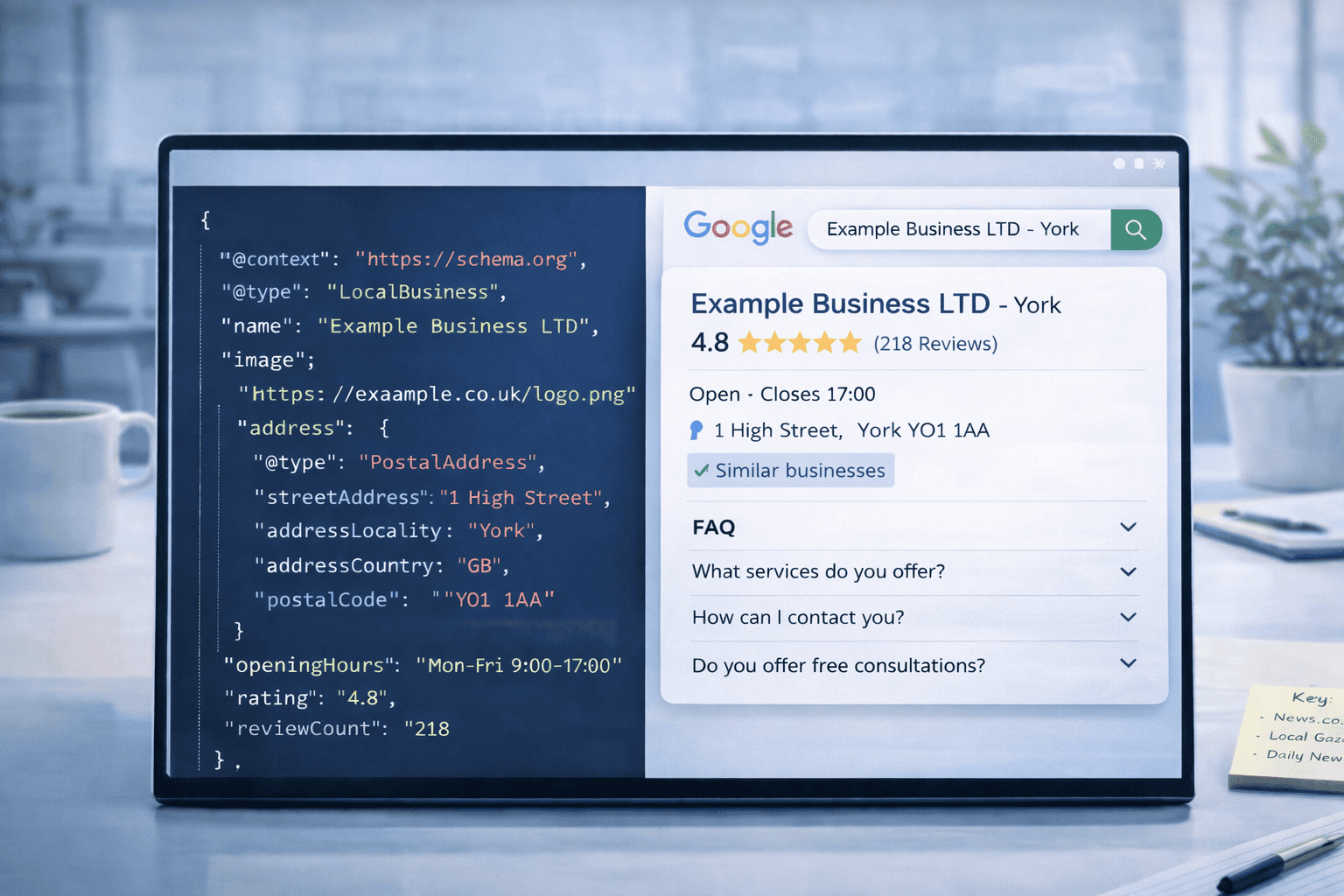
LocalBusiness is the backbone for most UK service companies. It connects your website to your real-world presence and aligns closely with local SEO. Prioritise the basics: name, address, telephone, opening hours, geo coordinates and the sameAs links to your social profiles. Add areaServed if you cover multiple towns, priceRange to set expectations, and image for your logo and premises. Consistency is crucial; your schema should mirror your Google Business Profile and your visible NAP details on the site. If a more specific subtype fits (for example ProfessionalService), use it to give algorithms an extra hint.
Organisation
Organisation schema complements LocalBusiness and helps Google build a cleaner picture of your brand. Include your legal name, logo, URL, contactPoint for sales or support, foundingDate if relevant, and sameAs links to established profiles such as LinkedIn or Companies House. This information can reinforce knowledge panels and improve how your brand appears on branded searches.
WebSite and BreadcrumbList
WebSite markup is a small but useful signal, especially when combined with a site search action if your site has a clean internal search experience. BreadcrumbList clarifies your hierarchy to users and search engines, improving how your URLs and paths appear on the results page. On service sites with guides, case studies and FAQs, tidy breadcrumbs reduce pogo-sticking and help Google understand the relationship between pages.
Service
Service schema describes what you actually do. It can be used on service overview pages and key service detail pages to define the serviceType, the areaServed and the provider (your LocalBusiness or Organization). Add offers where there is a clear, visible price or package; avoid inventing pricing if it is not on the page. If you offer website design, SEO or WordPress support, reflect those service names naturally to align with how customers search.
FAQPage
FAQPage is a powerful addition on service pages because it targets questions customers genuinely ask: pricing, timelines, what is included, and how onboarding works. The markup should mirror the visible Q&A on the page word-for-word. When implemented correctly, FAQ schema can capture more SERP real estate, reduce pre-sales friction and increase conversions. Keep each answer concise and helpful rather than salesy.
Ratings and reviews
If you feature third-party ratings that follow platform rules and are visible on the page, AggregateRating and Review markup can support star snippets for eligible content. Only mark up reviews that are genuine, sourced correctly and seen by users on that page. Avoid self-serving review markup where it is not permitted. It is better to be conservative than risk losing trust.
HowTo or Article when it adds real value
Service businesses often publish how-to content and in-depth guides. When a page demonstrates clear, step-by-step instructions with actions and materials, HowTo schema can help. For broader editorial content, Article or BlogPosting is appropriate. The key is alignment: choose the type that matches the on-page reality.
