SEO Through Storytelling: Crafting Narratives That Rank and Sell
Table of Contents
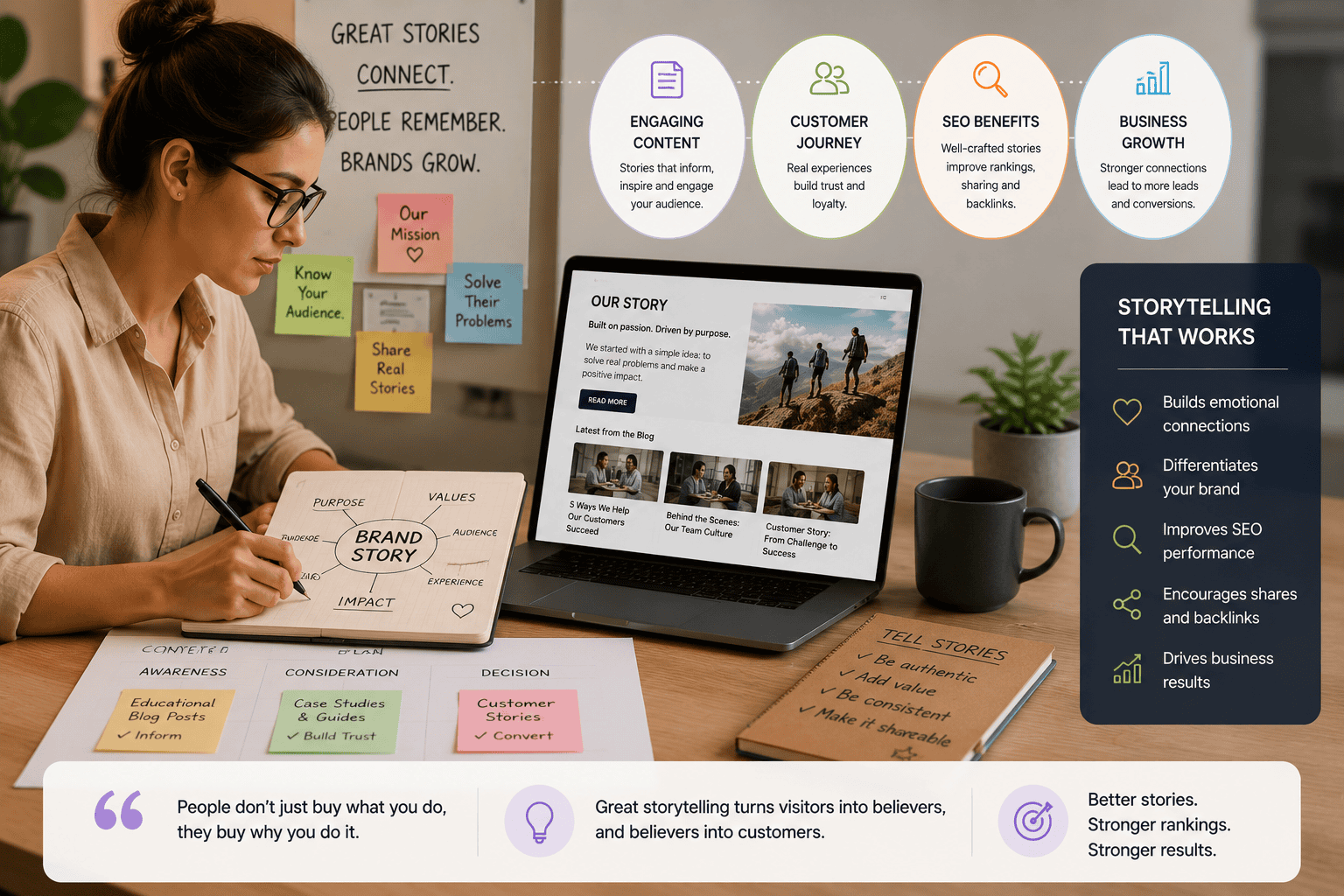
In 2025, SEO isn’t just about algorithms—it’s about people. Storytelling is the secret ingredient that makes your content engaging, shareable, and, yes, rankable. It’s not just a fluffy extra; it’s a strategic tool that can boost your search engine rankings and drive sales. In this blog, I’ll show you why storytelling works for SEO and how to craft narratives that captivate both readers and Google. Whether you’re a small business owner like Sarah or a digital marketer, these tips will help your website shine. Let’s dive in!
What is SEO Through Storytelling?
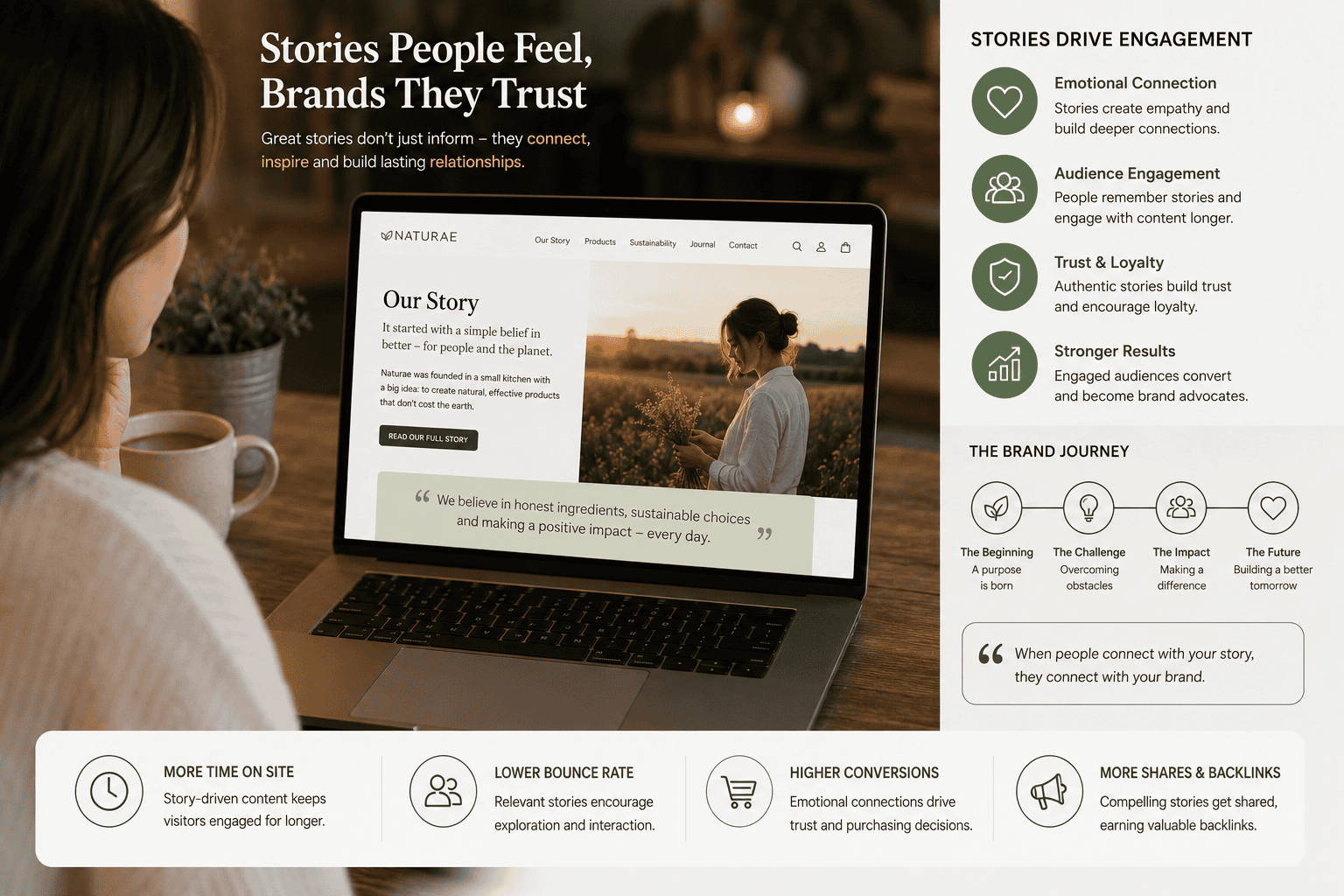
SEO through storytelling is the art of weaving narratives into your content to improve search engine rankings while engaging your audience. It’s about using stories—whether they’re customer testimonials, brand journeys, or problem-solving tales—to make your content more relatable and memorable. In 2025, with Google’s algorithms prioritising user experience and engagement, storytelling isn’t just nice to have; it’s essential.
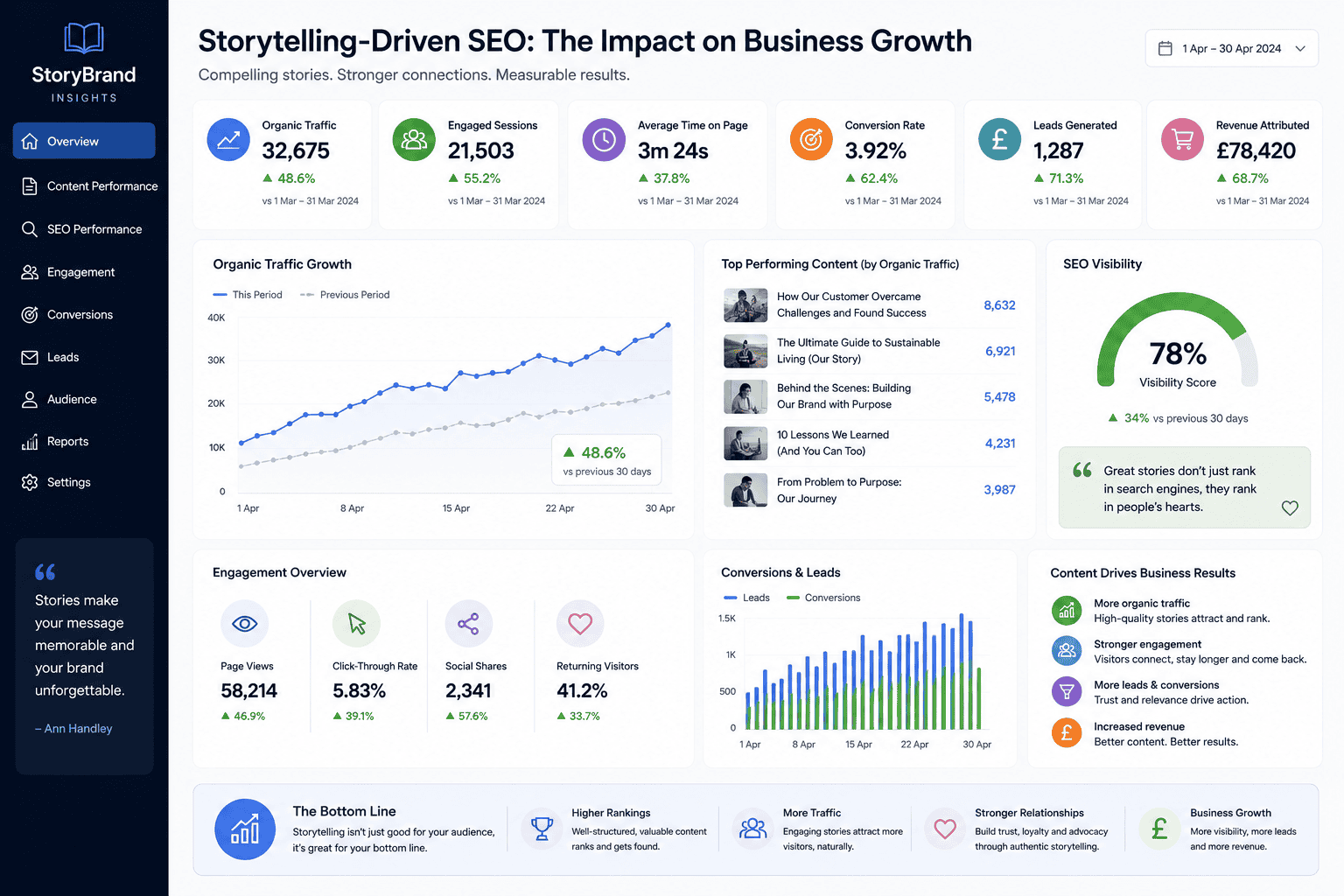
Why? Stories keep readers on your page longer, reduce bounce rates, and encourage shares and backlinks—all signals that tell Google your content is valuable. Plus, they make your brand human, building trust and connection in a way that keywords alone can’t.
Why Storytelling Boosts SEO in 2025
Storytelling isn’t just for bedtime—it’s a powerful SEO strategy. Here’s why:
Engagement Magnet: Stories hook readers, increasing time on page and signaling quality to Google.
Emotional Connection: People share content that moves them, driving social shares and backlinks.
Natural Keyword Integration: Stories let you weave keywords seamlessly, avoiding robotic, keyword-stuffed text.
User Experience: Stories simplify complex topics, making your content accessible and enjoyable.
Brand Differentiation: In a crowded market, a unique story sets you apart, boosting brand recall and loyalty.
Common Pitfalls to Avoid
Forcing Keywords: Don’t shoehorn keywords into your story—it disrupts the flow.
Generic Tales: Avoid clichés like “We’re passionate about tech.” Be specific and authentic.
Ignoring Structure: Use headers, bullet points, and visuals to break up text.
No Call-to-Action: Always end with a CTA, like “Read more stories” or “Shop our eco-tech.”
Skipping Mobile: Ensure your stories look great on phones with Google’s Mobile-Friendly Test.
Conclusion
SEO through storytelling is your 2025 secret weapon. By knowing your audience, choosing the right format, weaving in keywords, and using storytelling techniques, you’ll create content that ranks and sells. Start small—share your brand’s journey or a customer’s success—and watch your SEO soar. Let’s make your stories unforgettable for readers and Google alike!
How to Use AI Tools to Boost Your SEO Without Losing That Human Touch
Table of Contents
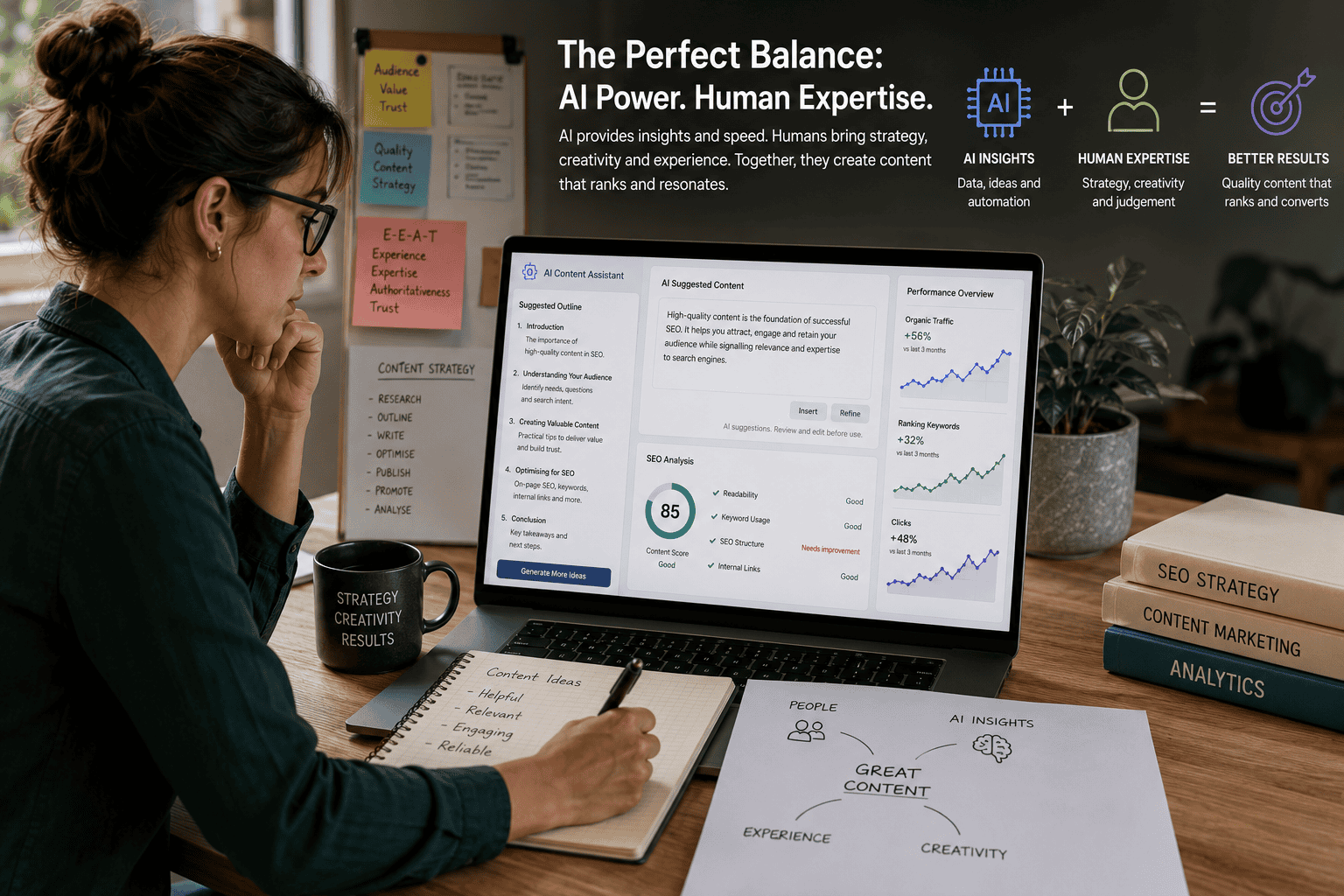
Let’s be real: SEO can sometimes feel like an endless game of catch-up. You’ve got keywords to wrestle with, competitors to size up, and content to tweak until it’s just right. It’s a lot! That’s where AI tools swoop in like a best mate, ready to lighten the load. They can spot hot keywords, polish your blog posts, and save you heaps of time. But here’s the thing: AI’s great with the techy stuff, yet it’s your personal flair that makes your words pop and keeps readers coming back.
I’ve been down this road myself. When I first tried AI for SEO, I was blown away by how fast it churned out ideas and tips. But something felt off. The soul, the warmth, the “me” in my writing? It wasn’t quite there. That’s when it hit me: AI’s a helper, not the whole show. The real trick is mixing its clever insights with your own creativity and knack for connecting with people. So, in this guide, we’ll walk through how to use AI tools to ramp up your SEO game in 2025, all while keeping your content real, lively, and totally you.
Why AI Feels Like a Superpower for SEO
SEO can eat up your time, can’t it? Digging into keyword research, checking how your content’s doing, keeping tabs on what works—it’s a marathon. AI tools are like a burst of energy, speeding through those fiddly tasks and handing you smart ideas in no time. Whether it’s picking out keywords or sprucing up your posts, AI’s got your back.
But don’t panic—it’s not here to steal your spotlight. Think of it as a trusty assistant, sorting the numbers so you can focus on spinning a good yarn. The best stuff happens when you pair AI’s sharp eye with your own voice and take on things.
What’s So Great About AI for SEO?
Before we dive into the tools, let’s chat about why AI’s such a big win for SEO:
Quick Wins: It tackles the slow jobs like keyword digging and tracking, leaving you free to dream up your next big idea.
Clever Clues: AI spots trends and gaps you might not catch, helping you stay one step ahead.
Content Glow-Up: It nudges your writing to play nice with search engines, from layout to readability.
Competitor Peek: See what’s clicking for others in your field and tweak your plan to match.
Grow Easy: Handle bigger projects without losing your cool.
Sure, AI’s ace, but it’s not the full picture. It can’t weave a tale that tugs at heartstrings or really get what your readers are feeling. That’s your gig—melding AI’s brainy bits with your human spark.
Top AI Tools to Level Up Your SEO
Ready to jump in? Here are some cracking AI tools to lift your SEO, plus tips to keep your writing real:
1. Clearscope: Your Content’s New Best Friend
Clearscope digs into top-ranking pages for your keywords and hands you a plan to make your content shine. It suggests word counts, related phrases, and even how to shape your piece.
How to Use It: Pop in your keyword, check the report, and let it guide your draft.
Stay You: Don’t just copy the tips. Toss in your own spin, maybe a quick story or a cheeky nugget, to keep it lively.
2. Surfer SEO: Craft with Pinpoint Accuracy
Surfer SEO stacks your content up against the best out there and gives you pointers, from how often to use keywords to how to lay it out.
How to Use It: Run a check on your draft and tweak it with the advice.
Stay You: Let the data steer you, but pepper in your know-how or a personal bit to make it stand out.
3. Ahrefs: Master Keywords and Rivals
Ahrefs mixes AI with solid data to help you nail keyword research and peek at backlinks. It’s gold for figuring out what pulls in clicks.
How to Use It: Hunt keywords with Keyword Explorer and scope out rivals with Site Explorer.
Stay You: Pick keywords that click with your crowd’s needs, not just the stats, and write stuff that speaks straight to them.
4. SEMrush: The Do-It-All Pal
SEMrush’s AI tricks, like its Writing Assistant, tweak your content’s vibe, readability, and SEO score as you go.
How to Use It: Write in the tool or paste your work for instant tips.
Stay You: Don’t let it flatten your style. Keep it chatty and zero in on what your readers care about.
5. ChatGPT: Your Idea-Sparking Mate
AI like ChatGPT can brainstorm topics, sketch outlines, or whip up rough drafts for you.
How to Use It: Ask for ideas or a starting point, then make it your own.
Stay You: Rework whatever it gives you to fit your vibe and add a personal twist—readers can sniff out bland AI stuff a mile off.
These tools are brilliant, but they’re not the whole deal. They’re here to back you up, not to run the show.
Conclusion
AI tools are your ace up the sleeve for SEO in 2025. They save time, sharpen your moves, and push you up the ranks. But the real win? Teaming them with your personal touch. Let AI crunch the stats while you weave the tale, chat with your readers, and build something one-of-a-kind.
The Hidden SEO Goldmine: Optimising Your ‘About Us’ Page in 2025
Table of Contents
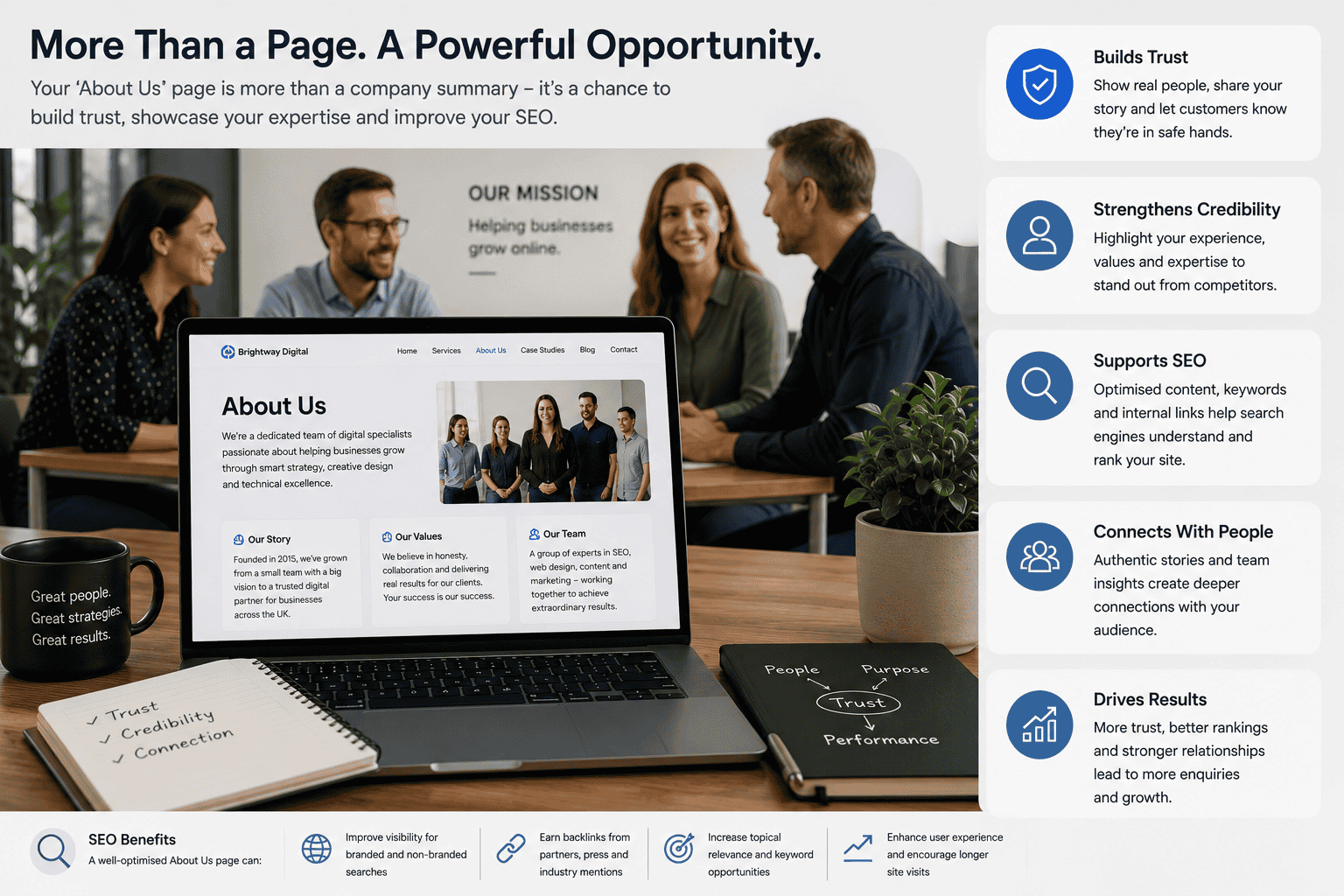
Have you ever visited a website and felt an instant connection? Maybe it was the story of how the company started or a photo of the team that made you smile. That’s the power of a well-crafted ‘About Us’ page. But did you know it can also be a secret weapon for SEO?
In 2025, as search engines become even more sophisticated, optimising every part of your website is crucial. The ‘About Us’ page, often overlooked, is a hidden goldmine waiting to be tapped. It’s not just a place to share your story—it’s a chance to boost your search rankings, engage visitors, and build trust. In this blog, we’ll explore why this page matters, how it can supercharge your SEO, and specific tips to make it shine in the years ahead. Let’s dive in!
What is an ‘About Us’ Page and Why Does It Matter?
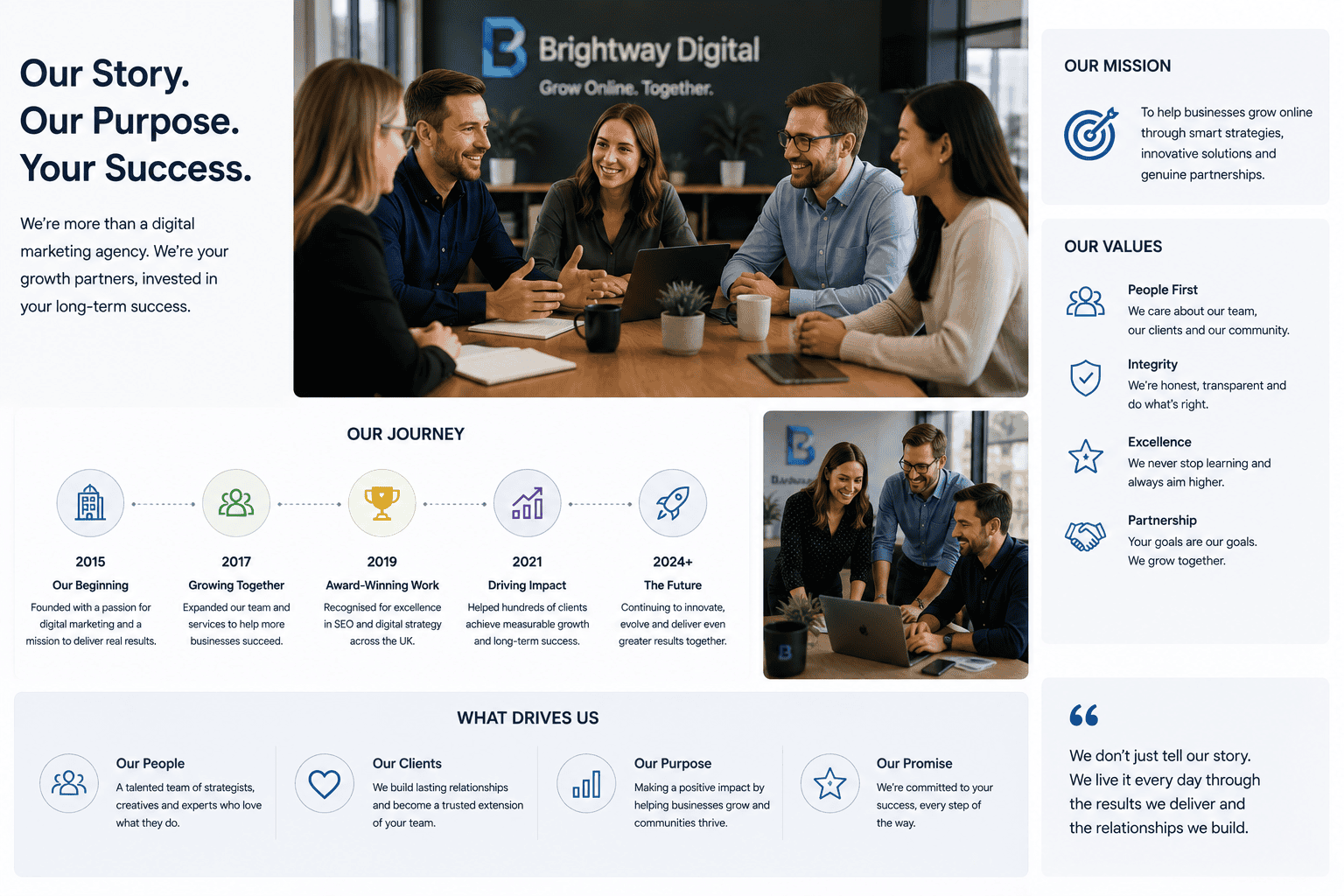
The ‘About Us’ page is where you tell your story. It’s where visitors learn who you are, what you do, and why you do it. It’s often one of the most visited pages on a website, yet many businesses treat it as an afterthought. But here’s the thing: a well-optimised ‘About Us’ page can do more than just build trust. It can improve your search engine rankings, drive more traffic, and even help you connect with your audience on a deeper level.
Think of it as your digital handshake—a chance to make a memorable first impression. And with search engines increasingly prioritising user experience and authenticity, this page is more important than ever.
The SEO Benefits of a Well-Optimised ‘About Us’ Page
A great ‘About Us’ page isn’t just good for your brand—it’s good for your SEO. Here’s how:
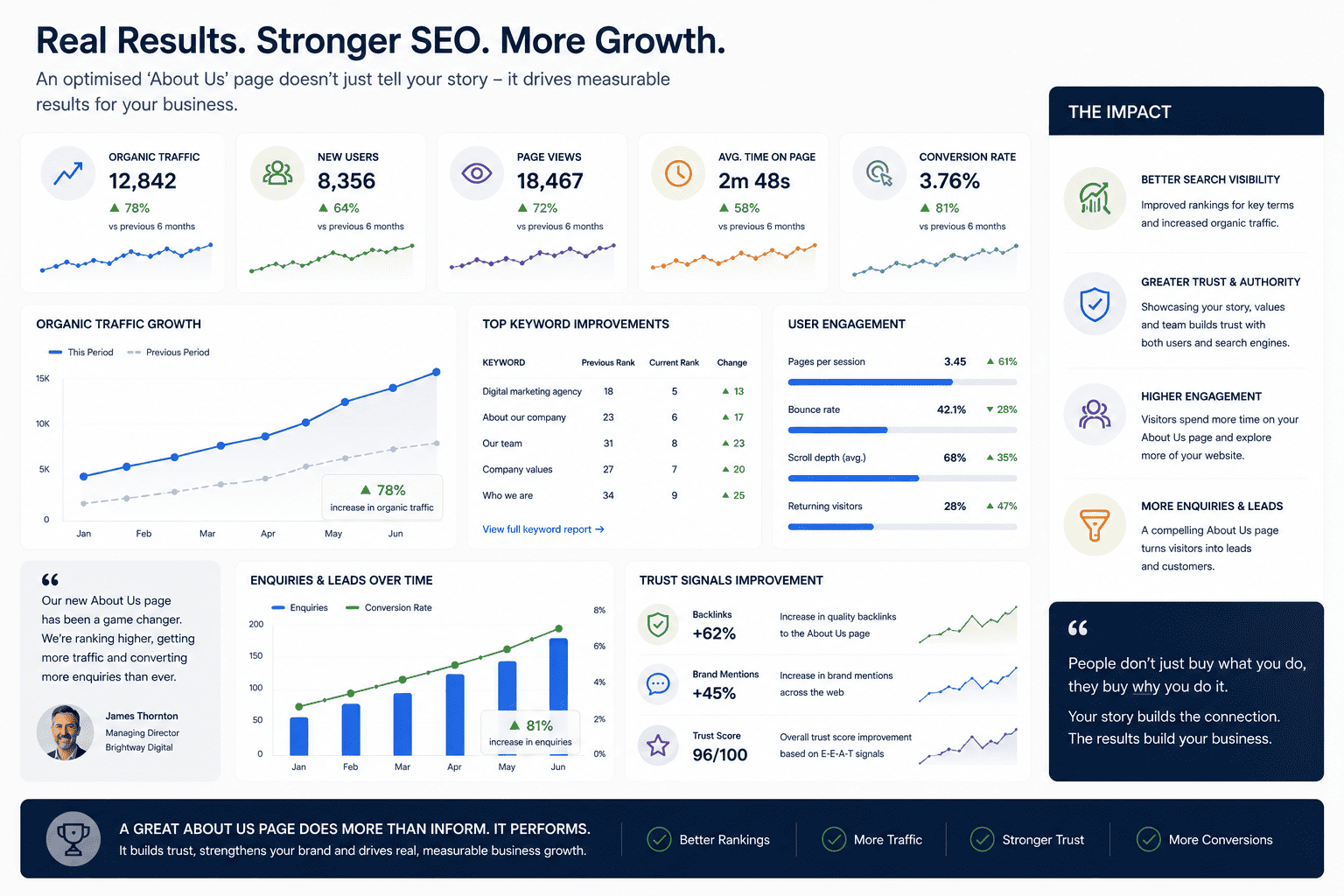
User Engagement: When visitors spend more time on your ‘About Us’ page, it signals to search engines that your content is valuable. This can improve your site’s overall engagement metrics, which are a key factor in SEO.
Keyword Opportunities: By naturally incorporating relevant keywords into your story, you can improve your chances of ranking for those terms. For example, if you’re a sustainable fashion brand, mentioning “eco-friendly clothing” or “ethical fashion” can help you appear in searches for those phrases.
Internal Linking: The ‘About Us’ page is a great place to include internal links to other important pages on your site, like your blog or product pages. This helps search engines understand your site’s structure and can boost the authority of those linked pages.
Multimedia Boost: Including images, videos, or infographics can make your page more engaging. Not only does this keep visitors on the page longer, but it also provides opportunities to optimise those media files with alt text and descriptions, further enhancing your SEO.
Trust and E-A-T: Google’s E-A-T (Expertise, Authoritativeness, Trustworthiness) guidelines are crucial for rankings. A transparent, authentic ‘About Us’ page showcases your expertise and builds trust, signalling to Google that you’re a credible source.
When I revamped my own ‘About Us’ page, I saw a 20% increase in time spent on the site and a noticeable bump in my rankings for niche keywords. It was proof that small tweaks can lead to big wins.
How to Optimise Your ‘About Us’ Page for 2025
As we look ahead to 2025, a few key trends will shape how we approach SEO. Voice search is becoming increasingly popular, so having conversational content on your ‘About Us’ page can help you rank for voice queries. Mobile optimisation is more important than ever, with over half of web traffic coming from phones. And with AI playing a bigger role in content creation, authenticity will be your secret weapon. Here’s how to make your ‘About Us’ page shine:
1. Use Storytelling to Engage Visitors
People love stories. Instead of listing facts about your company, weave them into a narrative. Talk about the problem that inspired you to start your business and how you’re solving it. For example, imagine a small bakery that began because the owner couldn’t find gluten-free treats for her daughter. That’s a story that resonates and makes your brand memorable.
Pro Tip: Start with a hook—like a surprising fact or question—to draw readers in. For instance, “Did you know our founder started with just £100 and a dream?”
2. Include Relevant Keywords Naturally
Don’t stuff your page with keywords, but make sure to mention terms your audience is searching for. Use tools like Google Keyword Planner to find phrases like “sustainable tech 2025” or “best eco-friendly products.”
Story Time: A client of mine, a sustainable fashion brand, added “ethical clothing” to their ‘About Us’ page. Within weeks, they ranked on page one for that term.
3. Add Multimedia Like Images or Videos
A picture of your team, a video tour of your office, or an infographic about your company’s history can make your page more engaging. Optimise these files with descriptive alt text (e.g., “team photo sustainable fashion brand”) and captions.
Action: Use Canva to create simple infographics or Loom for quick videos. Embed them with keywords in the file names.
4. Ensure the Page is Mobile-Friendly
With mobile traffic dominating in 2025, your ‘About Us’ page must look great on phones. Use responsive design and test your page on different devices with Google’s Mobile-Friendly Test.
Why It Works: Mobile-friendly sites rank higher and keep users engaged, reducing bounce rates.
5. Update the Page Regularly
Search engines favour fresh content. Add new team members, share recent achievements, or update your story as your business evolves.
Pro Tip: Set a reminder to refresh your ‘About Us’ page every six months. Even small updates signal to Google that your site is active.
6. Leverage Voice Search with Conversational Content
Voice search is booming, and users ask natural questions like “Who is the founder of [your brand]?” Include conversational phrases and FAQs on your page.
Action: Add a section like “Common Questions About Us” with answers to queries like “What inspired you to start your business?”
7. Build Trust with Transparency
In 2025, authenticity is key. Share your values, mission, and even challenges. This builds E-A-T and resonates with users tired of corporate jargon.
Example: A small tech startup shared their journey from a garage to a thriving business, including setbacks. It humanised their brand and boosted engagement.
8. Use Schema Markup for Rich Snippets
Schema markup helps Google understand your content, increasing chances of rich snippets like star ratings or FAQs in search results.
Action: Add Organization Schema with Google’s Structured Data Markup Helper. Test with the Rich Results Test.
Why It Works: Rich snippets boost CTR by up to 20%.
9. Link to Key Pages
Include internal links to your blog, product pages, or contact form. Use descriptive anchor text like “our latest tech innovations” instead of “click here.”
Why It Works: Internal links spread SEO juice and guide users to high-value pages.
10. Monitor and Refine
Track how your ‘About Us’ page performs with Google Analytics and Google Search Console. If dwell time is low, add more visuals or storytelling.
Pro Tip: Check monthly. If rankings dip, update keywords or add a video.
Common Pitfalls to Avoid
Generic Content: Avoid clichés like “We’re passionate about excellence.” Be specific and authentic.
Keyword Stuffing: Overloading keywords looks spammy. Use them naturally.
No Multimedia: A wall of text is boring. Add visuals to break it up.
Ignoring Mobile: A clunky mobile page kills engagement. Test and tweak.
Set and Forget: An outdated ‘About Us’ page signals neglect. Update it regularly.
Conclusion
Your ‘About Us’ page is more than a formality—it’s a powerful tool for building trust, engaging visitors, and boosting SEO. By using storytelling, keywords, multimedia, and mobile optimisation, you can turn this often-overlooked page into a hidden goldmine. In 2025, authenticity and user experience are king, so don’t let your ‘About Us’ page be an afterthought. Start optimising it today, and watch your website shine. Your audience and search engines will thank you.
SEO for Short Attention Spans: Winning Clicks with Snackable Content
Table of Contents
Let’s be honest: we’re all a bit like goldfish these days, scrolling through websites and social media with the attention span of a toddler on a sugar rush. I’m guilty of it too—give me a long, dense article, and I’m out the door before paragraph two. In 2025, capturing clicks means meeting people where they’re at: short attention spans. That’s where snackable content comes in, and it’s a game-changer for SEO.
When I first started my blog, I thought long-form content was the only way to rank on Google. But when I experimented with bite-sized posts, infographics, and quick videos, my traffic spiked, and users stayed longer. Snackable content isn’t just trendy—it’s a powerful way to win clicks and boost rankings. In this blog, I’ll show you how to create SEO-friendly, short-form content that grabs attention and keeps Google happy. Whether you’re running an e-commerce shop, a tech blog, or a local business, these tips will help your website shine in 2025. Let’s dive in!
What is Snackable Content?
Snackable content is short, engaging, and easy-to-digest material that delivers value fast—like a quick bite of your favourite treat. Think 60-second videos, infographics, listicles, or social media posts that pack a punch in under a minute. In 2025, with users spending an average of 8 seconds deciding whether to stay on a page, snackable content is perfect for grabbing attention and driving engagement.
For SEO, snackable content works because it’s shareable, boosts dwell time, and aligns with Google’s focus on user experience. It’s not about replacing long-form content but complementing it with quick hits that hook users and keep them coming back.
Why Snackable Content Boosts SEO in 2025
Here’s why short-form content is an SEO superstar:
User Engagement: Snackable content keeps users on your site longer, reducing bounce rates and signaling quality to Google.
Social Shares: Bite-sized posts are more likely to be shared on platforms like X or TikTok, driving traffic and backlinks.
Mobile-First: With 60% of searches on mobile in 2025, short content shines on small screens.
Voice Search Fit: Snackable answers match conversational queries like “What’s the best gadget for 2025?”
Rich Snippet Potential: Concise, structured content often lands in featured snippets or “People Also Ask” boxes.
Practical Strategies for Snackable Content SEO
Here’s a step-by-step guide to creating snackable content that wins clicks and boosts rankings in 2025, with actionable tips and real-world examples.
1. Craft Catchy, Keyword-Rich Headlines
Your headline is the first thing users see—it needs to grab them while sneaking in SEO keywords.
Pro Tip: Use numbers or questions, like “5 SEO Hacks for 2025” or “What’s the Best Tech Gift?”
Action: Write headlines under 60 characters with keywords like “snackable content 2025.” Use CoSchedule’s Headline Analyzer to score them.
Why It Works: Catchy headlines boost click-through rates (CTR), a key ranking factor.
2. Create Listicles and Short Blogs
Listicles (like “Top 10 Tips”) are perfect for short attention spans and SEO.
Story Time: My “5 Gadgets You Need in 2025” listicle got shared 200 times on X, driving 500 clicks to my site.
Action: Write 300–500-word posts with clear headers and bullet points. Target keywords like “best tech tips 2025.” Use Yoast SEO to optimise.
Why It Works: Listicles are scannable, shareable, and rank well for featured snippets.
3. Design Eye-Catching Infographics
Infographics pack info into visuals, perfect for quick consumption.
Action: Use Canva to create infographics like “SEO Checklist 2025.” Add alt text with keywords (e.g., “SEO infographic 2025”) and embed on your blog with a share button.
Why It Works: Infographics earn backlinks and social shares, boosting SEO.
4. Produce Short Videos
Videos under 60 seconds are SEO gold, especially on YouTube and TikTok.
Pro Tip: Start with a hook like “Want better SEO in 2025?” and end with a call-to-action linking to your site.
Action: Create videos with InVideo or CapCut. Upload to YouTube with keyword-rich titles like “Quick SEO Tips 2025” and embed on your blog.
Why It Works: Videos increase dwell time and rank in Google’s video results.
5. Optimise for Featured Snippets
Snackable content is ideal for landing in Google’s featured snippets or “People Also Ask” sections.
Action: Answer questions in 40–60 words under headers like “What is snackable content?” Use FAQ Schema with Google’s Structured Data Markup Helper.
Why It Works: Snippets boost visibility and CTR, driving organic traffic.
6. Leverage Social Media Posts
Short social posts on X, Instagram, or LinkedIn can drive traffic and SEO signals.
Story Time: An X post with “3 SEO Tricks for 2025 #SEOTips” got 100 retweets, sending 200 clicks to my blog.
Action: Post tips with hashtags like #SnackableContent2025. Link to your blog and use Smash Balloon to embed posts on your site.
Why It Works: Social engagement amplifies reach and referral traffic.
7. Use Micro-Content for Voice Search
Voice search loves concise answers, making snackable content a perfect fit.
Action: Create Q&A posts with conversational keywords like “What’s the best SEO tool for 2025?” Answer in 50 words or less.
Why It Works: Voice-friendly content ranks for Siri or Alexa queries.
8. Add Interactive Elements
Polls, quizzes, or sliders keep users engaged, boosting dwell time.
Example: I added a “What’s Your SEO Score?” quiz, and users spent 40% longer on my site.
Action: Use Outgrow for quizzes or Typeform for polls. Embed on blogs with keywords like “SEO quiz 2025.”
Why It Works: Interactive content increases engagement, a key SEO metric.
9. Optimise for Mobile
Snackable content thrives on mobile, where most users browse in 2025.
Action: Test with Google’s Mobile-Friendly Test. Use large fonts, clickable buttons, and fast-loading visuals. Choose mobile-first themes like Astra.
Why It Works: Mobile optimisation cuts bounce rates and boosts rankings.
10. Repurpose Content Across Platforms
Turn one piece of content into multiple snackable formats for maximum reach.
Action: Convert a blog into a TikTok video, X thread, and infographic. Link all to your site with keywords like “SEO tips 2025.”
Why It Works: Repurposing amplifies exposure and backlinks.
11. Monitor Performance
Track how snackable content performs to refine your strategy.
Pro Tip: Use Google Search Console for CTR and rankings, and Google Analytics for dwell time and traffic.
Action: Review monthly. If a video underperforms, tweak its title. If a listicle shines, create more.
Why It Works: Data keeps your content effective and SEO-friendly.
12. Balance Snackable and Long-Form Content
Snackable content hooks users, but long-form builds authority. Use both for a winning SEO strategy.
Action: Pair a 400-word listicle with a 2000-word guide linked internally. Promote both on X with #SEO2025.
Why It Works: This combo maximises engagement and authority.
Wrapping Up
In 2025, SEO for short attention spans is about snackable content that grabs users fast. With listicles, videos, infographics, and social posts, you’ll win clicks and boost rankings. Start small—try a quick post or video—and watch your site shine. Let’s make your content irresistible for Google and your audience!
Why User Reviews Are Your SEO Secret Weapon in 2025
Table of Contents
Picture this: you’re shopping online for a new gadget, and you find two similar products. One has a dozen glowing reviews with personal stories; the other has none. Which do you trust? If you’re like me, you’re clicking the one with reviews every time. That’s the power of user reviews, and in 2025, they’re not just swaying customers—they’re a secret weapon for SEO.
When I started my e-commerce site, I didn’t think much of reviews. I was too busy tweaking keywords and chasing backlinks. But when I encouraged customers to share feedback, my site’s rankings climbed, and traffic soared. Reviews were like rocket fuel for my SEO. In this blog, I’ll explain why user reviews are a must-have for your website in 2025 and share practical tips to harness them for better rankings. Whether you’re selling tech, fashion, or artisanal jam, these insights will help your site shine. Let’s dive in!
What Are User Reviews and Why Do They Matter?
User reviews are feedback from customers about your products, services, or brand, often posted on your website, Google, or third-party platforms like Trustpilot. They can be star ratings, written comments, or even photos. In 2025, reviews are more than just social proof—they’re a core part of SEO strategy.
Why? Google loves fresh, authentic content, and reviews provide it in spades. They signal trust, engagement, and relevance, all of which boost your rankings. Plus, reviews influence buyers—90% of consumers read them before purchasing, making them a double win for SEO and sales.
Why User Reviews Boost SEO in 2025
Reviews are SEO superstars for several reasons:
Fresh Content: Reviews add new, user-generated content (UGC), keeping your site dynamic and appealing to Google’s crawlers.
Keyword Opportunities: Customers naturally use keywords like “best wireless charger 2025” in reviews, enhancing your relevance.
Trust Signals: Reviews showcase expertise, authoritativeness, and trustworthiness (E-A-T), a key ranking factor.
Engagement Metrics: Review pages often have high dwell time and low bounce rates, as users read multiple comments.
Rich Snippets: Star ratings in reviews can trigger rich snippets, making your site stand out in search results.
When I added a review system to my product pages, my “eco-friendly tech” rankings jumped, and star ratings appeared in Google. It was proof that reviews are SEO gold.
Practical Ways to Leverage User Reviews for SEO
Here’s a step-by-step guide to making user reviews your SEO secret weapon in 2025, with actionable tips and real-world examples.
1. Make It Easy to Leave Reviews
If reviews are hard to submit, customers won’t bother. Streamline the process to get more feedback.
Pro Tip: Use a simple form with a star rating and comment box. Avoid mandatory logins or long surveys.
Action: Install a review plugin like Yotpo or Reviews.io on your site. Place a “Leave a Review” button on product pages and order confirmation emails.
Why It Works: More reviews mean more content and engagement, boosting SEO.
2. Encourage Reviews with Post-Purchase Emails
Customers often need a nudge to share feedback. A friendly email can work wonders.
Story Time: I sent a “How’s Your New Gadget?” email a week after purchases, and 20% of customers left reviews. My product pages started ranking higher.
Action: Use Klaviyo or Mailchimp to send automated emails 5–7 days post-purchase. Include a direct link to the review form and a thank-you note.
Why It Works: Consistent reviews keep your site fresh and keyword-rich.
3. Add Review Schema Markup
Schema markup helps Google understand your reviews, increasing chances of star ratings in search results.
Pro Tip: Use Review Schema to highlight ratings and AggregateRating Schema for overall scores.
Action: Add schema with Google’s Structured Data Markup Helper, then test with the Rich Results Test. Apply to product pages and review sections.
Why It Works: Rich snippets boost click-through rates (CTR) by up to 20%.
4. Showcase Reviews Prominently
Display reviews where users (and Google) can’t miss them—on product pages, homepages, or dedicated review sections.
Action: Embed reviews on product pages with Yotpo or Trustpilot. Create a “Customer Stories” page showcasing top reviews with photos.
Why It Works: Visible reviews increase dwell time and signal trust, improving SEO.
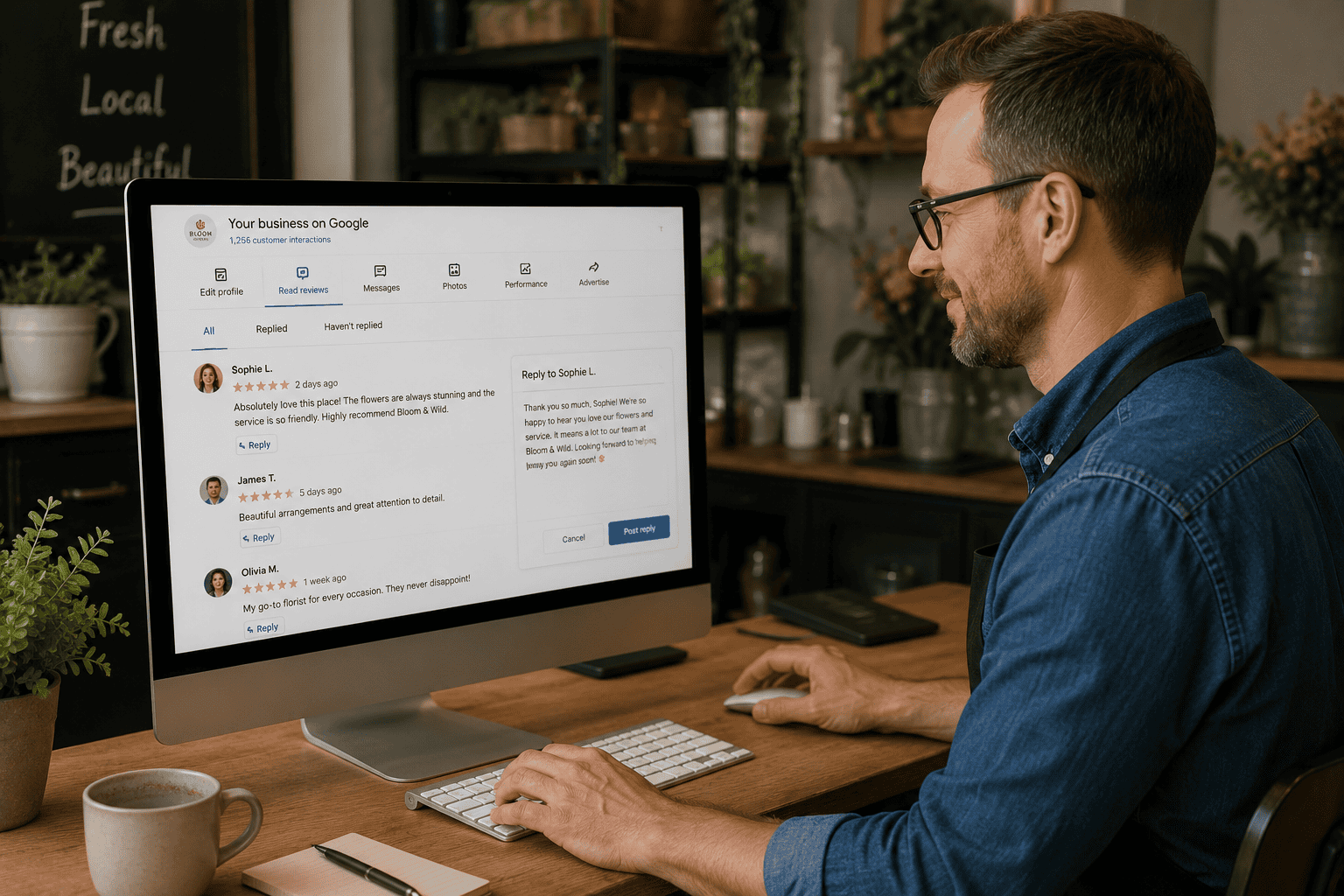
5. Respond to All Reviews
Replying to reviews—good or bad—shows you care and keeps the conversation alive.
Example: I replied to a negative review with “Sorry about that, let’s make it right!” and turned the customer into a repeat buyer. Google noticed the engagement.
Action: Reply within 48 hours. Use a friendly tone, like “Cheers, Sarah, glad you loved it!” or “We’re sorry, John—here’s how we’ll fix it.”
Why It Works: Responses add fresh content and boost E-A-T.
6. Use Reviews for Keyword Opportunities
Customers often mention keywords in reviews, like “fast delivery” or “best eco headphones 2025.”
Pro Tip: Analyse reviews for recurring phrases and add them to your content or meta descriptions.
Action: Use Google Analytics to track review page keywords. Update product descriptions with phrases like “top-rated sustainable tech 2025.”
Why It Works: Keyword-rich reviews align with user intent, lifting rankings.
7. Encourage Detailed Reviews
Short reviews are great, but detailed ones are SEO dynamite, packed with keywords and context.
Action: Prompt users with questions like “How did the product help you?” or “What’s your favourite feature?” in review forms.
Share reviews on social media to drive traffic and engagement, amplifying SEO signals.
Story Time: I posted a 5-star review on X with #TechomaticReviews, and it got 100 shares, sending 200 visitors to my site.
Action: Share top reviews on X, Instagram, or LinkedIn with a link to your product page. Use Smash Balloon to embed posts on your site.
Why It Works: Social engagement boosts referral traffic and brand mentions.
9. Optimise Review Pages for Local SEO
If you have a physical store, reviews can skyrocket local SEO for “near me” searches.
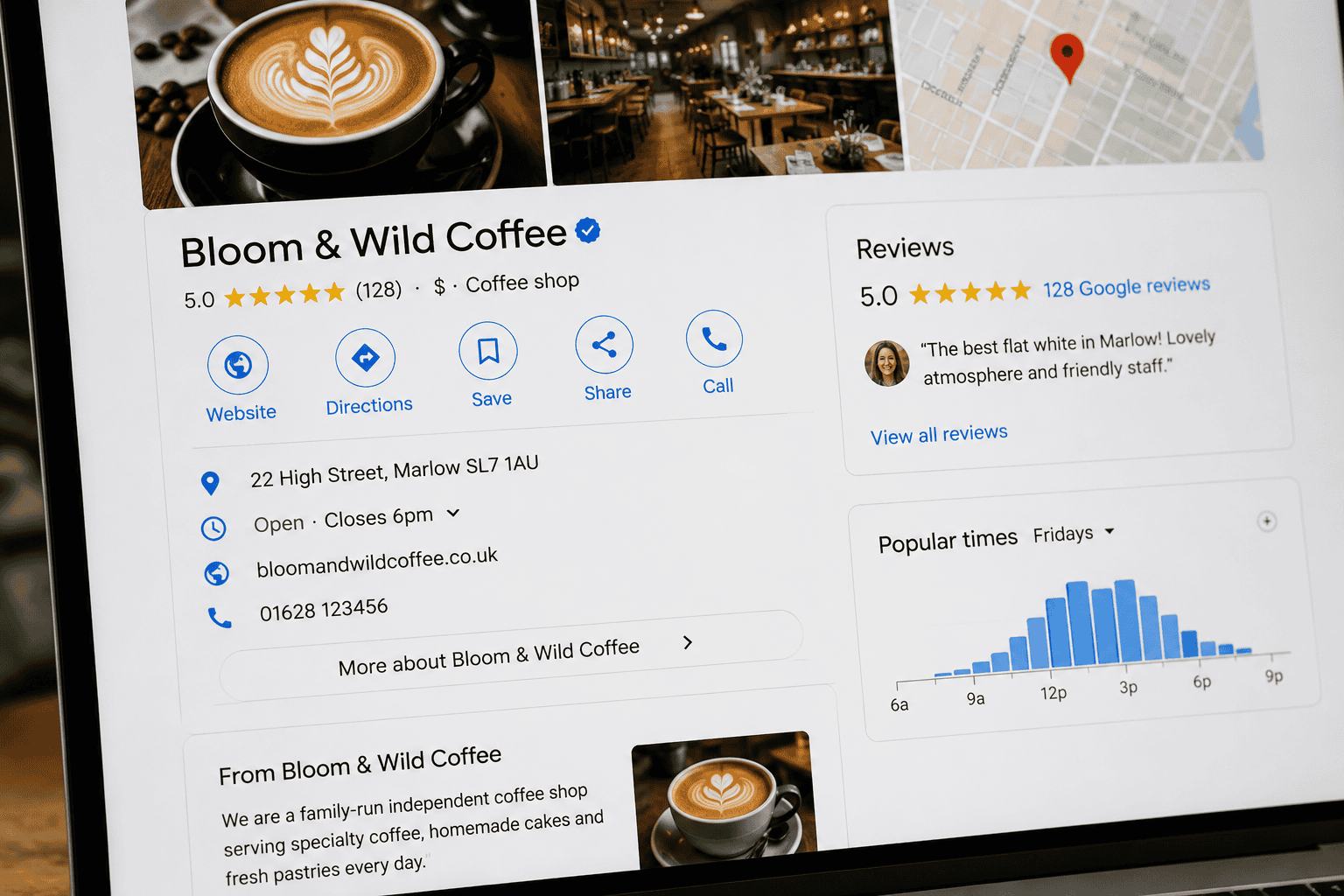
Action: Encourage reviews on Google My Business with local keywords like “best tech shop Manchester 2025.” Reply with location-specific thanks.
Why It Works: Local reviews enhance rankings for geo-targeted queries.
10. Turn Negative Reviews into SEO Wins
Bad reviews happen, but they’re not the end. Handle them well to boost trust and engagement.
Example: A 2-star review complained about delivery. I replied publicly, fixed it, and the customer updated to 4 stars. Google saw the interaction as positive.
Action: Address issues politely, offer solutions, and follow up privately. Highlight improvements in replies.
Why It Works: Handled well, negative reviews add authenticity and engagement.
11. Integrate Reviews with Voice Search
Voice search is massive in 2025, and reviews can help you rank for conversational queries.
Action: Encourage reviews with phrases like “best eco gadget for travel 2025.” Add FAQ Schema to answer voice queries like “What’s the top-rated tech shop?”
Why It Works: Voice-friendly reviews match natural language searches.
12. Track Review Performance
Monitor how reviews impact SEO to refine your strategy.
Pro Tip: Use Google Search Console for CTR and ranking data, and Google Analytics for review page traffic.
Action: Check monthly. If a product page’s CTR dips, highlight new reviews. If traffic grows, double down on email prompts.
Why It Works: Data ensures your review strategy stays effective.
How to Make Your Website Shine with Micro-SEO Tweaks in 2025
Table of Contents
Picture this: you’ve built a cracking website for your business, but it’s not getting the love it deserves on Google. You’re tempted to overhaul everything, but what if I told you that tiny tweaks—micro-SEO tweaks—could make your site shine without breaking the bank or your brain? In 2025, small changes can lead to big wins in search rankings, and I’m here to show you how.
When I launched my first site, I was obsessed with big SEO strategies—chasing backlinks and churning out long blog posts. But it was the little things, like tweaking meta tags or speeding up a page, that sent my traffic soaring. These micro-SEO tweaks are like polishing a gem: they make your site sparkle for both users and Google. In this blog, I’ll walk you through simple, actionable steps to boost your website’s performance in 2025, with a few stories from my own journey to keep it real. Whether you’re a small business owner, e-commerce seller, or blogger, these tips will help your site stand out. Let’s get started!
What Are Micro-SEO Tweaks?
Micro-SEO tweaks are small, targeted adjustments to your website that improve its search engine optimisation (SEO) without requiring a major overhaul. Think of them as quick fixes—like tightening a loose screw or adding a splash of paint—that enhance user experience, boost engagement, and signal quality to Google. In 2025, with Google’s algorithms focusing on user satisfaction, mobile performance, and content relevance, these tweaks are more powerful than ever.
Why bother with small changes? They’re low-effort, high-impact, and perfect for busy folks who don’t have time for a full SEO audit. Plus, they add up, creating a ripple effect that lifts your rankings over time.
Why Micro-SEO Tweaks Matter in 2025
Here’s why these tweaks are a game-changer:
User-Centric Algorithms: Google’s 2025 updates prioritise user experience metrics like page speed, mobile-friendliness, and content clarity—areas micro-tweaks excel at.
Quick Wins: Small changes deliver faster results than complex strategies, ideal for small businesses or startups.
Competitive Edge: With e-commerce and content competition fiercer than ever, micro-tweaks help you stand out in crowded niches.
Cost-Effective: Most tweaks are free or low-cost, saving you from pricey SEO tools or agencies.
Cumulative Impact: Each tweak builds on the last, creating a stronger SEO foundation.
Practical Micro-SEO Tweaks to Make Your Website Shine
Here’s a step-by-step guide to 12 micro-SEO tweaks that will boost your website’s rankings in 2025, with practical tips and real-world examples.
1. Optimise Meta Titles and Descriptions
Your meta title and description are like a shop window—they entice users to click. Keep them punchy and keyword-rich.
Pro Tip: Use a primary keyword like “eco-friendly tech 2025” in the title and a hook in the description, like “Discover sustainable gadgets today!”
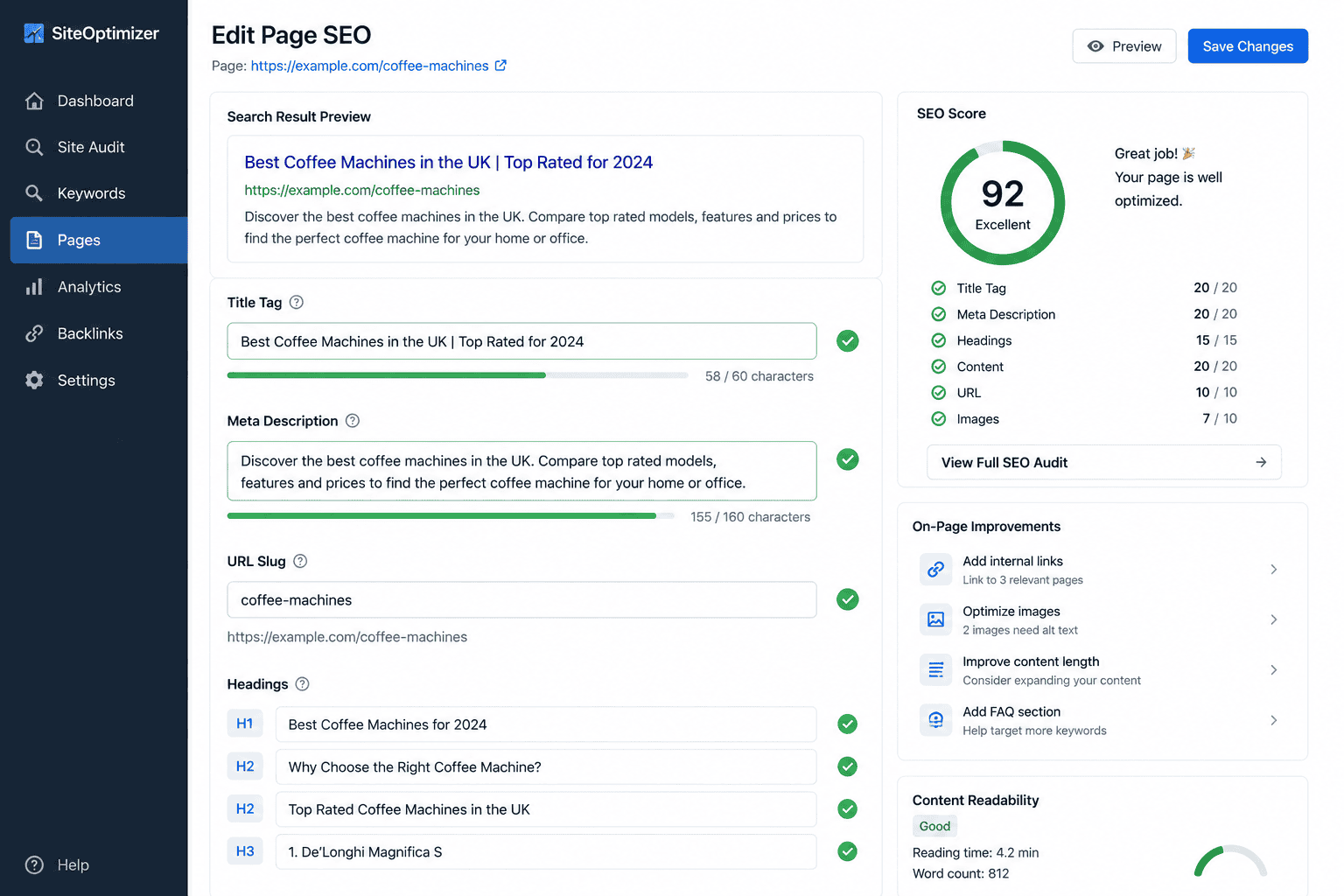
Action: Keep titles under 60 characters and descriptions under 160. Use Yoast SEO for WordPress to preview them. Update your top 5 pages.
Why It Works: Optimised meta tags boost click-through rates (CTR), a key ranking signal.
2. Improve Image Alt Text
Alt text describes images for search engines and accessibility. It’s a quick way to add keywords and improve user experience.
Story Time: My product images had generic alt text like “image1.jpg.” Adding “solar-powered phone charger 2025” doubled image search traffic.
Action: Add descriptive, keyword-rich alt text (e.g., “handmade leather wallet 2025”) to all images. Use Google’s Lighthouse to check accessibility.
Why It Works: Alt text boosts image SEO and accessibility, signaling quality to Google.
3. Fix Broken Links
Broken links frustrate users and hurt SEO. A quick scan can clean them up.
Action: Use Screaming Frog or Broken Link Checker to find 404 errors. Redirect or remove broken links. Check monthly.
Why It Works: Clean links improve user experience and crawl efficiency.
Common Pitfalls to Avoid
Overloading Keywords: Stuffing meta tags or alt text looks spammy—keep it natural.
Ignoring Users: Focus on tweaks that improve experience, not just rankings.
Skipping Mobile: A desktop-only site will tank in 2025.
Neglecting Data: Don’t guess—use analytics to guide tweaks.
One-and-Done: SEO needs regular care to stay effective.
How AI Is Shaping Website Design in 2025: Revolutionising the Digital Landscape
Table of Contents
In the fast-paced world of digital marketing and website development, few trends have proven as transformative as the rise of artificial intelligence (AI). Over the past few years, AI has gone from a buzzword to a practical, powerful tool for businesses seeking to sharpen their competitive edge online. By 2025, website design has grown increasingly sophisticated, with AI playing a central role in everything from creating dynamic user interfaces to optimising site performance for search engines.
In this in-depth exploration, we’ll delve into how AI is reshaping website design and the wider digital landscape in 2025. We’ll also take a closer look at the services offered by Techomatic—a leading provider of website design and SEO solutions in the UK—and discuss how businesses can harness AI-driven approaches to create high-impact, conversion-focused websites.
The Evolution of AI in Web Design
To understand AI’s current impact on website design, it’s helpful to take a brief look back at where it all began. At first, AI’s influence on design was relatively limited, mainly confined to chatbots or basic recommendation engines. However, with advances in machine learning algorithms and the democratisation of data analytics, AI has emerged as a genuine game-changer.
From Simple Automation to Intelligent Design
Initially, the idea of AI-driven design simply meant automating a few routine tasks—things like generating design mock-ups or cropping images to fit various device screen sizes. Today, AI can make much more sophisticated decisions. For instance, an AI tool can learn from user interactions—where visitors click, how long they hover over a section, which content captures their attention—and then iterate the layout to maximise engagement.
At Techomatic, we’ve seen a steady shift in how our clients view AI. It’s no longer considered an optional extra or a novelty. It’s an essential part of the creative and technical process, used to quickly prototype, refine, and optimise websites based on real-world data.
Real-Time Adaptation
One of the most exciting areas of growth is real-time adaptation. Instead of waiting weeks for designers and developers to analyse user engagement data, AI can monitor visitor interactions in real time and make immediate adjustments. Whether it’s rearranging the position of calls-to-action (CTAs) or changing the colour scheme to suit user preferences, real-time adaptation is bringing a dynamic, highly personalised feel to modern websites.
Personalisation: The AI-Driven Key to User Experience
Web design in 2025 is all about making the user feel seen, heard, and valued. That’s where AI-powered personalisation comes in. By harnessing data gleaned from user behaviour, businesses can now create sites that adapt to each user’s needs and preferences, providing custom product recommendations, relevant articles, or even adjusting the site’s layout based on browsing patterns.
Tailoring Content and Layout
While traditional website personalisation typically used generalised data—things like demographics or broad purchase history—AI can delve deeper. Modern machine learning models can cross-reference a wide array of data points, from micro-interactions (like cursor movements) to broader historical usage data (such as what time of day a user usually visits). With these insights, the website can adjust headlines, imagery, and suggested content on the fly.
For example, a returning user who consistently looks at a particular category of services might see that category featured prominently on their next visit. Meanwhile, a new visitor might be guided through a more generalised “discovery” pathway with an engaging hero video or a simple, informative landing page. The result is a meaningful, streamlined experience that encourages deeper engagement and boosts conversion rates.
Boosting User Satisfaction (and SEO)
User satisfaction doesn’t just keep visitors on your site longer—it also has a direct impact on SEO. Search engines in 2025 are more capable of interpreting user experience signals, such as bounce rates, time spent on page, and click-through rates. A personalised, user-centric site not only fosters loyalty but also sends positive signals to Google and other search engines, improving your website’s ranking potential.
At Techomatic, our custom AI-driven design solutions go hand in hand with robust SEO strategies. By combining personalisation insights with on-page optimisation, we help businesses deliver a site experience that both users and search engines love.
AI-Assisted Design Tools and Workflow
Another way AI is making waves in 2025 is by supercharging the workflow of design and development teams. Tools that once only offered basic automation—like colour palette suggestions or template-driven layouts—have become far more advanced, capable of generating entire design concepts that reflect a brand’s ethos and user preferences.
Intelligent Wireframing and Mock-Ups
Before a single line of code is written, web designers typically create wireframes and mock-ups to plan the site’s layout. AI can now analyse a brand’s style guidelines, competitor websites, user behaviour data, and trending design aesthetics to produce suggestions for page structures, font pairings, and visual hierarchies. This not only speeds up the early stages of a project but also ensures that the final product is on point from a branding perspective.
In essence, AI acts like a digital design assistant, freeing up humans to focus on more creative or strategic tasks. For instance, if you have a brand colour or typography preference, AI can automatically generate coherent secondary colours, font sizes, and spacing suggestions. Many of these platforms also integrate seamlessly with project management tools, meaning updates happen in real time and can be instantly reflected in the design prototypes.
Faster Iterations and Data-Driven Decisions
Once a mock-up is created, the next step is testing. Traditionally, user testing might involve a lengthy process of showing the design to a small sample audience, gathering feedback, and then iterating. AI-driven design tools can gather usage data or run simulations of how users might interact with your site. They can then provide actionable insights—like “The CTA button might be too low on the page” or “Users are missing key navigation links.”
Techomatic leverages these data-driven insights to refine design elements and ensure that each iteration brings us closer to a site that not only looks fantastic but also performs exceptionally well. With the help of AI, we can gather complex insights quickly, allowing for rapid design sprints and reduced overall development time.
Chatbots: More Than Just Customer Support
If you’ve ever visited a website only to be greeted by a friendly pop-up chat asking if you need help, you’ve witnessed one of the more visible ways AI is reshaping the web. Chatbots, once clunky and limited to scripted responses, are now fully AI-driven, capable of understanding context, detecting emotional cues, and even predicting a user’s next question based on behavioural data.
Enhanced Engagement and Lead Generation
In 2025, chatbots are no longer mere customer support tools. Many businesses deploy them as lead generation engines, personal shopping assistants, or interactive guides. Visitors to an ecommerce site might be asked a few quick questions and then presented with curated product suggestions. Service-based companies can use chatbots to gather preliminary information from prospective clients, offering quick quotes or booking appointments seamlessly.
From an SEO standpoint, well-deployed chatbots can reduce bounce rates and increase the amount of time users spend on a site—two metrics that can indirectly boost your rankings. At Techomatic, we build and integrate advanced AI chatbots that align with your brand tone, ensuring users feel they’re interacting with a knowledgeable, friendly representative of your business.
AI in SEO: Going Beyond Keyword Searches
It’s impossible to discuss the future of web design without touching on SEO. In 2025, search engines have become astonishingly good at interpreting user intent, evaluating site quality, and filtering out spammy or irrelevant pages. AI sits at the heart of this transformation.
Intelligent Keyword Research
Keyword research is more nuanced than ever. Simple keyword lists are being replaced by semantic analysis, topic clusters, and advanced user-intent matching. AI-powered SEO tools can now analyse massive datasets—such as competitor websites, trending search terms, and user engagement metrics—to pinpoint exactly which topics and keywords hold the greatest potential for your brand.
For Techomatic’s SEO services, this means we can craft hyper-targeted strategies that align perfectly with each client’s unique market position and audience needs. Instead of focusing solely on broad, competitive keywords, we also explore high-intent, longer-tail phrases that often convert better and face less competition.
Predictive Content Optimisation
Once the right keywords or topics have been identified, the next step is crafting content. AI can help here, too, by providing insights into the types of articles, blog posts, or landing pages that are most likely to resonate with a particular audience segment. It can even predict which writing style—formal, conversational, data-driven—best aligns with your target user’s preferences.
Predictive content optimisation ensures that every piece you publish is fine-tuned for engagement, dwell time, and conversions. This is particularly significant in 2025, as search engines factor user experience signals more heavily into their rankings. By delivering exactly what users are looking for, you’re far more likely to earn high-quality backlinks, social shares, and positive engagement metrics that further enhance your online visibility.
The Convergence of Design and SEO
A key theme that has emerged is the ever-closer link between website design and SEO. Historically, these were somewhat separate disciplines. Designers focused on aesthetics and usability, while SEO specialists worried about keywords, meta tags, and link building. But in 2025, design and SEO must work in tandem, and AI is the connective tissue that ties them together.
Seamless User Journeys
For instance, a site might automatically reorder its content blocks based on how users typically progress from information-gathering to purchase. The AI can track user journeys, notice patterns, and rearrange CTAs or content sections to reduce friction. When used properly, such AI-driven enhancements simultaneously boost user satisfaction and align with SEO goals.
Accessibility and Performance
Modern AI can help identify accessibility issues (e.g., insufficient colour contrast, missing alt text) and performance bottlenecks (such as slow-loading images or unoptimised code). Both of these factors weigh heavily on SEO in 2025. A site that’s accessible to users with disabilities and loads quickly across all devices will inevitably score better in search rankings.
Techomatic integrates these AI-driven audits into our core service offerings, ensuring our clients’ sites meet the highest standards of performance, accessibility, and SEO compliance.
Case Studies: Real-World Applications of AI in 2025
To illustrate how AI-driven design is making a difference, it’s worth considering a few hypothetical examples drawn from real-world scenarios:
1.Ecommerce Retailer
•A medium-sized online retailer specialising in home decor integrates an AI-driven chatbot that acts as a personal stylist. Users receive real-time product suggestions based on their design preferences and budget. The chatbot records these interactions, feeding them back into the company’s personalisation engine to refine future recommendations. Within six months, the retailer sees a 30% increase in average order value and a 20% decrease in cart abandonment.
2.Professional Services Firm
•A law firm decides to update its website to better capture leads. Instead of a static contact form, it implements an AI-assisted booking system that’s tailored to the user’s location, type of legal issue, and urgency. The design dynamically adapts after a brief questionnaire, directing visitors to an appointment scheduling page or an information resource. Organic traffic surges due to improved engagement metrics, propelling the firm to page one of local search results.
3.SaaS Startup
•A budding software-as-a-service startup uses AI-driven split testing to optimise landing pages. AI analyses click-through rates, user sessions, and bounce rates in real time, automatically adjusting headline text, images, and CTA placements. The startup experiences a 45% boost in sign-up conversions over a three-month period.
In each of these cases, the interplay between AI-driven design and smart SEO strategies is crucial. This synergy not only improves user experience but also drives tangible business results—precisely what Techomatic aims to deliver for all our clients.
Embracing Ethical and Responsible AI
With AI becoming so deeply embedded in web design and digital marketing, it’s essential to address ethical considerations. User data collection is a powerful tool, but it must be handled with care, respecting privacy regulations such as the General Data Protection Regulation (GDPR). In 2025, these regulations have expanded even further, necessitating stronger data encryption, transparent user consent, and responsible usage of any information gathered.
Techomatic prioritises compliance and ethical AI practices, ensuring that our clients deploy AI in a way that’s both respectful and beneficial to end users. This not only helps you stay on the right side of the law but also fosters trust and credibility with your audience.
How Techomatic Can Help
Techomatic stands at the intersection of innovative design and cutting-edge SEO. Our holistic approach ensures that your website is more than just aesthetically pleasing—it’s a powerful, optimised tool for growth. Here’s what you can expect when you partner with us:
1.AI-Enhanced Design Services: We use AI to accelerate the design process, from wireframing and prototyping to real-time user behaviour analysis, ensuring that every aesthetic choice aligns with your brand identity and user preferences.
2.SEO Strategy Tailored for 2025: Our SEO experts leverage AI-driven insights to identify the most valuable keywords, craft high-converting content, and keep you ahead of algorithm updates. By uniting on-page and off-page tactics, we aim to deliver long-lasting ranking improvements.
3.Next-Gen Personalisation & Chatbots: Whether you need an intelligent chatbot for customer engagement or advanced personalisation features to drive conversions, we provide end-to-end implementation, training, and support.
4.Compliance and Ethical Best Practices: We help you navigate the complex regulatory landscape of AI, ensuring data collection and usage align with current UK and EU privacy standards.
5.Continuous Monitoring & Optimisation: AI thrives on data, and we make sure your site continues to learn and improve over time. Our ongoing analytics help you adapt quickly to shifting market trends or user preferences, keeping your site ahead of the competition.
Practical Steps to Get Started
If you’re considering incorporating AI-driven website design into your business strategy, here are a few practical steps:
1.Audit Your Current Site: Identify areas where AI could make the biggest impact. This might involve gathering data on user paths, top entry points, or places with high bounce rates.
2.Define Your Goals: Are you looking to improve lead generation, boost sales, or increase brand awareness? Clarifying your objectives will help you determine which AI solutions are the most relevant.
3.Consult the Experts: An experienced partner like Techomatic can guide you through the maze of tools, data, and best practices, helping you build a strategy that’s both ambitious and achievable.
4.Implement and Iterate: AI is most powerful when it can continuously learn from real-world data. Plan for a series of iterations rather than a single, static redesign.
5.Monitor ROI: Keep track of key performance indicators, such as conversion rates, average order value, and lead quality. AI-driven solutions often yield immediate insights you can use to refine your approach.
Final Thoughts
The integration of AI into website design isn’t just a passing trend—it’s a permanent shift in how we think about online experiences. In 2025, businesses that adapt to these AI-driven realities are thriving, while those that cling to outdated methods risk getting left behind. From personalisation engines that cater to each visitor’s tastes, to chatbots that act as round-the-clock brand ambassadors, AI is changing the rules of engagement, accessibility, and optimisation.
Yet, the human touch remains vital. Successful websites still require a creative spark—an empathetic understanding of user needs—that AI alone can’t replicate. At Techomatic, we blend the best of both worlds: innovative, data-fuelled technology paired with real human expertise and insight. We believe this synergy is the recipe for truly remarkable digital experiences that drive both user satisfaction and business growth.
As we stand on the cusp of even more exciting developments—think augmented reality interfaces, enhanced natural language understanding, and real-time data analytics—the opportunities for innovation are endless. By embracing these AI-driven tools and methodologies, businesses can create websites that not only look stunning but also function as high-performing, intelligent platforms for growth.
If you’re ready to take your online presence to the next level, consider exploring the AI-powered design and SEO solutions offered by Techomatic. Together, we can chart a path forward that embraces the future of digital marketing and web development—secure, responsive, and always a step ahead of the competition.
Mobile-First (Still) Matters: The Future of Responsive Design in 2025
The digital landscape continues to evolve at an astonishing pace, but one thing remains constant: the mobile device has become our primary window to the online world. By 2025, consumers are more reliant than ever on smartphones and tablets for everything from shopping to research and communication. However, the conversation around mobile design isn’t just about “making a site fit on a small screen.” It’s about crafting an experience specifically tailored to the needs and behaviours of mobile users—and doing so from the ground up.
In this blog, we’ll explore why mobile-first is still a critical approach in 2025, how user expectations have changed, and what best practices can help you stay ahead in an ever-competitive environment. We’ll also touch on how leading agencies like Techomatic use mobile-first design principles to deliver robust, future-proof websites that meet both user and search engine demands.
1. The Rise (and Ongoing Reign) of Mobile
1.1 Mobile Usage: A Quick Snapshot
We’ve all heard the statistics: mobile traffic officially overtook desktop usage several years ago. Now, in 2025, more than three-quarters of global internet traffic comes from mobile devices. This trend shows no sign of slowing, driven by factors like:
•Growing smartphone penetration in both developed and emerging markets.
•Improved network speeds, including widely accessible 5G (and the oncoming 6G horizon).
•Wearable technology and internet-enabled devices that blur the lines between “phone” and “computer.”
What does this mean for web design and user experience (UX)? Quite simply, if your site isn’t optimised for mobile users, you risk alienating the majority of your potential audience.
1.2 The Mobile-First Approach vs. “Mobile-Friendly”
It’s easy to assume “mobile-friendly” equals “mobile-first,” but these are two distinct philosophies:
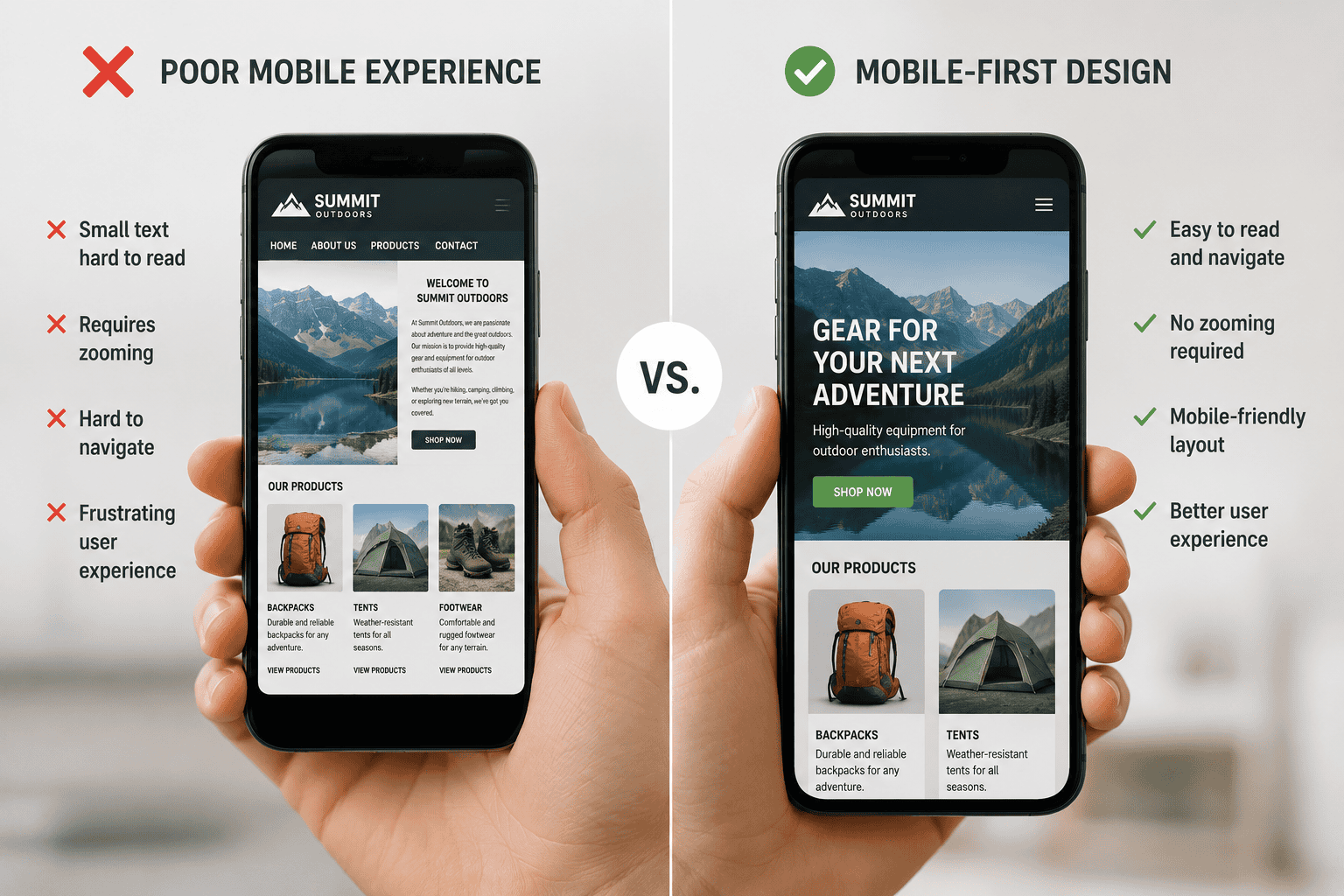
•Mobile-Friendly: Ensures that a desktop-based website is responsive and looks good on smaller screens.
•Mobile-First: Starts the design and development process with mobile devices as the primary target, then scales up to tablets and desktops.
By prioritising mobile during the initial design phase, you’re not just shrinking a site to fit a smaller screen—you’re creating experiences that feel native to the way users browse, tap, and scroll on mobile devices. This approach inherently leads to cleaner, faster, and more intuitive websites.
2. Why Mobile-First Still Matters in 2025
2.1 User Expectations Have Skyrocketed
Today’s mobile users demand instant gratification—pages that load within seconds and navigation that’s simple and intuitive. Slow, clunky mobile experiences lead to higher bounce rates and abandoned carts. A mobile-first design ensures your site is primed for swift loading and a seamless user journey, whether someone is on the bus, in a café, or multi-tasking at home.
Moreover, 2025’s consumers are accustomed to high-quality native apps. They expect a similarly frictionless experience when they visit your website. This puts enormous pressure on designers and developers to replicate app-like fluidity and responsiveness in a browser-based environment.
2.2 Search Engines Reward Mobile-Focused Websites
Google’s shift to mobile-first indexing, which began rolling out in earnest several years ago, continues to evolve. In 2025, search engine algorithms are more sophisticated in measuring user experience signals such as:
•Core Web Vitals (Largest Contentful Paint, First Input Delay, and Cumulative Layout Shift)
•Page loading speed on 4G, 5G, and potentially emerging 6G connections
Sites that excel in these areas typically see improved rankings. By adopting a mobile-first approach, you naturally optimise for these crucial metrics. Additionally, voice search—often used on mobile—continues to rise in popularity, meaning mobile-first sites that are well-structured for conversational queries also have a distinct SEO edge.
2.3 Enhanced Accessibility and Inclusivity
An often-overlooked advantage of mobile-first design is its role in improving accessibility. A clutter-free layout with clear tap targets, balanced contrast, and straightforward navigation is friendly not just for the average user, but also for those with visual or motor impairments. Designing with the smallest screens in mind helps enforce a minimalist style—only the essentials remain. This approach typically benefits every visitor, ensuring your site is usable by the widest range of audiences possible.
3. Key Trends Driving Mobile-First Design in 2025
3.1 Dark Mode and Thematic Colour Shifts
While the option to switch to dark mode has been around for a few years, in 2025, it’s virtually the norm. Users can toggle between light and dark themes depending on personal preference or ambient conditions. Designing a site to accommodate theme shifts smoothly is now a must. Careful attention should be given to contrast ratios, typography, and brand consistency across both modes.
3.2 AI-Powered Personalisation
AI-driven personalisation isn’t just about product recommendations anymore. Modern algorithms can adapt layout elements based on user behaviour, time of day, or even device battery levels. For example, if a user frequently accesses your site in bright outdoor conditions, the interface might automatically switch to a higher contrast for better readability. By prioritising AI personalisation in your mobile-first framework, you create a truly tailored experience that resonates with each individual user.
3.3 Augmented Reality (AR) Integration
With the advent of more powerful mobile processors, AR experiences have become common on e-commerce and service websites. Imagine trying on a piece of furniture in your living room with your phone’s camera or previewing a hairstyle before booking an appointment. These AR features require a user interface designed specifically for smaller, handheld screens. A mobile-first approach ensures your AR elements are intuitive and robust.
3.4 Gesture-Based Navigation
Home buttons have been disappearing for years, but by 2025, gesture-based controls are even more ubiquitous. Swiping, pinching, and tapping gestures now form an essential part of modern UX. Mobile-first designs capitalise on these intuitive actions, allowing users to navigate your site with minimal friction. For instance, a quick swipe can reveal a hidden menu or a pinch-out gesture can bring up additional content.
4. Best Practices for Mobile-First Design
4.1 Prioritise Speed Above All Else
Your site’s performance is tied directly to user satisfaction and SEO. Some ways to ensure speed:
•Optimise images and videos: Use next-gen formats (e.g., WebP), compress files, and serve media at the correct resolution for each device.
•Leverage lazy loading: Load content only as it’s needed, reducing initial load times.
•Minimise scripts and CSS: Inline critical CSS and defer non-critical scripts.
A snappy mobile-first site not only retains users but also signals to search engines that you prioritise a positive experience.
4.2 Keep Navigation Simple
On a smaller screen, even the slightest complexity can become daunting. Some navigation tips:
•Use a clear, concise menu: Prioritise the most important sections.
•Sticky navigation: Keep key navigation elements visible as the user scrolls.
•Easy returns to homepage: A visible home icon or company logo leads back to the main page.
In 2025, minimalism isn’t just a design trend; it’s a usability necessity.
4.3 Employ Responsive and Adaptive Techniques
While mobile-first means starting with the smallest screen in mind, your site must scale gracefully up to tablets, desktops, and even large smart TVs:
•Fluid Grids: Use percentage-based widths and min/max values to ensure elements resize appropriately.
•Adaptive Images: Serve different image sizes based on device width and resolution.
•Breakpoints: Define breakpoints for common screen sizes (mobile, tablet, laptop, desktop), ensuring a smooth transition between formats.
4.4 Make CTAs Prominent and Tappable
Calls-to-action (CTAs) are the lifeblood of most websites. On mobile, they must be instantly visible and easy to tap:
•Use high-contrast colours that stand out from the background.
•Button size: Aim for a minimum touch target of around 44×44 pixels to accommodate different finger sizes.
•Minimal text: Keep the CTA message crisp—nobody wants to read a paragraph on a button.
5. Mobile SEO Optimisation Tips
5.1 Embrace Schema Markup and Structured Data
With smaller screens and heightened competition, rich search results are more valuable than ever. Schema markup helps search engines understand your content’s context, making it eligible for rich snippets, FAQs, and other eye-catching search features. For local businesses, ensure you use LocalBusiness or Organisation schema to show up in local searches more prominently.
5.2 Optimise for Voice Search
Voice assistants are increasingly baked into our daily routines. By 2025, many people use them on mobile devices to complete tasks hands-free. Focus on conversational keywords, long-tail phrases, and a concise style of writing. Consider creating Q&A sections that directly address common user questions with succinct, direct answers.
5.3 Ensure Fast Server Response Times
Even if your site is lightweight, a slow server can sabotage your performance. Employ caching strategies, use a reliable hosting provider, and consider content delivery networks (CDNs) to deliver content from servers closer to the user’s geographical location.
5.4 Leverage Progressive Web Apps (PWAs)
PWAs bridge the gap between websites and native apps, offering features like offline access and push notifications. They also load faster, thanks to caching mechanisms. In many cases, a PWA can appear as an app icon on a user’s device, deepening engagement and brand presence.
6. Case Studies: Real-World Impact of Mobile-First
6.1 Retailer Increases Conversions by 40%
A mid-sized ecommerce retailer decided to redesign their site using a mobile-first strategy. By simplifying navigation, optimising product images, and integrating AI personalisation, they reduced page load times by half. As a result, mobile users spent more time browsing and the site’s checkout abandonment rate dropped significantly—leading to a 40% boost in overall conversions.
6.2 B2B Website Gains Search Visibility
A business-to-business consultancy found that their mobile traffic bounce rate was much higher than on desktop. After a mobile-first overhaul, which included better readability for white papers and easy-to-tap contact buttons, their average session duration on mobile climbed by 35%. Google rewarded this improved user engagement, and the site jumped to the first page for several high-value keywords.
6.3 Local Restaurant Improves User Experience
A local family-run restaurant typically received most bookings via walk-ins or phone calls. Post-pandemic, they noticed a shift towards mobile reservations. By adopting a mobile-first site with a quick online booking system, they streamlined their reservation process. Within six months, they saw a 25% increase in total bookings, most of which came from mobile users.
7. How Techomatic Approaches Mobile-First in 2025
At Techomatic, we’ve been passionate advocates of mobile-first design for years, and that commitment has only deepened by 2025. Here’s how we ensure our clients’ websites remain at the cutting edge:
1.In-Depth Site Audits: We examine your site’s current mobile performance, speed, and user experience, pinpointing pain points and opportunities.
2.Strategy Consultation: Our team collaborates with you to define your key objectives—whether that’s increasing sales, generating leads, or boosting brand visibility.
3.Data-Driven Design: Using advanced analytics, AI insights, and user testing, we create designs that directly address your audience’s needs.
4.Iterative Development: We adopt an agile methodology, continuously refining your site’s layout and features based on real-world user feedback.
5.Ongoing Optimisation: Post-launch, we don’t just walk away. We monitor site metrics, tweak SEO, and apply updates to keep your website relevant and high-performing.
By combining cutting-edge technology with user-centric principles, Techomatic ensures your mobile-first website stands out in a crowded digital landscape.
8. The Road Ahead: Beyond 2025
8.1 Foldable Devices and Wearables
Foldable screens have been around for a few years now, but by 2025, they’re poised to become more commonplace. Designers must account for transitions between different screen sizes in real time, ensuring a site’s layout adapts seamlessly as a device is folded or unfolded. Similarly, wearables like smartwatches require ultra-condensed interfaces that deliver vital information at a glance.
8.2 Hyper-Personalised Web Experiences
AI will continue to evolve, enabling deeper personalisation across every facet of your site. Expect advanced user profiles that combine browsing history, location data, and even biometric information (where ethically and legally permissible) to serve content that is “perfectly you.” For businesses, striking a balance between personalisation and privacy compliance will be crucial.
8.3 The Ongoing Importance of Security
With more users relying on mobile devices for transactions and data sharing, security remains a paramount concern. HTTPS, two-factor authentication, and robust encryption have become the norm. As you craft your mobile-first approach, integrating advanced security features is a key pillar, not an optional extra.
9. Action Steps to Elevate Your Mobile-First Strategy
If you’re ready to invest in a mobile-first approach—or looking to enhance an existing one—here are some concrete steps:
1.Audit Your Current Metrics: Start with data. What’s your mobile bounce rate? How quickly do your pages load on a 4G or 5G connection?
2.Identify Quick Wins: Sometimes small tweaks—like compressing images or cleaning up JavaScript—can dramatically improve mobile speed.
3.Reassess Content Strategy: Mobile-first often means concise, bite-sized content. Can you cut down on fluff while retaining value?
4.Test Across Devices: Don’t assume that “mobile” just means an iPhone 12 or Samsung Galaxy S series. Test across various screen sizes, brands, and operating systems.
5.Partner with Experts: Working with a team like Techomatic can save you time and ensure you leverage the latest best practices.
6.Iterate and Improve: Mobile design is an ongoing process. Gather user feedback, monitor analytics, and remain open to iterative updates.
Conclusion
By 2025, mobile-first design isn’t merely a recommendation—it’s the baseline standard for anyone hoping to remain competitive in a digital world dominated by smartphones and tablets. It’s about more than just making your site “look good” on a smaller screen. It’s a comprehensive strategy that prioritises speed, usability, accessibility, and personalisation at every step.
Designing for mobile users first fosters a cleaner, more intuitive interface that benefits all visitors, whether they’re browsing on a phone, tablet, or desktop. Combine this with robust SEO techniques—like structured data, fast loading times, and voice-friendly content—and you’ll be well-positioned to climb the search rankings and capture the attention of potential customers.
At Techomatic, we see this mobile-first future as a realm of exciting possibilities. Advances in AI, AR, and device technology will continue to shape the online experience, but the cornerstone will always be ensuring users can effortlessly engage with your content from the palm of their hand. As user expectations evolve, websites that deliver on speed, usability, and personalisation will thrive—and adopting a mobile-first approach is the surest way to get there.
In the ever-evolving digital landscape, businesses must adapt and innovate to stay ahead of the curve. As we step into 2023, one tool remains as crucial as ever for businesses of all sizes: Google My Business (GMB). In this article, we’ll delve into the significance of GMB and why it’s an indispensable asset for businesses in 2023.
1. Enhanced Local Visibility
Local search has become a dominant force in the digital realm. When potential customers search for services or products near them, Google My Business listings are often the first results they see. By optimizing your GMB profile, you ensure that your business stands out in local searches, driving more foot traffic and local sales.
2. Trust and Credibility
A complete and regularly updated GMB profile lends credibility to your business. Reviews, ratings, and customer photos provide social proof, assuring potential customers of the quality of your products or services. In 2023, with the surge in online shopping and service seeking, trust is more crucial than ever.
3. Free Advertising
Think of your GMB listing as a mini-website for your business on Google. It offers a snapshot of what you do, where you’re located, and how customers can reach you. And the best part? It’s entirely free. In an age where advertising costs can skyrocket, GMB provides businesses with a cost-effective platform to showcase their offerings.
4. Insights and Analytics
Google My Business isn’t just a listing service. It offers valuable insights into how customers find you, what queries they used, and how they interact with your listing. This data is gold for businesses, helping them tailor their marketing strategies and understand their local audience better.
5. Integration with Other Google Services
In 2023, the Google ecosystem is more integrated than ever. Your GMB profile seamlessly connects with other Google services like Google Maps, Google Ads, and Google Analytics. This integration ensures a cohesive online presence and allows businesses to tap into a broader range of tools and services.
6. The Rise of Voice Search
With the proliferation of smart speakers and voice-activated assistants, voice search has seen a meteoric rise. GMB listings are optimized for voice search, ensuring that when someone asks their virtual assistant about a service near them, businesses with GMB profiles are at the forefront.
7. Engage with Customers Directly
GMB offers features like the Q&A section, where potential customers can ask questions and get answers directly from the business. This direct line of communication fosters engagement and can be the difference between a potential lead and a confirmed sale.
Conclusion
As we navigate the digital landscape of 2023, Google My Business remains a pivotal tool for businesses aiming to bolster their online presence, especially at the local level. From enhancing visibility to fostering trust and providing valuable insights, GMB is more than just a listing service—it’s a comprehensive platform that every business should leverage.
For more insights and digital solutions, stay tuned to Techomatic Web Services.
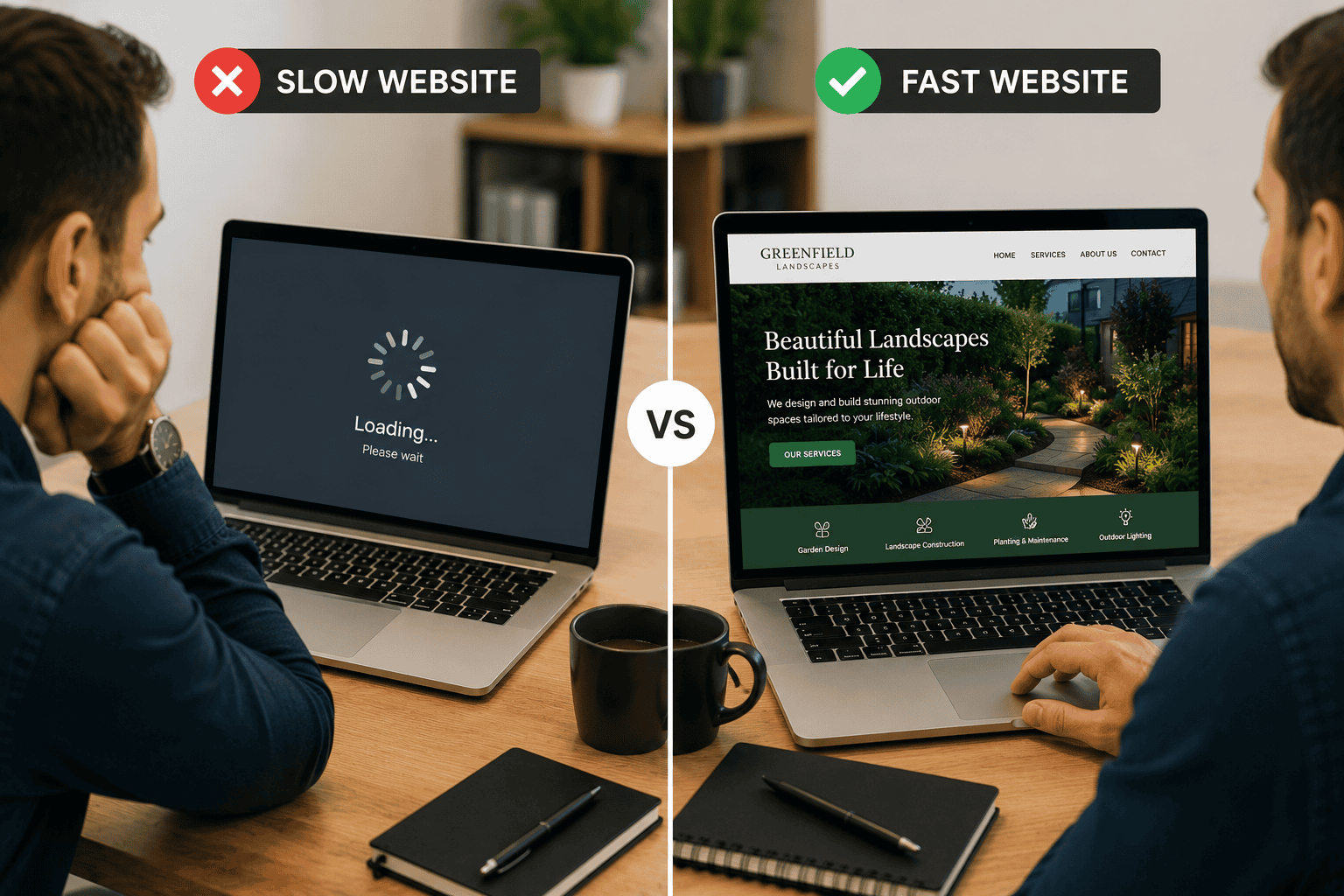
Nothing is more annoying than trying to access a website only to be confronted by pages and visuals that take an eternity to load.
Nowadays, even a slight delay can cause users to return to the search page in search of another website that contains the information they need.
As a result, you could ask yourself: How fast is my website?
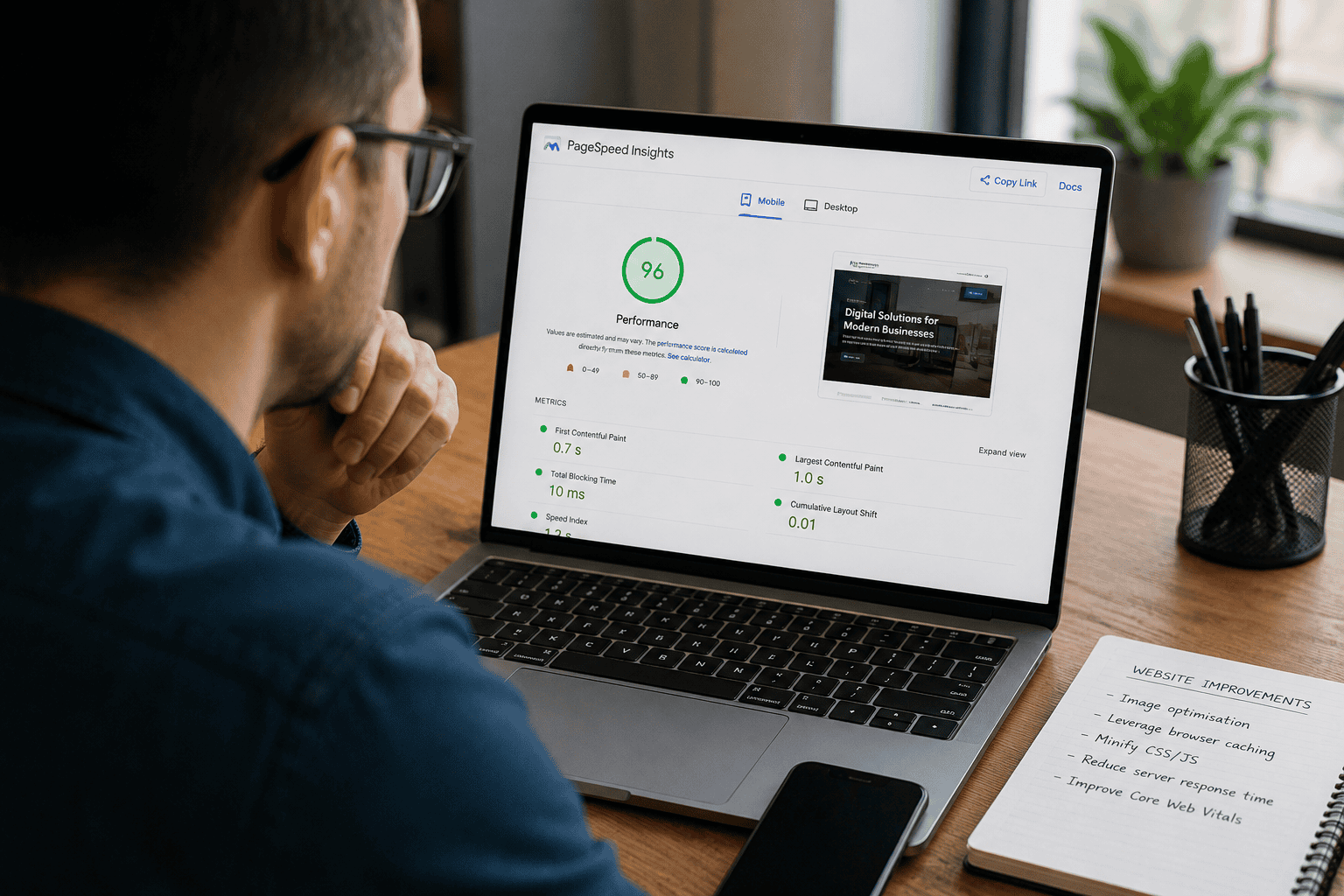
Fortunately, there are several tools available that you may use to assess the performance of your website. Most of them provide thorough reports along with tips for reducing loading times.
You’ll be able to optimise your website appropriately and retain people on your pages for a more extended period after you understand how to use these tools.
This piece will review some points to consider while conducting a speed test. Then, we’ll explain how to evaluate the performance of your website and go over how to analyse the findings to speed up your site.
What is Website Speed?
Your website speed tells how swiftly users can access it. This is based on the average number of page speeds, which measures how long it takes for a page’s text and visual elements to load fully.
Research has shown that an individual is likely to click away from your site if it takes more than 400 milliseconds – a literal blink — these days, web users are frequently put off by even the tiniest delay.
Why Is Website Speed Important?
Your site speed, as previously noted, could instantly determine whether an individual stays on your website. However, it’s much more significant than that. Site speed is crucial for search engines, especially Google, when deciding which websites to display at the top of the search engine results page (SERP).
If your website loads slowly, you cannot be number one on the page ranking! Website speed optimization is essential and shouldn’t be neglected because it improves SEO.
Everyone would prefer a responsive website to one that loads slowly. But loading speed affects a site’s performance more than personal preference.
The bounce rate of a website will increase dramatically the longer it takes to load. Search engine rankings will suffer if a page has a high bounce rate, which indicates that people don’t find the information on the page valuable. And if, for instance, an e-commerce site’s checkout page is marginally slower than its rivals, it will undoubtedly lose clients.
How Quickly Should a Website Load, Then?
Your website should load in less than three seconds or two seconds if it’s an e-commerce site. Bounce rates start to soar around the two to three-second mark; in fact, 40% of users won’t wait more than three seconds before leaving a website.
How to Make Your Website Faster
You’ll undoubtedly start to question how to make your site quicker and more effective once you’ve established your website performance for both desktop and mobile.
This website SEO in action may raise your SERP ranks, keep visitors on your site longer, generate more leads, and even increase sales.
Check out these suggestions if you want to minimize the average load time of your website!
Cut back on site redirection
The amount of redirects on your website has to be decreased if you want it to load quickly. Redirects cause your site to go through an extra HTTP request-response cycle. When this occurs, the load time of your website increases.
This extra time slows down your website, but you can speed up loading by cutting back on redirects.
Optimise Images on Your Site
To keep your website exciting and engaging, you need to use images when building it. The drawback is that a site’s performance may suffer with too many visuals. If you own an eCommerce website, your website will likely contain dozens of product photos.
You may make your website load quicker and improve user experience by compressing pictures.
Utilise browser caching
For a website to load quickly, browser caching is essential. Your website must load all the components from scratch each time someone views it. If they must complete this each time they access your website, it can result in a lengthy loading process.
Your readers will have a better experience if you enable browser caching. Your website will load quicker since not everything has to be loaded.
Place your videos on a third-party site
Videos might slow down the loading of your website just like photographs can. To stop videos from slowing down your website, host them on an external platform. Your videos may be uploaded to Wistia or YouTube for in the request
The weight of the videos isn’t on your site when you host them on such services. You may still benefit from having video on your website, which will still load swiftly.
Cut down on HTTP requests
Using HTTP, you may load documents like photos, scripts, etc. HTTP requests will increase if your site is prominent and has many components. This increase in HTTP requests may cause your website to load slowly.
Merge and minify files
Minify and combine files so to get a site that loads quickly. Each file on your website lengthens the time it takes to load. As stated previously, more HTTP requests are generated due to too many files, which might slow down your website.
Make use of a content delivery network (CDN)
Use a content delivery network to decrease the average page load time. Your audience may get your content more quickly, thanks to a CDN. Request processing takes longer when your website is frequently used.
Conclusion
Aside from being a possible nuisance, slow website speed affects your viewers. A sluggish website can result in worse search ranks, fewer clicks, fewer leads, and decreased sales. You can also invest in the overall well-being of your website by taking the time to assess and enhance its speed.
Now that you know the solution to your long-awaited question, you can begin reducing your website load time with the tips above.