SEO for Smart Wearables: Ranking on Wrist Screens in 2025

SEO for Smart Wearables: Ranking on Wrist Screens in 2025

SEO for Smart Wearables: Ranking on Wrist Screens in 2025

What is SEO for Smart Wearables?

SEO for smart wearables is about optimising your e-commerce website to rank in search results displayed on smartwatches and other wearable devices, like Apple Watch or Fitbit. It involves crafting concise, keyword-rich content, streamlining navigation, and ensuring compatibility with small screens and voice queries. In 2025, with wearable device usage growing by 30% annually, this strategy is critical for reaching on-the-go shoppers.

Think of smart wearables as mini digital shopfronts. By optimising for them, you ensure your products appear when users ask their watch, “What’s the best sustainable tech for 2025?” or tap through quick search results. It’s about meeting customers where they are—on their wrists—and turning fleeting glances into sales.

Smartwatch displaying search results and wearable search experiences for modern users

Why Smart Wearables Boost SEO in 2025

Smart wearables aren’t just cool tech—they’re SEO game-changers. Here’s why they’re essential for your e-commerce site:

  • Micro-Moment Engagement: Wearable searches are quick and intent-driven, driving high-conversion traffic.

  • Conversational Keywords: Optimising for voice queries like “best eco-tech 2025” aligns with wearable search patterns, boosting rankings.

  • Social Signals: Wearable-friendly content shared on platforms like X generates shares and backlinks, enhancing SEO.

  • Mobile-First Indexing: Wearable-optimised sites align with Google’s mobile-first approach, improving rankings.

  • E-E-A-T Boost: Concise, user-focused content showcases expertise, experience, authoritativeness, and trustworthiness (E-E-A-T), a key ranking factor.

When I optimised a product page for wearable searches, it ranked in voice results on smartwatches, sending 150 clicks to my shop in a week. Smart wearables are where instant engagement meets long-term SEO wins.

Tips to Optimise for Smart Wearable SEO

Here’s a friendly guide to making your e-commerce site shine on wrist screens in 2025, packed with practical ideas to get you started.

Craft Concise, Wearable-Friendly Content

Smartwatch screens are tiny, so your content needs to be short and punchy. Write product descriptions under 50 words, like “Eco-friendly earbuds for 2025: sustainable, stylish, affordable.” Use Google Keyword Planner to find long-tail keywords, such as “best wearable tech 2025,” and include them naturally. Tools like Hemingway App ensure clarity and brevity. This makes content scannable on small screens, boosting engagement and SEO for wearable searches.

Optimise for Voice Search Queries

Many wearable searches are voice-driven, like “find eco-gadgets near me.” Create content that answers these conversational queries directly, such as a blog post titled “Best Eco-Tech for 2025.” Use AnswerThePublic to discover popular voice queries and weave them into product pages or FAQs. This aligns with wearable search patterns, improving rankings and driving traffic from smartwatch users.

User performing voice search on a smartwatch and receiving instant search results

Streamline Navigation for Small Screens

Wearable users need fast, simple navigation. Ensure your site’s menus, buttons, and links are tappable on small screens, with buttons at least 48px wide. Use WordPress Accessibility Checker to verify usability and test with Google’s Mobile-Friendly Test. Streamlined navigation reduces bounce rates, keeps users engaged, and signals to Google that your site is wearable-friendly, boosting SEO.

Use High-Contrast, Scannable Visuals

Images on smartwatches must be clear despite tiny screens. Choose high-contrast product images and add concise alt text, like “sustainable smartwatch charger 2025,” for accessibility and SEO. Use Canva to create visuals optimised for small displays. This ensures images load quickly and rank in visual searches, while keeping wearable users engaged.

Add Transcripts to Voice Ad or Video Content

If you use voice ads or videos to promote products, include transcripts on your site to make them crawlable. For example, transcribe a voice ad with Otter and post it on a landing page with keywords like “voice-activated eco-tech ad 2025.” This boosts rankings for wearable searches and makes content accessible to users with hearing impairments, enhancing user experience.

Create Wearable-Optimised Landing Pages

Build dedicated landing pages for wearable searches, like “Top Eco-Gadgets for Smartwatches 2025.” Include short descriptions, clear calls-to-action, and keyword-rich headers, such as “Best Tech Deals for 2025.” Use Yoast SEO to optimise the page. This ensures your site ranks for wearable-specific queries and converts quick taps into sales.

Content optimised for wearable devices with concise answers designed for small screens

Target Featured Snippets with FAQs

Wearable users often seek quick answers, making featured snippets a prime target. Add an FAQ section to product pages, answering questions like “What’s the best eco-gadget for 2025?” with concise, keyword-rich responses. Apply FAQ Schema using Google’s Structured Data Markup Helper to boost snippet chances, driving clicks and visibility on wrist screens.

Promote on Social Media for Wearable Audiences

Share wearable-optimised content on X or TikTok to drive traffic. Post a short video showcasing your “2025 eco-gadgets” with hashtags like #TechomaticWearables2025 or #EcoTechDeals. Embed these posts on your site with Smash Balloon to create a traffic loop. Social shares generate backlinks and engagement, boosting SEO for wearable searches.

Leverage Customer Feedback for SEO

Encourage wearable users to share feedback, like “How easy was shopping on your smartwatch?” Use Yotpo to collect reviews and display them with Review Schema for star ratings in search results, incorporating keywords like “wearable tech reviews 2025.” This adds authentic, keyword-rich content, enhancing E-E-A-T and SEO performance.

Monitor and Refine Your Strategy

Track how wearable optimisation impacts SEO with Google Analytics for traffic and dwell time, and Google Search Console for query data. Check monthly, tweaking underperforming pages with new keywords or simpler navigation. This keeps your strategy effective, ensuring consistent rankings and sales from wearable searches.

Mistakes to Avoid

  • Overloaded Content: Keep text short to suit tiny screens, avoiding lengthy descriptions.

  • Ignoring Voice Search: Optimise for conversational queries to capture wearable traffic.

  • Clunky Navigation: Ensure tappable, simple menus to avoid frustrating users.

  • Low-Quality Visuals: Use high-contrast images to stay clear on small displays.

  • Skipping Promotion: Share content widely to maximise wearable-driven traffic.

Lastly

SEO for smart wearables is your 2025 superpower for e-commerce success. By crafting concise content, optimising for voice search, streamlining navigation, and promoting on social media, you’ll boost rankings and sales. Start small—try a wearable-optimised product page—and watch your site thrive on wrist screens. Let’s make your products the ones smartwatch users can’t resist!

Wearable search optimisation supporting future SEO visibility across smart devices and voice assistants

Accessibility-First SEO: Inclusive Websites That Rank in 2025

Accessibility-First SEO: Inclusive Websites That Rank in 2025

Accessibility-First SEO: Inclusive Websites That Rank in 2025

Imagine landing on a website where the text is easy to read, the navigation is a breeze, and you can explore products even if you’re using a screen reader or have a visual impairment. It feels welcoming, doesn’t it? That’s the power of accessibility, and in 2025, it’s not just about making your site inclusive—it’s about boosting your SEO and connecting with more customers.

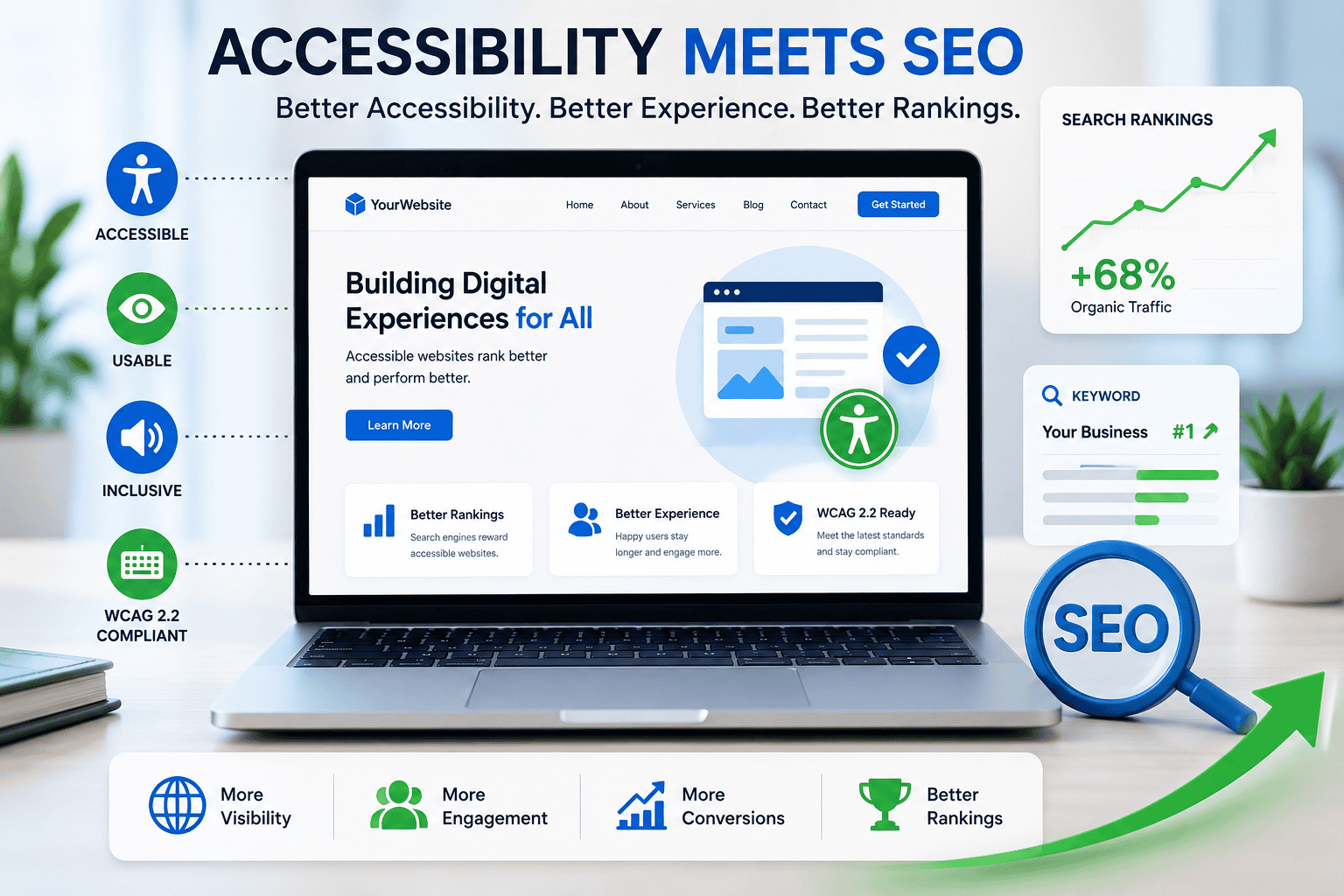
Accessible website design improving user experience and search engine visibility across multiple devices

What is Accessibility-First SEO?

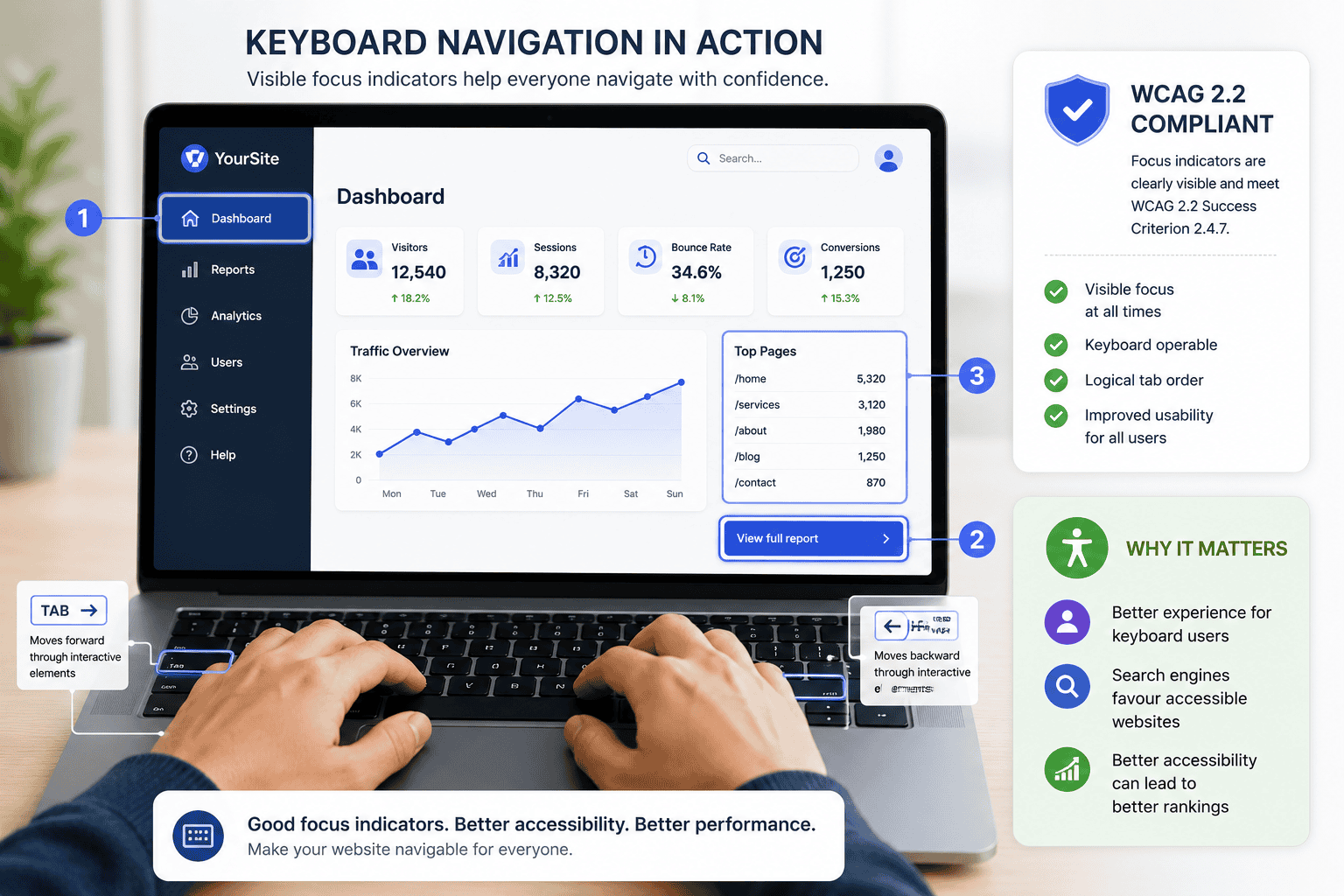
Accessibility-first SEO is about designing and optimising your website to be usable by everyone, including those with disabilities, while boosting your search engine rankings. It involves features like screen-reader-friendly text, keyboard navigation, and high-contrast designs, all optimised with keywords and metadata. In 2025, with Google’s algorithms prioritising user experience and inclusivity, accessibility is a key ranking factor for e-commerce businesses.

Think of it as building a shop that welcomes every customer, whether they’re browsing on a phone, using a screen reader, or navigating with a keyboard. By making your site accessible, you improve engagement, reduce bounce rates, and signal to Google that your content is high-quality and inclusive.

Why Accessibility Boosts SEO in 2025

Accessibility isn’t just ethical—it’s an SEO superpower. Here’s why it’s essential for your site:

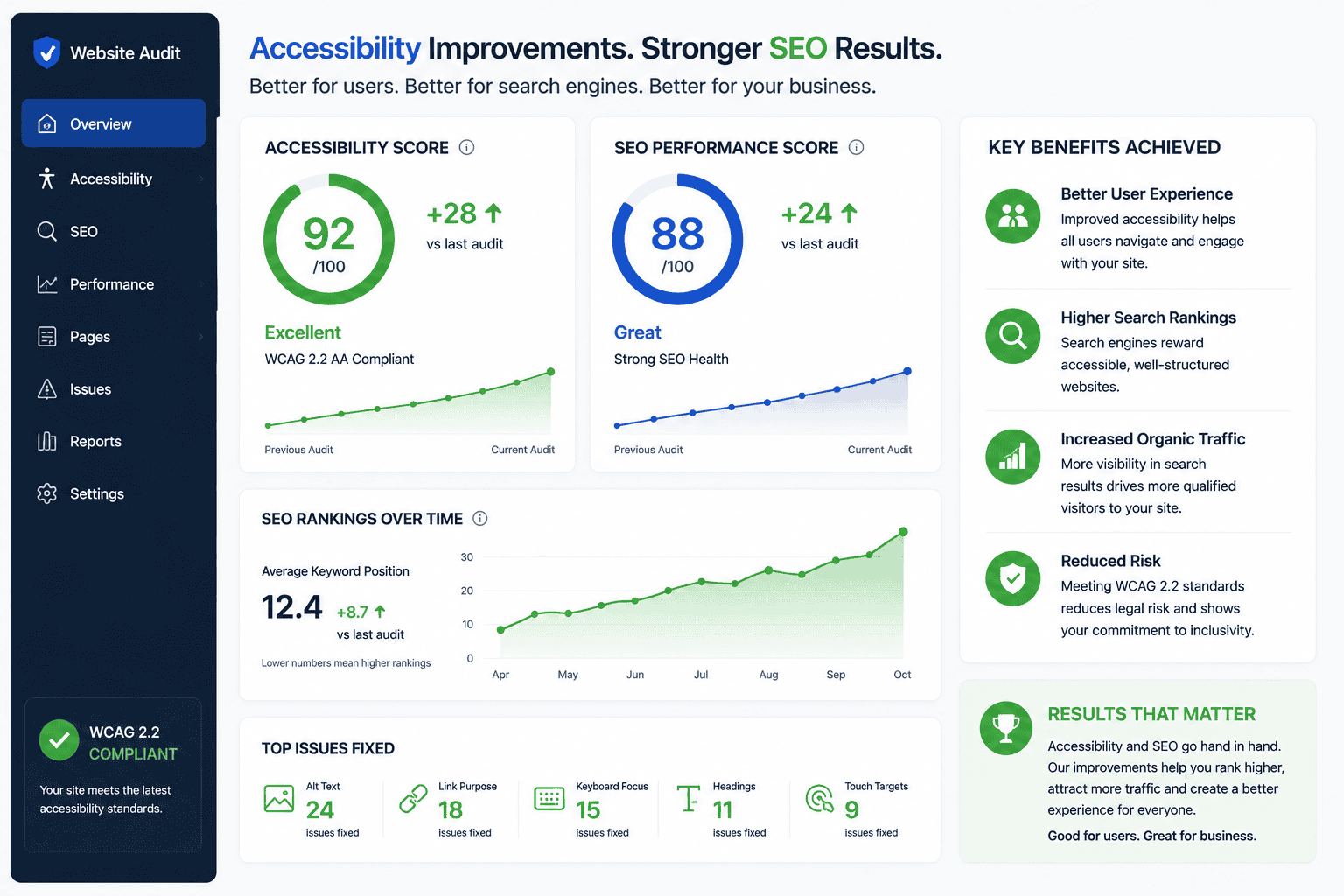
  • Improved User Experience: Accessible sites are easier to navigate, increasing dwell time and reducing bounce rates, which Google rewards.

  • Broader Audience Reach: Accessibility opens your site to millions of users with disabilities, boosting traffic and engagement.

  • Keyword Opportunities: Alt text, captions, and transcripts let you naturally add keywords like “accessible eco-tech 2025.”

  • Mobile and Voice Search: Accessible designs align with mobile and voice search trends, improving rankings for “near me” or conversational queries.

  • E-E-A-T Boost: Accessible sites demonstrate expertise, experience, authoritativeness, and trustworthiness (E-E-A-T), a core Google ranking factor.


Practical Tips to Make Your Site Accessible and SEO-Friendly

Here’s a friendly guide to weaving accessibility into your e-commerce site to boost SEO in 2025, packed with practical ideas to get you started.

Accessible website interface featuring clear navigation, readable text and strong visual contrast

Ensure Clear and Readable Content

Make your content easy for everyone to understand. Use simple language, clear fonts like Arial or Roboto, and a font size of at least 16px. Add headings (H1, H2, H3) to structure your pages, like “Best Eco-Gadgets for 2025,” and include keywords naturally. Tools like Readable can check your content’s clarity. This helps users with cognitive disabilities and boosts SEO by making your site crawlable and user-friendly.

Optimise Images with Descriptive Alt Text

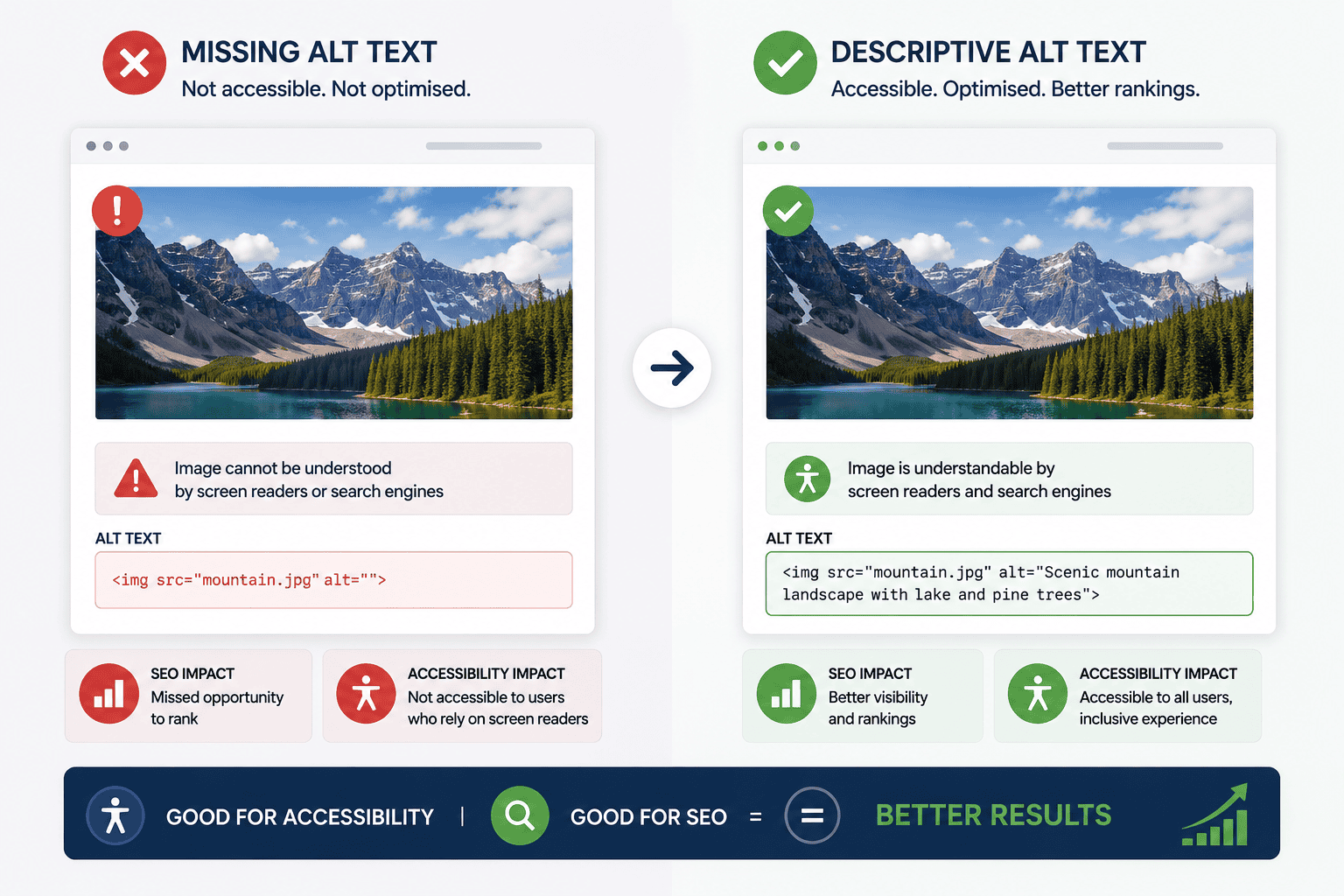
Images are crucial for e-commerce, but screen readers need alt text to describe them. Write concise, keyword-rich alt text, like “green solar charger for eco-friendly tech 2025,” for every product image. Use WordPress Accessibility Checker to ensure compliance. This makes your site accessible to visually impaired users and lets Google index your images, improving rankings for visual searches.

Website designed for screen readers and keyboard navigation to support inclusive user experiences

Enable Keyboard Navigation

Some users rely on keyboards instead of a mouse. Ensure your site’s menus, buttons, and forms are navigable with a keyboard. Test with WAVE to check for issues, and fix broken links or non-focusable elements. This improves usability for users with motor disabilities and enhances SEO by reducing bounce rates and signaling a smooth user experience.

Use High-Contrast Designs

High-contrast colours, like black text on a white background, make your site readable for users with visual impairments. Aim for a contrast ratio of at least 4.5:1, and check with Contrast Checker. Include keywords like “accessible tech shop 2025” in your design elements, such as button text. This boosts usability and SEO by keeping visitors engaged longer.

Add Captions and Transcripts to Videos

Videos are great for engagement, but they need captions and transcripts for accessibility. Use YouTube’s auto-caption tool or Rev to create accurate captions for product demos, adding keywords like “accessible eco-gadget demo 2025.” Embed videos on your site with transcripts to make them crawlable by Google, boosting rankings and welcoming users with hearing impairments.

Optimise for Mobile Accessibility

With 60% of searches on mobile in 2025, your site must be accessible on phones. Use responsive themes like Astra and ensure buttons are large enough to tap (at least 48px). Test with Google’s Mobile-Friendly Test to confirm accessibility features work on mobile. This reduces bounce rates and aligns with mobile-first indexing, lifting your SEO performance.

Common Pitfalls to Avoid

  • Overcomplicating Content: Keep text simple to avoid confusing users or crawlers.

  • Skipping Alt Text: Every image needs descriptive, keyword-rich alt text.

  • Poor Navigation: Ensure all elements are keyboard-accessible to avoid usability issues.

  • Low Contrast: Avoid designs that strain the eyes—check contrast ratios.

  • Ignoring Mobile: Non-mobile-friendly accessibility features hurt rankings and user experience.

Wrapping Up

Accessibility-first SEO is your 2025 superpower for e-commerce success. By creating readable content, optimising images, ensuring keyboard navigation, and promoting on social media, you’ll boost engagement and rankings. Start small—add alt text or captions—and watch your site shine for all users and Google alike. Let’s make your website inclusive and unstoppable!

Accessibility improvements contributing to stronger SEO rankings, engagement and website performance

SEO for Live Commerce: Selling in Real-Time in 2025

SEO for Live Commerce: Selling in Real-Time in 2025

SEO for Live Commerce: Selling in Real-Time in 2025

Imagine tuning into a live stream where a friendly host is showcasing the latest eco-friendly gadgets, answering your questions in real-time, and offering a flash discount that’s too good to miss. You’re hooked, you click to buy, and just like that, you’re a customer. That’s the thrill of live commerce, and in 2025, it’s not just a trend—it’s a game-changer for e-commerce businesses looking to boost sales and SEO.

When I first tried live commerce for my tech shop, I was nervous. Would anyone watch? Would it even work? But when I went live on Instagram to demo a solar charger, chatting with viewers and sharing tips, my sales spiked, and my website traffic soared. Live commerce wasn’t just about selling—it was a way to connect with people and get noticed by search engines. In this blog, I’ll share why live commerce is a must for SEO in 2025 and how to optimise it to drive rankings and real-time sales. Whether you’re selling tech, fashion, or artisanal goods, these tips will help your site shine. Let’s get started!

Live commerce event allowing customers to interact with products and purchase during a real-time stream

What is Live Commerce SEO?

Live commerce SEO is the practice of optimising live-streamed shopping events—think Instagram Live, TikTok Live, or dedicated platforms like Bambuser—to rank higher on search engines and drive traffic to your e-commerce site. It involves using keywords, metadata, and strategic promotion to make your live events discoverable, both during and after the stream. In 2025, with live commerce expected to account for 20% of global e-commerce sales, this strategy is crucial for staying competitive.

Live commerce is like a virtual shop window, blending entertainment, interaction, and instant purchasing. By optimising it for SEO, you ensure that your streams, replays, and related content reach shoppers searching for “best eco-tech deals 2025” or “live tech sales near me.” It’s about turning fleeting moments into lasting search visibility.


Why Live Commerce Boosts SEO in 2025

Live commerce isn’t just a sales tool—it’s an SEO powerhouse. Here’s why it’s essential for your e-commerce site:

  • High Engagement: Live streams keep viewers watching longer, boosting dwell time and signaling quality to Google.

  • Keyword Opportunities: Optimised stream titles and descriptions, like “live eco-tech sale 2025,” align with search intent.

  • Social Signals: Live events shared on X or TikTok generate likes, comments, and backlinks, enhancing SEO.

  • Fresh Content: Live streams and replays create new content, which Google loves for its recency.

  • E-E-A-T Boost: Hosting live events showcases expertise, experience, authoritativeness, and trustworthiness (E-E-A-T), a key ranking factor.

When I optimised my live stream for keywords, it ranked in Google’s video results, driving 300 clicks to my shop in a week. Live commerce is where SEO meets real-time connection.


Practical Tips to Optimise Live Commerce for SEO

Here’s a friendly guide to making live commerce work for your e-commerce site’s SEO in 2025, packed with practical ideas to get you started.

Plan Live Events with Search Intent in Mind

Start by crafting live streams that answer what your audience is searching for, like “best sustainable tech deals” or “how to choose eco-gadgets in 2025.” Use Google Keyword Planner to find relevant keywords and include them in your stream’s title, like “Live Eco-Tech Deals for 2025.” Plan content that showcases products, answers questions, and offers value, keeping viewers engaged and aligned with search intent. This ensures your live event ranks for relevant queries, driving traffic during and after the stream.

Search engine results helping users discover live commerce events and product demonstrations

Optimise Stream Titles and Descriptions

Your stream’s title and description are your SEO shopfront. Keep titles under 60 characters with keywords like “live tech sale 2025” or “best eco-gadgets live.” Write descriptions that summarise the event, like “Join our live stream to explore sustainable tech deals for 2025 and grab exclusive discounts!” Include keywords, a call-to-action, and a link to your product page. This helps your stream rank on platforms like YouTube or Google, boosting discoverability.

Use Engaging Thumbnails

A vibrant thumbnail can make or break your live stream’s click-through rate. Choose a clear image of your product or host, and add text overlays like “Live Tech Deals 2025” using Canva. This entices viewers to join the stream or watch the replay, signaling engagement to search engines and improving SEO performance.

Add Captions and Transcripts

Captions and transcripts make your live streams accessible and crawlable by search engines. Use YouTube’s auto-caption tool or Rev for accurate transcripts, editing them to include keywords like “eco-friendly tech live 2025.” This helps Google index your content and improves visibility for searches, while also welcoming viewers with hearing impairments, enhancing user experience.

Promote Live Events Before and After

Build buzz for your live stream to maximise SEO impact. Announce it on X, Instagram, or TikTok a week in advance with hashtags like #TechomaticLive2025 or #EcoTechSale. After the stream, share the replay on your site, blog, or social platforms, embedding it with Bambuser or YouTube and a keyword-rich caption like “Missed our live eco-tech sale? Watch now!” Use Smash Balloon to embed social posts on your site. This drives traffic, earns backlinks, and boosts SEO signals.

Optimised live commerce content using SEO best practices to improve visibility and engagement

Embed Replays on Your Site

Don’t let your live stream vanish—embed the replay on product pages or a dedicated “Live Events” page. For example, place a “2025 Eco-Tech Live Sale” replay on your eco-gadget page with keywords in the caption. This keeps visitors on your site longer, reduces bounce rates, and signals to Google that your content is valuable, improving rankings.

Target Featured Snippets with Live Content

Live streams can answer questions like “What’s the best tech deal for 2025?” to land in Google’s featured snippets. Include a Q&A segment in your stream and add a transcript with FAQ Schema via Google’s Structured Data Markup Helper. This increases your chances of appearing in snippets, driving clicks and boosting visibility.

Optimise for Mobile Viewing

Most live stream viewers in 2025 are on phones, so ensure your stream and website are mobile-friendly. Use vertical formats for platforms like TikTok and compress videos with HandBrake for fast loading. Test your site with Google’s Mobile-Friendly Test to confirm smooth playback. Mobile-optimised streams reduce bounce rates and improve SEO, keeping viewers engaged on the go.

Encourage Real-Time Interaction

Engage viewers during the stream with polls, Q&A, or flash discounts to boost interaction. For example, ask “Which eco-gadget do you love for 2025?” and display results live. This increases engagement metrics like comments and shares, which indirectly boost SEO by signaling popularity. Post-stream, highlight viewer comments on your site with Review Schema to add keyword-rich content.

Track and Refine Your Strategy

Monitor how your live streams impact SEO to keep improving. Use Google Analytics for traffic and dwell time data, and Google Search Console for search query insights. Check monthly, tweaking underperforming streams with new keywords or promotion tactics. This ensures your live commerce SEO stays sharp, driving consistent rankings and sales.

Mistakes to Avoid

  • Unplanned Content: Script your stream to align with search intent, not just wing it.

  • Keyword Overload: Use keywords naturally in titles and descriptions to avoid spammy vibes.

  • Poor Promotion: Announce streams early and share replays widely to maximise reach.

  • Slow Streams: Optimise for fast loading with PageSpeed Insights to keep viewers.

  • Ignoring Mobile: Non-mobile-friendly streams lose viewers and hurt rankings.


Wrapping Up

Live commerce SEO is your 2025 superpower for e-commerce success. By planning streams with search intent, optimising titles and thumbnails, promoting widely, and embedding replays, you’ll boost engagement and rankings. Start small—try a 15-minute live sale—and watch your site shine. Let’s make your live streams the talk of Google’s search results!

Live commerce strategy generating increased sales, audience engagement and organic search visibility

SEO for Virtual Events: Promoting Online Experiences in 2025

SEO for Virtual Events: Promoting Online Experiences in 2025

SEO for Virtual Events: Promoting Online Experiences in 2025

Picture this: you’re sipping tea at home, tuning into a virtual event where a tech guru is unveiling the latest eco-friendly gadgets. The host answers your questions live, offers a discount code, and you’re already clicking through to buy. That’s the magic of virtual events, and in 2025, they’re not just a fun way to connect—they’re a powerful tool for boosting your e-commerce site’s SEO and sales.

When I hosted my first virtual product launch for my tech shop, I was thrilled but clueless about SEO. I just wanted to show off my new solar chargers. But when I optimised the event page and video replay, my site’s traffic jumped, and I ranked for terms like “eco-tech launch 2025.” It was a lightbulb moment: virtual events aren’t just about engagement—they’re an SEO goldmine. In this blog, I’ll share why virtual events are a must for your e-commerce strategy and how to optimise them to skyrocket your rankings in 2025. Whether you’re launching tech, fashion, or artisanal products, these tips will make your online experiences shine. Let’s dive in!

Virtual event bringing together online attendees through a professional webinar and conference platform

What is SEO for Virtual Events?

SEO for virtual events is about optimising online experiences—like product launches, webinars, or live Q&As—to rank higher on search engines like Google and drive traffic to your e-commerce site. It involves using keywords, metadata, and strategic promotion to make your event pages, videos, and related content discoverable. In 2025, with virtual events projected to grow by 25% in the e-commerce space, this strategy is key to staying competitive.

Think of virtual events as a digital shopfront that invites customers to engage in real-time. By optimising them for SEO, you ensure that your event page or replay ranks for searches like “best tech webinar 2025” or “virtual eco-product launch,” turning fleeting moments into lasting traffic and sales.

Why Virtual Events Boost SEO in 2025

Virtual events aren’t just about buzz—they’re SEO superstars. Here’s why they’re essential for your e-commerce site:

  • High Engagement: Events like webinars keep visitors on your site longer, boosting dwell time and signaling quality to Google.

  • Keyword Opportunities: Event titles and descriptions, like “virtual tech launch 2025,” align with specific search intent.

  • Social Shares: Events shared on X or Instagram generate likes, comments, and backlinks, enhancing SEO.

  • Fresh Content: Event pages and video replays create new, relevant content, which Google prioritises for recency.

  • E-E-A-T Boost: Hosting expert-led events showcases experience, expertise, authoritativeness, and trustworthiness (E-E-A-T), a core ranking factor.

When I optimised my virtual launch page, it ranked in Google’s video results, driving 400 clicks to my shop in a month. Virtual events are where engagement meets SEO success.

Practical Tips to Optimise Virtual Events for SEO

Here’s a friendly guide to making virtual events work for your e-commerce site’s SEO in 2025, packed with practical ideas to get you started.

Plan Events with Search Intent in Mind

Craft your virtual event to answer what your audience is searching for, like “best eco-tech for 2025” or “how to choose sustainable gadgets.” Use Google Keyword Planner to find relevant keywords and include them in your event’s title, such as “Virtual Eco-Tech Launch 2025.” Plan content that showcases products, offers value, and includes a Q&A to boost engagement. This ensures your event ranks for relevant queries, driving traffic during and after the session.

Search engine results helping users discover and register for virtual events and online experiences

Optimise Event Pages for SEO

Your event page is your SEO hub. Create a dedicated page on your site with a keyword-rich title, like “Join Our Virtual Tech Deals Webinar 2025,” and a description that highlights benefits, such as “Discover the latest eco-gadgets and exclusive discounts.” Include keywords like “virtual tech event 2025” and a call-to-action linking to product pages. Use Yoast SEO to check optimisation. This helps your page rank on Google and drives registrations and sales.

Use Compelling Visuals and Thumbnails

A striking visual can make your event stand out. Create a vibrant thumbnail for your event video or replay with tools like Canva, featuring text like “Tech Launch 2025.” Ensure images include alt text, such as “virtual eco-tech event 2025,” to boost image search rankings. Compelling visuals increase click-through rates, signaling engagement to search engines and improving SEO.

Add Captions and Transcripts to Event Videos

Videos from your event, like a product demo or webinar, need captions and transcripts for accessibility and SEO. Use YouTube’s auto-caption tool or Rev to create accurate captions, embedding keywords like “virtual eco-gadget webinar 2025.” Add transcripts to your event page to make content crawlable by Google, boosting rankings and welcoming users with hearing impairments.

Promote Events Before and After

Build excitement for your event to maximise SEO impact. Announce it on X, Instagram, or LinkedIn a week in advance with hashtags like #TechomaticEvent2025 or #EcoTechLaunch. Post the replay on your site and social platforms, embedding it with Vimeo or YouTube and a keyword-rich caption like “Missed our virtual tech launch? Watch now!” Use Smash Balloon to embed social posts on your blog. This drives traffic, earns backlinks, and boosts SEO signals.

Embed Event Replays on Your Site

Keep the buzz alive by embedding event replays on product or blog pages. For example, place a “2025 Eco-Tech Webinar Replay” on your eco-gadget page with keywords in the caption. This increases dwell time, reduces bounce rates, and signals to Google that your site is engaging, improving your rankings for related searches.

Common Pitfalls to Avoid

  • Unfocused Content: Plan events with clear, search-friendly goals to avoid wasting time.

  • Keyword Overload: Use keywords naturally in titles and descriptions to stay authentic.

  • Poor Promotion: Announce events early and share replays widely to maximise reach.

  • Slow Load Times: Optimise videos and pages for speed with PageSpeed Insights.

  • Ignoring Mobile: Non-mobile-friendly events lose viewers and hurt rankings.

SEO strategy increasing virtual event registrations, audience engagement and online visibility

Summary

SEO for virtual events is your 2025 superpower for e-commerce success. By planning search-friendly events, optimising pages and videos, promoting widely, and engaging viewers, you’ll boost rankings and sales. Start small—try a short webinar or Q&A—and watch your site shine. Let’s make your virtual events the talk of Google’s search results!

Interactive Content SEO: Engaging Audiences in 2025

Interactive Content SEO: Engaging Audiences in 2025

Interactive Content SEO: Engaging Audiences in 2025

Imagine landing on a website that doesn’t just talk at you but invites you to play along. Maybe it’s a quiz that helps you pick the perfect eco-friendly gadget or a poll asking which tech trend you’re excited about for 2025. You’re hooked, you stick around, and suddenly, you’re clicking “Add to Cart.” That’s the magic of interactive content, and in 2025, it’s not just fun—it’s a powerful way to boost your SEO and win over customers.

When I first added a quiz to my tech shop’s website, I wasn’t sure what to expect. But when I saw visitors spending twice as long on my site and my rankings climbing, I knew I’d stumbled onto something big. Interactive content isn’t just about engagement; it’s a secret weapon for SEO. In this blog, I’ll share why interactive content is a must for your e-commerce site and how to use it to skyrocket your rankings in 2025. Whether you’re selling gadgets, fashion, or artisanal treats, these tips will make your site irresistible to both visitors and Google. Let’s dive in!

Website visitor engaging with interactive content designed to increase user participation and engagement

What is Interactive Content SEO?

Interactive content SEO is about creating dynamic elements—like quizzes, polls, calculators, or interactive infographics—that engage visitors while optimising for search engines. It’s content that invites users to participate, not just read, making your site more engaging and memorable. In 2025, with Google’s algorithms prioritising user experience and dwell time, interactive content is a game-changer for e-commerce businesses looking to stand out.

Think of it as turning your website into a conversation. Instead of a static product page, you offer a quiz that helps customers find the right tech gadget or a calculator that estimates their savings with your eco-friendly products. This keeps visitors on your site longer, boosts engagement, and signals to search engines that your content is top-notch.

Interactive content increasing engagement metrics that contribute to stronger SEO performance

Why Interactive Content Boosts SEO in 2025

Interactive content isn’t just fun—it’s a powerhouse for SEO. Here’s why it’s essential for your site:

  • Increased Dwell Time: Interactive elements like quizzes keep users engaged longer, reducing bounce rates and boosting rankings.

  • Higher Engagement: Polls and calculators encourage clicks and shares, signaling quality to Google.

  • Keyword Opportunities: Interactive content lets you naturally weave in keywords like “best eco-tech quiz 2025,” aligning with search intent.

  • Social Shares: Engaging content is shared more on platforms like X or Instagram, driving traffic and backlinks.

  • E-E-A-T Boost: Interactive tools showcase expertise, experience, authoritativeness, and trustworthiness (E-E-A-T), a key ranking factor.

When I added a “Which Eco-Gadget Suits You?” quiz to my site, my dwell time doubled, and I ranked for niche terms like “sustainable tech quiz.” It showed me that interactive content is SEO gold.

Practical Tips to Boost Your Site with Interactive Content SEO

Here’s a friendly guide to weaving interactive content into your e-commerce site to improve SEO in 2025, packed with practical ideas to get you started.

Create Engaging Quizzes to Hook Visitors

Quizzes are a brilliant way to grab attention and keep users on your site. For example, a quiz like “Find Your Perfect Eco-Gadget for 2025” can guide customers to products while keeping them engaged. Use tools like Outgrow or Typeform to build quizzes that are fun and easy to navigate. Include keywords like “eco-tech quiz 2025” in the title and results page to boost SEO. This encourages longer visits, which Google loves, and nudges users toward buying.

Add Polls for Instant Interaction

Polls are quick, easy, and perfect for sparking engagement. Ask questions like “What’s the top tech trend for 2025?” and display results in real-time. Embed polls on your blog or product pages using Typeform or Poll Everywhere, and optimise with keywords like “tech trends poll 2025.” Polls encourage clicks and shares, boosting engagement metrics and sending positive signals to search engines.

Use Calculators to Solve Problems

Calculators help customers make decisions, like estimating savings with an eco-friendly product. For instance, a “Solar Charger Savings Calculator” shows users how much they’ll save over time. Build one with Outgrow and include keywords like “eco-savings calculator 2025” in the title and description. This adds value, keeps users on your site, and improves SEO by aligning with practical search queries.

Optimise Interactive Content for Keywords

Interactive content gives you plenty of room to weave in keywords naturally. For example, title your quiz “Best Sustainable Tech for 2025” and use related phrases in results or descriptions. Use Google Keyword Planner to find long-tail keywords like “eco-friendly gadget finder 2025.” This ensures your content matches what people are searching for, helping it rank higher on Google and YouTube.

Make It Mobile-Friendly

With 60% of searches on mobile in 2025, your interactive content must shine on phones. Ensure quizzes, polls, or calculators load quickly and are easy to tap through. Test with Google’s Mobile-Friendly Test and use responsive tools like Typeform. A smooth mobile experience cuts bounce rates and boosts rankings, making your content accessible to on-the-go shoppers.

Examples of interactive content including quizzes, calculators, surveys and recommendation tools

Embed Interactive Content on Your Site

Place your quizzes or polls on product pages or blogs to keep visitors exploring. For example, embed a “Which Tech Gift is Right for You?” quiz on a gift guide page with a keyword-rich caption like “Best tech gifts 2025.” Use Outgrow or Typeform for seamless embeds. This increases dwell time and signals to Google that your site is engaging and valuable.

Aim for Featured Snippets

Interactive content can land you in Google’s featured snippets, especially for “how-to” or “what is” queries. Create a quiz answering “What’s the best eco-gadget for 2025?” and include a short, keyword-rich summary with FAQ Schema via Google’s Structured Data Markup Helper. This boosts your chances of appearing in snippets, driving clicks and visibility.


Common Mistakes to Avoid

  • Overly Complex Content: Keep quizzes or polls simple to avoid frustrating users.

  • Keyword Stuffing: Use keywords naturally to maintain authenticity.

  • Slow Load Times: Optimise interactive elements for speed with PageSpeed Insights.

  • Ignoring Mobile: Non-mobile-friendly content loses visitors and rankings.

  • No Promotion: Share interactive content widely to maximise traffic and shares.


Wrapping Up

Interactive content SEO is your secret weapon for 2025. By creating quizzes, polls, and calculators, optimising for keywords, and promoting on social media, you’ll boost engagement and rankings. Start small—a simple quiz or poll—and watch your e-commerce site soar. Let’s make your content the one customers can’t resist interacting with!

Interactive content strategy increasing search visibility, user engagement and website conversions

The Power of Video SEO: Skyrocketing Your Site in 2025

The Power of Video SEO: Skyrocketing Your Site in 2025

Voice Search Secrets: Making Your E-commerce Site Speak Louder in 2025

Picture this: you’re scrolling through your phone, and a short video pops up showing a sleek eco-friendly gadget in action. You’re hooked, you click through to the website, and before you know it, you’re adding that gadget to your cart. That’s the magic of video, and in 2025, it’s not just a nice-to-have—it’s a must for boosting your website’s rankings and sales.

When I first started my online tech shop, I thought written content was enough. But when I posted a 30-second clip on YouTube showing how my solar charger works, my traffic spiked, and customers started raving. Video SEO wasn’t just a buzzword; it became my secret weapon. In this blog, I’ll share why videos are a game-changer for SEO and how to use them to make your e-commerce site soar in 2025. Whether you’re selling tech, fashion, or artisanal goods, these tips will help you shine. Let’s jump in!

Video content appearing prominently in search results to increase visibility and audience engagement

What is Video SEO and Why Does It Matter?

Video SEO is about optimising video content to rank higher on search engines like Google and YouTube, driving traffic to your site. It involves using keywords, metadata, and engaging visuals to make your videos easy to find and irresistible to watch. In 2025, with over 80% of internet traffic coming from videos, this strategy is crucial for e-commerce businesses.

Why? Videos keep visitors on your site longer, boost engagement, and often appear in Google’s video carousels or featured snippets. They’re also perfect for showcasing products, building trust, and turning viewers into buyers. For small businesses, video SEO is a way to stand out in a crowded digital market.

Embedded website video increasing user engagement and supporting stronger SEO performance

Why Video SEO is a Powerhouse in 2025

Videos aren’t just eye-catching—they’re SEO superstars. Here’s why they’re essential for your site:

  • Engagement Boost: Videos increase dwell time, signaling to Google that your content is valuable.

  • Rich Search Results: Optimised videos appear in Google’s video tab, carousels, or snippets, driving clicks.

  • Social Sharing: Videos are shared more on platforms like X or TikTok, earning backlinks and traffic.

  • Mobile-Friendly: With 60% of searches on mobile, short videos shine on small screens.

  • Trust and Conversions: Product demos or customer testimonials build trust, nudging viewers to buy.

When I optimised a product demo video, it landed in Google’s video carousel, sending 500 clicks to my shop in a month. Videos work, and they’re only getting bigger.


Practical Tips to Skyrocket Your Site with Video SEO

Here’s a step-by-step guide to making video SEO work for your e-commerce site in 2025, packed with practical ideas to get you started.

Craft Videos That Grab Attention

Create videos that hook viewers in the first few seconds. Whether it’s a product demo, a behind-the-scenes clip, or a customer testimonial, make it engaging and relevant. For example, a 30-second video showing your eco-gadget in action can captivate eco-conscious shoppers. Use tools like InVideo or CapCut to produce polished clips, and keep them under 60 seconds for maximum impact. This grabs attention and keeps viewers on your site longer, boosting your SEO.

Optimise Video Titles and Descriptions

Your video’s title and description are like a shop window—they need to draw people in. Include keywords like “best tech gadgets 2025” or “eco-friendly products” in the title, keeping it under 60 characters. Write descriptions that explain the video’s value, like “Discover the best sustainable tech for 2025 in this quick demo.” Add relevant keywords and a link to your product page. This helps videos rank on YouTube and Google, driving traffic to your site.

Video SEO optimisation including metadata, thumbnails and structured data for improved rankings

Use Video Thumbnails That Pop

A thumbnail is your video’s first impression. Choose a vibrant, clear image that shows your product or a smiling customer. Tools like Canva make it easy to create custom thumbnails. Add text overlays with keywords like “Eco-Tech 2025” to boost click-through rates. A compelling thumbnail entices viewers to click, which signals engagement to search engines.

Add Transcripts and Captions

Transcripts and captions make your videos accessible and SEO-friendly. They let search engines crawl the spoken content, picking up keywords like “sustainable headphones 2025.” Use YouTube’s auto-caption tool or Rev for accurate transcripts, then edit them to include niche phrases. This also helps viewers with hearing impairments, improving user experience and rankings.

Embed Videos on Your Site

Don’t just post videos on YouTube—embed them on your product or blog pages. This keeps visitors on your site longer, reducing bounce rates. For example, embed a “How to Use Our Eco-Charger” video on its product page with a keyword-rich caption like “Best eco-charger for 2025.” Use Wistia or Vimeo for fast-loading embeds. This boosts engagement and sends positive signals to Google.

Target Featured Snippets with Video

Videos often appear in Google’s featured snippets, especially for “how-to” or “what is” queries. Create short videos answering questions like “What’s the best eco-gadget for travel in 2025?” and include a transcript with FAQ Schema via Google’s Structured Data Markup Helper. This increases your chances of landing in snippets, driving clicks and visibility.

Promote Videos on Social Media

Share your videos on X, TikTok, or Instagram to amplify reach and earn backlinks. Post a teaser clip with hashtags like #Techomatic2025 or #EcoTech2025 and link to your site. Use Smash Balloon to embed social posts on your blog, creating a feedback loop of traffic. Social shares boost SEO by driving referral traffic and signaling popularity.

Optimise for Mobile Viewing

With most searches on mobile in 2025, your videos must look great on phones. Use vertical or square formats for platforms like TikTok and ensure fast loading with compressed files via HandBrake. Test your site with Google’s Mobile-Friendly Test to confirm videos play smoothly. Mobile-optimised videos reduce bounce rates and improve rankings.

Common Mistakes to Avoid

  • Boring Content: Skip dull videos—make them fun and relevant to hook viewers.

  • Keyword Stuffing: Use keywords naturally in titles and descriptions to avoid looking spammy.

  • Slow Load Times: Compress videos to keep your site fast—test with PageSpeed Insights.

  • Ignoring Mobile: Non-mobile-friendly videos lose viewers and rankings.

  • No Promotion: Don’t let videos sit on YouTube—share them widely to drive traffic.

Conclusion

Video SEO is your ticket to skyrocketing your e-commerce site in 2025. By crafting engaging videos, optimising titles and thumbnails, embedding on your site, and promoting on social media, you’ll boost rankings and sales. Start small—a quick product demo or customer testimonial—and watch your site soar. Let’s make your videos the star of Google’s search results!

Video SEO strategy increasing website traffic, engagement and business growth through search visibility

Personalisation in SEO: Tailoring Your Site to Win in 2025

Personalisation in SEO: Tailoring Your Site to Win in 2025

Personalisation in SEO: Tailoring Your Site to Win in 2025

Imagine landing on an e-commerce site that feels like it was made just for you. The homepage suggests products you’ve been eyeing, the blog offers tips tailored to your interests, and even the search bar seems to know exactly what you’re after. That’s the power of personalisation, and in 2025, it’s not just a nice-to-have—it’s a game-changer for SEO and sales.

When I started my tech shop, I treated every visitor the same, blasting generic content and hoping for the best. But when I began tailoring my site—showing eco-conscious buyers green gadgets and students budget tech—my traffic and conversions soared. Personalisation made my site feel like a friend, not a faceless shop. In this blog, I’ll share why personalisation is a must for SEO in 2025 and how to implement it to boost rankings and win customers. Whether you’re selling headphones, handmade soaps, or software, these tips will help your site shine. Let’s dive in!

Personalised website experience delivering tailored content and recommendations to individual users

What is Personalisation in SEO?

Personalisation in SEO is about customising your website’s content, design, and user experience to match individual visitors’ preferences, behaviours, and needs. It’s like being a brilliant shop assistant who knows exactly what each customer wants before they ask. In 2025, with Google’s algorithms prioritising user experience and engagement, personalisation isn’t just about delighting visitors—it’s about climbing search rankings.

Think of it as crafting a unique journey for each user. From tailored product recommendations to location-based content, personalisation makes your site more relevant, engaging, and likely to convert. And Google loves that.

Why Personalisation Boosts SEO in 2025

Personalisation is a powerhouse for SEO. Here’s why it’s essential for e-commerce success:

  • Better Engagement: Personalised content keeps users on your site longer, reducing bounce rates and signaling quality to Google.

  • Higher Conversions: Tailored experiences, like showing relevant products, increase sales, which indirectly boosts SEO by improving user satisfaction.

  • Keyword Relevance: Personalisation lets you target specific, long-tail keywords, like “eco-friendly tech for students in 2025,” matching user intent.

  • Local SEO Edge: Customising content for local audiences, like “tech shops in Manchester,” lifts rankings for “near me” searches.

  • E-E-A-T Boost: Personalised content showcases expertise, experience, authoritativeness, and trustworthiness (E-E-A-T), a key Google ranking factor.

Practical Tips to Personalise Your E-commerce Site for SEO

  • Green SEO: Sustainable Strategies for E-commerce in 2025
    • Why It’s Great: Explores eco-friendly SEO practices, like energy-efficient hosting and sustainable content strategies, appealing to environmentally conscious businesses.
    • Uniqueness: Focuses on sustainability in SEO, a novel angle not covered in your sitemap or prior suggestions like voice search or AI tools.
  • Augmented Reality SEO: Boosting Product Pages in 2025
    • Why It’s Great: Guides e-commerce owners on using AR (e.g., virtual try-ons) to enhance product pages, increase engagement, and improve SEO metrics like dwell time.
    • Uniqueness: Targets AR-specific SEO, distinct from your existing posts and previous ideas like personalisation or storytelling.
  • Zero-Click SEO: Winning Search Without Clicks in 2025
    • Why It’s Great: Offers strategies to optimise for zero-click searches (e.g., featured snippets, knowledge panels) to gain visibility despite no direct site visits.
    • Uniqueness: Focuses on zero-click searches, a cutting-edge topic not addressed in your sitemap or prior suggestions like local SEO or video SEO.

Dynamic website content adapting to individual visitor preferences and browsing behaviour

Common Pitfalls to Avoid

  • Over-Personalisation: Too much tailoring can feel creepy—balance it with general content.

  • Keyword Overload: Don’t force keywords; let them flow naturally.

  • Slow Sites: Personalised elements must load fast—test with PageSpeed Insights.

  • Ignoring Privacy: Be transparent about data use to build trust.

  • Static Content: Update personalised content regularly to stay relevant.


Conclusion

Personalisation in SEO is your ticket to standing out in 2025. By understanding your audience, using dynamic recommendations, targeting long-tail keywords, and leveraging AI, you’ll create a site that feels custom-made for every visitor. Start small—try a personalised product page or email—and watch your rankings and sales soar. Let’s make your site the one customers love and Google rewards!

Personalised SEO strategy increasing engagement, conversions and organic search performance

Voice Search Secrets: Making Your E-commerce Site Speak Louder in 2025

Voice Search Secrets: Making Your E-commerce Site Speak Louder in 2025

Voice Search Secrets: Making Your E-commerce Site Speak Louder in 2025

Picture this: I’m rushing to get dinner ready, hands covered in flour, when I realise I need a new eco-friendly frying pan. No time to type, so I shout, “Hey, Alexa, find me the best non-stick pan for 2025!” Within seconds, I’ve got options read out loud. That’s the magic of voice search, and in 2025, it’s changing how we shop online. For e-commerce businesses, this is a massive opportunity to get your products in front of customers like me.

When I first started my online tech shop, I focused on traditional SEO—keywords, backlinks, the lot. But when I noticed voice search queries driving traffic, I realised I was missing a trick. Optimising for voice search sent my rankings soaring and brought in customers who’d never found me otherwise. In this blog, I’ll share why voice search is a game-changer for e-commerce and how to make your site speak louder in 2025. Whether you’re selling gadgets, fashion, or artisanal coffee, these tips will help you shine. Let’s get started!

Consumer using voice search technology to find products and shop online

What is Voice Search and Why Does It Matter?

Voice search lets users query search engines using spoken words via devices like Alexa, Siri, or Google Assistant. It’s fast, hands-free, and perfect for busy folks like me juggling dinner and shopping. In 2025, voice search is booming, with over 50% of searches expected to be voice-based, especially for shopping queries like “best eco-friendly headphones” or “where to buy sustainable fashion near me.”

For e-commerce, voice search matters because it’s how customers discover products. Unlike typed searches, voice queries are conversational and often local, like “What’s the best tech shop in Manchester?” Optimising for these queries puts your products front and centre, boosting traffic and sales.

Comparison between traditional keyword searches and conversational voice search queries

Why Voice Search is an E-commerce Must in 2025

Voice search isn’t just a trend—it’s a must-have for SEO. Here’s why:

  • Conversational Queries: Voice searches use natural language, like “What’s the best laptop for students in 2025?” Optimising for these boosts relevance.

  • Local SEO Power: Many voice searches are location-based, like “tech shops near me,” perfect for businesses with physical stores.

  • High Intent: Voice searchers often want to buy now, making them valuable customers.

  • Featured Snippets: Voice assistants read answers from snippets, giving optimised sites prime exposure.

  • Mobile Dominance: With 60% of searches on mobile, voice search fits the on-the-go shopping vibe.

Ecommerce product page optimised for voice search with structured content and featured snippet opportunities

Practical Voice Search Secrets for E-commerce

Here’s a step-by-step guide to optimising your e-commerce site for voice search in 2025, with actionable tips and real-world examples.

1. Target Conversational Keywords

Voice searches are chatty, like “What’s the best eco-friendly phone case for 2025?” rather than “eco phone case.”

  • Pro Tip: Use tools like AnswerThePublic to find questions your audience asks.

  • Action: Create product descriptions with phrases like “best sustainable headphones for travel in 2025.” Add a Q&A section to answer queries like “How do I choose eco-tech?”

  • Why It Works: Conversational keywords match user intent, boosting rankings.

I added “best eco-gadgets for home” to a product page, and it ranked for Siri queries.

2. Optimise for Local Voice Searches

Many voice searches are local, like “Where can I buy tech in Bristol?”

  • Story Time: My Manchester shop wasn’t showing up for “tech shops near me.” After updating my Google My Business profile, I landed in voice results, driving foot traffic.

  • Action: Claim and optimise your Google My Business profile with local keywords, hours, and photos. Add local phrases like “Manchester tech shop 2025” to product pages.

  • Why It Works: Local optimisation targets high-intent customers nearby.

3. Aim for Featured Snippets

Voice assistants often read answers from Google’s featured snippets, making them gold for e-commerce.

  • Action: Use clear headers like “What’s the best eco-laptop for 2025?” and answer in 40–60 words. Add FAQ Schema with Google’s Structured Data Markup Helper.

  • Why It Works: Snippets give your products top billing in voice results.

My “Best Eco-Headphones” snippet sent 100 weekly clicks via Alexa.

4. Speed Up Your Site

Voice searchers expect instant answers, so a slow site won’t cut it.

  • Action: Compress images with TinyPNG, enable caching with W3 Total Cache, and test with Google PageSpeed Insights. Aim for a load time under 3 seconds.

  • Why It Works: Fast sites rank higher and keep users engaged.

My site’s load time dropped from 4 to 2 seconds, lifting voice search traffic by 25%.

5. Make Content Mobile-Friendly

Voice searches often happen on phones, so your site must shine on mobile.

  • Action: Test with Google’s Mobile-Friendly Test. Use responsive themes like Astra and ensure buttons and text are easy to tap and read.

  • Why It Works: Mobile-friendly sites reduce bounce rates and rank better.

A mobile tweak cut my bounce rate by 10%, boosting voice-driven sales.

6. Use Natural Language in Product Descriptions

Write product descriptions like you’re chatting with a friend, not a robot.

  • Example: Instead of “Eco-friendly charger,” try “This solar-powered charger is perfect for eco-conscious travellers in 2025.”

  • Action: Rewrite top product pages with conversational phrases. Include benefits, like “charges your phone sustainably on the go.”

  • Why It Works: Natural language aligns with voice search queries.

My rewritten “eco-charger” description ranked for “best green charger 2025.”

7. Add Voice-Friendly FAQs

FAQs answer voice queries directly, like “How long does a solar charger last?”

  • Action: Add 3–5 FAQs per product page with concise, conversational answers. Use FAQ Schema to boost snippet chances.

  • Why It Works: FAQs match voice search intent and drive visibility.

An FAQ on my charger page landed in Google Assistant results.

8. Leverage Customer Reviews

Reviews often contain voice-friendly phrases like “best eco-gadget I’ve bought.”

  • Story Time: A customer’s review mentioning “fast eco-delivery” pushed my product page up for “quick green tech delivery.”

  • Action: Encourage reviews with post-purchase emails via Klaviyo. Add Review Schema for star ratings in search results.

  • Why It Works: Reviews add fresh, keyword-rich content.

9. Optimise for Long-Tail Keywords

Voice searches are specific, like “best budget eco-laptop under £500 in 2025.”

  • Action: Use Google Keyword Planner to find long-tail phrases. Include them in blogs, like “Top Budget Eco-Laptops for Students.”

  • Why It Works: Long-tail keywords capture high-intent shoppers.

A long-tail blog post ranked for “affordable green tech 2025” within a month.

10. Track Voice Search Performance

Monitor how voice search drives traffic to refine your strategy.

  • Pro Tip: Use Google Search Console for query data and Google Analytics for mobile traffic insights.

  • Action: Check monthly. If voice queries grow, add more FAQs. If not, tweak keywords.

  • Why It Works: Data keeps your optimisation on point.

Tracking showed voice searches drove 20% of my traffic—time to double down!

Voice search optimisation increasing ecommerce visibility, traffic and online sales performance

Conclusion

Voice search is your e-commerce superpower in 2025. By targeting conversational keywords, optimising for local and snippets, and keeping your site fast and mobile-friendly, you’ll make your products heard loud and clear. Start small—add a few FAQs or tweak a product page—and watch your rankings soar. Let’s make your site the one Alexa picks first!

SEO Through Storytelling That Rank and Sell

SEO Through Storytelling: Crafting Narratives That Rank and Sell

SEO Through Storytelling: Crafting Narratives That Rank and Sell

In 2025, SEO isn’t just about algorithms—it’s about people. Storytelling is the secret ingredient that makes your content engaging, shareable, and, yes, rankable. It’s not just a fluffy extra; it’s a strategic tool that can boost your search engine rankings and drive sales. In this blog, I’ll show you why storytelling works for SEO and how to craft narratives that captivate both readers and Google. Whether you’re a small business owner like Sarah or a digital marketer, these tips will help your website shine. Let’s dive in!

Digital storytelling strategy helping businesses create engaging content that supports SEO performance

What is SEO Through Storytelling?

SEO through storytelling is the art of weaving narratives into your content to improve search engine rankings while engaging your audience. It’s about using stories—whether they’re customer testimonials, brand journeys, or problem-solving tales—to make your content more relatable and memorable. In 2025, with Google’s algorithms prioritising user experience and engagement, storytelling isn’t just nice to have; it’s essential.

Why? Stories keep readers on your page longer, reduce bounce rates, and encourage shares and backlinks—all signals that tell Google your content is valuable. Plus, they make your brand human, building trust and connection in a way that keywords alone can’t.

Why Storytelling Boosts SEO in 2025

Storytelling isn’t just for bedtime—it’s a powerful SEO strategy. Here’s why:

  • Engagement Magnet: Stories hook readers, increasing time on page and signaling quality to Google.

  • Emotional Connection: People share content that moves them, driving social shares and backlinks.

  • Natural Keyword Integration: Stories let you weave keywords seamlessly, avoiding robotic, keyword-stuffed text.

  • User Experience: Stories simplify complex topics, making your content accessible and enjoyable.

  • Brand Differentiation: In a crowded market, a unique story sets you apart, boosting brand recall and loyalty.

Story-driven website content creating stronger emotional connections with online audiences

Common Pitfalls to Avoid

  • Forcing Keywords: Don’t shoehorn keywords into your story—it disrupts the flow.

  • Generic Tales: Avoid clichés like “We’re passionate about tech.” Be specific and authentic.

  • Ignoring Structure: Use headers, bullet points, and visuals to break up text.

  • No Call-to-Action: Always end with a CTA, like “Read more stories” or “Shop our eco-tech.”

  • Skipping Mobile: Ensure your stories look great on phones with Google’s Mobile-Friendly Test.


Conclusion

SEO through storytelling is your 2025 secret weapon. By knowing your audience, choosing the right format, weaving in keywords, and using storytelling techniques, you’ll create content that ranks and sells. Start small—share your brand’s journey or a customer’s success—and watch your SEO soar. Let’s make your stories unforgettable for readers and Google alike!

Storytelling-focused SEO strategy increasing engagement, search visibility and business growth

How to Use AI Tools to Boost Your SEO

How to Use AI Tools to Supercharge Your SEO Without Losing the Human Touch

How to Use AI Tools to Boost Your SEO Without Losing That Human Touch

Let’s be real: SEO can sometimes feel like an endless game of catch-up. You’ve got keywords to wrestle with, competitors to size up, and content to tweak until it’s just right. It’s a lot! That’s where AI tools swoop in like a best mate, ready to lighten the load. They can spot hot keywords, polish your blog posts, and save you heaps of time. But here’s the thing: AI’s great with the techy stuff, yet it’s your personal flair that makes your words pop and keeps readers coming back.

I’ve been down this road myself. When I first tried AI for SEO, I was blown away by how fast it churned out ideas and tips. But something felt off. The soul, the warmth, the “me” in my writing? It wasn’t quite there. That’s when it hit me: AI’s a helper, not the whole show. The real trick is mixing its clever insights with your own creativity and knack for connecting with people. So, in this guide, we’ll walk through how to use AI tools to ramp up your SEO game in 2025, all while keeping your content real, lively, and totally you.

SEO professional using AI tools to support content creation while maintaining human expertise and oversight

Why AI Feels Like a Superpower for SEO

SEO can eat up your time, can’t it? Digging into keyword research, checking how your content’s doing, keeping tabs on what works—it’s a marathon. AI tools are like a burst of energy, speeding through those fiddly tasks and handing you smart ideas in no time. Whether it’s picking out keywords or sprucing up your posts, AI’s got your back.

But don’t panic—it’s not here to steal your spotlight. Think of it as a trusty assistant, sorting the numbers so you can focus on spinning a good yarn. The best stuff happens when you pair AI’s sharp eye with your own voice and take on things.

Artificial intelligence assisting with keyword research, content planning and SEO strategy development

What’s So Great About AI for SEO?

Before we dive into the tools, let’s chat about why AI’s such a big win for SEO:

  • Quick Wins: It tackles the slow jobs like keyword digging and tracking, leaving you free to dream up your next big idea.

  • Clever Clues: AI spots trends and gaps you might not catch, helping you stay one step ahead.

  • Content Glow-Up: It nudges your writing to play nice with search engines, from layout to readability.

  • Competitor Peek: See what’s clicking for others in your field and tweak your plan to match.

  • Grow Easy: Handle bigger projects without losing your cool.

Sure, AI’s ace, but it’s not the full picture. It can’t weave a tale that tugs at heartstrings or really get what your readers are feeling. That’s your gig—melding AI’s brainy bits with your human spark.

Top AI Tools to Level Up Your SEO

Ready to jump in? Here are some cracking AI tools to lift your SEO, plus tips to keep your writing real:

1. Clearscope: Your Content’s New Best Friend

Clearscope digs into top-ranking pages for your keywords and hands you a plan to make your content shine. It suggests word counts, related phrases, and even how to shape your piece.

  • How to Use It: Pop in your keyword, check the report, and let it guide your draft.

  • Stay You: Don’t just copy the tips. Toss in your own spin, maybe a quick story or a cheeky nugget, to keep it lively.

2. Surfer SEO: Craft with Pinpoint Accuracy

Surfer SEO stacks your content up against the best out there and gives you pointers, from how often to use keywords to how to lay it out.

  • How to Use It: Run a check on your draft and tweak it with the advice.

  • Stay You: Let the data steer you, but pepper in your know-how or a personal bit to make it stand out.

3. Ahrefs: Master Keywords and Rivals

Ahrefs mixes AI with solid data to help you nail keyword research and peek at backlinks. It’s gold for figuring out what pulls in clicks.

  • How to Use It: Hunt keywords with Keyword Explorer and scope out rivals with Site Explorer.

  • Stay You: Pick keywords that click with your crowd’s needs, not just the stats, and write stuff that speaks straight to them.

4. SEMrush: The Do-It-All Pal

SEMrush’s AI tricks, like its Writing Assistant, tweak your content’s vibe, readability, and SEO score as you go.

  • How to Use It: Write in the tool or paste your work for instant tips.

  • Stay You: Don’t let it flatten your style. Keep it chatty and zero in on what your readers care about.

5. ChatGPT: Your Idea-Sparking Mate

AI like ChatGPT can brainstorm topics, sketch outlines, or whip up rough drafts for you.

  • How to Use It: Ask for ideas or a starting point, then make it your own.

  • Stay You: Rework whatever it gives you to fit your vibe and add a personal twist—readers can sniff out bland AI stuff a mile off.

These tools are brilliant, but they’re not the whole deal. They’re here to back you up, not to run the show.

AI-assisted SEO strategy improving search visibility while preserving authentic human-led content creation

Conclusion

AI tools are your ace up the sleeve for SEO in 2025. They save time, sharpen your moves, and push you up the ranks. But the real win? Teaming them with your personal touch. Let AI crunch the stats while you weave the tale, chat with your readers, and build something one-of-a-kind.